



VERDI 200 – A celebration
by George Fleetonxa0© 2013
[caption id="attachment_32481" align="alignleft" width="150"]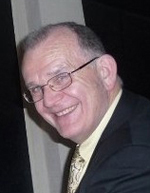 George Fleeton[/caption]
This is the expanded text of my pre-concert Talk, given on October 16 at Lyric Opera Productions’xa0Verdi 200xa0Gala in the National Concert Hall Dublin, and it is published here to support that particular celebration of the life and works of Giuseppe Verdi (1813-1901).
The Verdi Gala involved the Lyric Opera Chorus (prepared byxa0Killian Farrell), the RTÉ Concert Orchestra, conducted by David Heusel, and six Irish and international soloists.
*
The company’s most recent production had been the Czech operaxa0Rusalka, four weeks earlier in the Gaiety Theatre, and that opera had opened in Prague just two months after Verdi’s death in 1901, soxa0Rusalkaxa0belonged to the new vanguard of post-Verdian twentieth-century opera ¹.
*
In terms ofxa0the composer’s life and works,xa0Verdi 200xa0offered the audience literally a score (twenty) pieces of music from about a dozen of his operas, plus an extract from hisxa0Requiem, and my task was to fill in the back story of each work and its selected music.
As this year is also the 90thxa0anniversary of Maria Callas’ birth in New York, December 1923, the Talk began with Callas singing Gilda’s Act 1 ariaxa0Caro nomefrom Verdi’s gothic melodramaxa0Rigolettoxa0(Venice, 1851), recorded by Callas in 1956 at La Scala Milan, the opera house which was Verdi’s spiritual home for just over fifty-three years.
In this aria,xa0which was not included in the concert programme (but had been fully staged by the company in 2004), Gilda, the over-protected daughter of the court jester Rigoletto, reflects on her liaison with a young man (the Duke of Mantua, disguised as a poor student) and, all youth and innocence, she weaves a fantasy around his name, Gualtier Maldè, just before some horrid courtiers arrive to abduct her …
*
This year we arexa0celebrating the bicentenary of Verdi, the full-bearded revolutionary, musical dramatist, single-handedlyxa0xa0 responsible (over a period of fifty years)xa0xa0 for keeping Italian opera distinct from styles emerging elsewhere in Europe, and in whose operas beauty of vocal delivery (bel canto) gave way to plot and character, so the voices had to dramatically suit physical and emotional conflicts on stage, and melodramatic states of mind such as female madness and pathological male jealousy.
Verdi, refused entryxa0at age 19 to the conservatory in Milan which now bears his name, wrote his first two operas in his spare time, and thereafter employed no agent or manager, doing every deal on commission up front.
He was a national hero, a one-man opera factory, with a long, successful and mainly happy life, starting as a talented provincial musician and finishing up as a great maestro, the polymath and sage of Italian opera.
He put the chorusxa0back into opera, put it centre stage in fact, as a main player, but then he was light on overtures, preludes and entr’actes.
Hexa0wrote meaningfully for expiring sopranos, distressed tenors, imperious baritones, wicked basses, always with those wonderful ensembles that were his signature hallmarks for, after Verdi, no one dared write the kind of operas that were the staple diet before his time.
To paraphrase St Paulxa0to the Corinthians: ‘and now there remain Mozart, Wagner and Verdi, these three; but the greatest of these is Verdi.’
Fromxa0Nabuccoxa0toxa0Falstaff, like a huge sequoia, Verdi stole the sun from all the smaller trees in the forest.
And most of hisxa0twenty-eightxa0 operas have become important planets in our operatic solar system.
*
The concert opened withxa0the Overture from the biblical dramaxa0Nabuccoxa0(Milan, 1842), Verdi’s breakthrough opera (which had been produced, in full, by Lyric Opera in 1999, and again in 2007).
Thisxa0work came after the early death of Verdi’s first wife, Margherita Barezzi, and the deaths of their two infant children, Virginia and Icilio Romano.
They had been married just overxa0four years, and he was 29.
Nabuccoxa0was in fact Verdi’s thirdxa0xa0 opera (the previous two are rarely performed outside Italy).
Later in the concert we heard thexa0powerful chorusxa0Va, pensieroxa0– the chorus of the Hebrew Slaves, the yearning of the Jewish people in Babylonian captivity – the stylistic heart of this opera, its main artery, a slow, simple line underpinned by thickening orchestral textures.
Twenty years later this became the newly-united Italy’s national-anthem-in-waiting, and it was spontaneously intoned by thousands of mourners on the streets of Milan, during Verdi’s funeral procession, in February 1901, as Toscanini was conducting the orchestra of La Scala.
Then there were two, conjoint arias from Act 3 of the historical tragedyxa0Un Ballo in Mascheraxa0(A Masked Ball, Rome, 1859): Amelia’sxa0Morrò, ma prima in grazia,xa0with cello obligato, in which she pleads to see her son, before her husband kills her, and that was sung on the night by Italian soprano Angela Papale; followed by that husband, Renato,xa0 sung by Tasmanian baritone Simon Thorpe, and his ariaxa0Eri tu che macchiavi quell’anima, in which he accuses Amelia of staining their child’s soul.
This is the point of no return in the narrative of this opera, for Renato then joins the conspiracy to assassinate his lord and master, Riccardo, whom he believes is his wife’s lover.
The third opera quoted from wasxa0the historical dramaxa0Macbethxa0(Florence, 1847), fully staged, just once, by Lyric Opera, in 2001.
From it we had three excerpts, including another fine chorus, the Act 4xa0Patria oppressa!xa0in which Macduff’s disaffected clansmen sing menacingly of their miserable life and times.
That was then followed by Macduff’s grief for his murdered family,xa0O figli miei, sung for us by American tenor Michael Wade Lee.
It is a rare opera that dispenses with a conventional love interest, yetxa0here there are only two principals, Macbeth and his wife, in an opera which clearly eschews uncomplicated young romantic love.
Thisxa0was the first of three Verdi-Shakespeare operas (composed over forty years before he addressedxa0Otelloxa0andxa0Falstaff, when in his late 70’s).
Next on the programme wasxa0Pace, pace,xa0mio Dio, Leonora’s Act 4 prayer, from Verdi’s Spanish melodramaxa0La Forza delxa0destinoxa0(The Power of Fate, St Petersburg, 1862), an aria of the utmost delicacy, accompanied by harp, in which, as a hermit, separated from her lover for six years, she summons up remembrance of things past, and beseeches God to end her joyless life.
From the even more exotic melodramaxa0Il trovatorexa0(The Troubadour, Rome, 1853) we heard the ‘Anvil Chorus’, which opens Act 2, in the gypsy camp, celebrating hard work, good wine and gypsy women, with lots of sing-along zing.
Previously this opera had been given twice by the company, in 1997 and 2011.
Part one ofxa0Verdi 200xa0concluded with two pieces from his penultimate opera,Otelloxa0(Milan, 1887), written when he was 74.
We had Desdemona’s ‘Willow Song,’ sad, unearthly, with spare, bare accompaniment, as she is preparing for bed, followed by her intensexa0Ave, Maria, both from Act 4, and sung by Irish soprano Sinead Campbell- Wallace.
Here Verdi lavishes uponxa0this passive, pallid character an endless stream of lyrical poetry.
It wasxa0followed by the earlier Act 1 love duetxa0Già, nella notte densa,xa0free-ranging, high voltage stuff, when times were more passionate for Otello and Desdemona.
*
At this point in the Talk, we listened to the Belfast tenor James Johnston (1903-1991) singingxa0Celeste Aida,xa0from the beginning of Verdi’s twenty-sixth opera (Cairo, 1871), in which Radamès, hoping to be appointed C-in-C of the Egyptian army, is torn between that ambition and his secret love for Aida, an Ethiopian slave girl at court.
The Johnston recording I used was from 1951, but it had been unavailable until three years after his death.
Aidaxa0was not on the concert programme, although Lyric Opera had produced it on stage in 1999, 2004, and 2012.
*
Partxa0two ofxa0Verdi 200xa0comprised equally beautiful if less well known music.
Fromxa0Attilaxa0(Venice, 1846) we heard the Prelude, and Attila’s bad dream aria,Mentre gonfiarsixa0l’anima, sung by Irish bass John Molloy.
This drama (given here in a full production in 2006) is what we call Verdi’s visigothic tragedy, with lots of Goths, Vandals and Romans, but it was an opera that languished for decades after Verdi died until it was wheeled out in Venice in 1951, and rediscovered at Covent Garden as late as 1989, both to great acclaim, with its strong, vigorous music and effective choruses.
Then it was on to several conjoined pieces fromxa0Don Carloxa0(the much revised Modena, 1886 edition) for chorus and principals, in what was surely Verdi’sxa0chef d’oeuvrexa0and the grandest of grand operas.
These scenes involved the sixth and final soloist, Irish soprano Shauna Buckingham.
The next opera featured in this concert was the dark horse of the entire evening:xa0I masnadieri, an opera Verdi wrote for London in 1847, and which he conducted there in Her Majesty’s Theatre, thenxa0 at the Haymarket but not the building we know today.
And from it the Carlo/Amalia Act 3 duet of reconciliation (Carlo a 18thxa0century German brigand has been disinherited by his younger brother, rescues his father from starving to death and drives the brother to a remorseful suicide).
As you will have noticed, there aren’t many intentional laughs in Verdi’s output and, if he was the Shakespeare of 19thxa0century European opera, although he matched his English paragon in writing tragedy and historical drama for the stage, comedy was something for which the Italian composer simply had no flair.
Hisxa0Messa da Requiemxa0was written in 1874, during the long, fifteen year respite betweenxa0Aidaxa0andxa0Otello, and it is the most operatic of classical music’s Requiems (when compared to those of Mozart, Berlioz, Brahms, Dvořàk, Fauré, Duruflé and Britten).
Verdi wrote this to commemorate the first anniversary ofxa0the death of someone whom he admired greatly, Alessandro Manzoni, a poet, novelist and patriot.
From it we heard the tenor solo from the Mass’xa0Dies irae –xa0thexa0Ingemiscoxa0which radiates hope for the sinner who asks for God’s mercy.
That brought us toxa0another early opera,xa0Ernanixa0(Venice, 1844), and to Don Silva’sInfelice, in which the elderly Spanish grandee complains about two younger rivals paying court to his fiancée Elvira, namely the King of Castile and the duke-turned-bandit Ernani.
George Fleeton[/caption]
This is the expanded text of my pre-concert Talk, given on October 16 at Lyric Opera Productions’xa0Verdi 200xa0Gala in the National Concert Hall Dublin, and it is published here to support that particular celebration of the life and works of Giuseppe Verdi (1813-1901).
The Verdi Gala involved the Lyric Opera Chorus (prepared byxa0Killian Farrell), the RTÉ Concert Orchestra, conducted by David Heusel, and six Irish and international soloists.
*
The company’s most recent production had been the Czech operaxa0Rusalka, four weeks earlier in the Gaiety Theatre, and that opera had opened in Prague just two months after Verdi’s death in 1901, soxa0Rusalkaxa0belonged to the new vanguard of post-Verdian twentieth-century opera ¹.
*
In terms ofxa0the composer’s life and works,xa0Verdi 200xa0offered the audience literally a score (twenty) pieces of music from about a dozen of his operas, plus an extract from hisxa0Requiem, and my task was to fill in the back story of each work and its selected music.
As this year is also the 90thxa0anniversary of Maria Callas’ birth in New York, December 1923, the Talk began with Callas singing Gilda’s Act 1 ariaxa0Caro nomefrom Verdi’s gothic melodramaxa0Rigolettoxa0(Venice, 1851), recorded by Callas in 1956 at La Scala Milan, the opera house which was Verdi’s spiritual home for just over fifty-three years.
In this aria,xa0which was not included in the concert programme (but had been fully staged by the company in 2004), Gilda, the over-protected daughter of the court jester Rigoletto, reflects on her liaison with a young man (the Duke of Mantua, disguised as a poor student) and, all youth and innocence, she weaves a fantasy around his name, Gualtier Maldè, just before some horrid courtiers arrive to abduct her …
*
This year we arexa0celebrating the bicentenary of Verdi, the full-bearded revolutionary, musical dramatist, single-handedlyxa0xa0 responsible (over a period of fifty years)xa0xa0 for keeping Italian opera distinct from styles emerging elsewhere in Europe, and in whose operas beauty of vocal delivery (bel canto) gave way to plot and character, so the voices had to dramatically suit physical and emotional conflicts on stage, and melodramatic states of mind such as female madness and pathological male jealousy.
Verdi, refused entryxa0at age 19 to the conservatory in Milan which now bears his name, wrote his first two operas in his spare time, and thereafter employed no agent or manager, doing every deal on commission up front.
He was a national hero, a one-man opera factory, with a long, successful and mainly happy life, starting as a talented provincial musician and finishing up as a great maestro, the polymath and sage of Italian opera.
He put the chorusxa0back into opera, put it centre stage in fact, as a main player, but then he was light on overtures, preludes and entr’actes.
Hexa0wrote meaningfully for expiring sopranos, distressed tenors, imperious baritones, wicked basses, always with those wonderful ensembles that were his signature hallmarks for, after Verdi, no one dared write the kind of operas that were the staple diet before his time.
To paraphrase St Paulxa0to the Corinthians: ‘and now there remain Mozart, Wagner and Verdi, these three; but the greatest of these is Verdi.’
Fromxa0Nabuccoxa0toxa0Falstaff, like a huge sequoia, Verdi stole the sun from all the smaller trees in the forest.
And most of hisxa0twenty-eightxa0 operas have become important planets in our operatic solar system.
*
The concert opened withxa0the Overture from the biblical dramaxa0Nabuccoxa0(Milan, 1842), Verdi’s breakthrough opera (which had been produced, in full, by Lyric Opera in 1999, and again in 2007).
Thisxa0work came after the early death of Verdi’s first wife, Margherita Barezzi, and the deaths of their two infant children, Virginia and Icilio Romano.
They had been married just overxa0four years, and he was 29.
Nabuccoxa0was in fact Verdi’s thirdxa0xa0 opera (the previous two are rarely performed outside Italy).
Later in the concert we heard thexa0powerful chorusxa0Va, pensieroxa0– the chorus of the Hebrew Slaves, the yearning of the Jewish people in Babylonian captivity – the stylistic heart of this opera, its main artery, a slow, simple line underpinned by thickening orchestral textures.
Twenty years later this became the newly-united Italy’s national-anthem-in-waiting, and it was spontaneously intoned by thousands of mourners on the streets of Milan, during Verdi’s funeral procession, in February 1901, as Toscanini was conducting the orchestra of La Scala.
Then there were two, conjoint arias from Act 3 of the historical tragedyxa0Un Ballo in Mascheraxa0(A Masked Ball, Rome, 1859): Amelia’sxa0Morrò, ma prima in grazia,xa0with cello obligato, in which she pleads to see her son, before her husband kills her, and that was sung on the night by Italian soprano Angela Papale; followed by that husband, Renato,xa0 sung by Tasmanian baritone Simon Thorpe, and his ariaxa0Eri tu che macchiavi quell’anima, in which he accuses Amelia of staining their child’s soul.
This is the point of no return in the narrative of this opera, for Renato then joins the conspiracy to assassinate his lord and master, Riccardo, whom he believes is his wife’s lover.
The third opera quoted from wasxa0the historical dramaxa0Macbethxa0(Florence, 1847), fully staged, just once, by Lyric Opera, in 2001.
From it we had three excerpts, including another fine chorus, the Act 4xa0Patria oppressa!xa0in which Macduff’s disaffected clansmen sing menacingly of their miserable life and times.
That was then followed by Macduff’s grief for his murdered family,xa0O figli miei, sung for us by American tenor Michael Wade Lee.
It is a rare opera that dispenses with a conventional love interest, yetxa0here there are only two principals, Macbeth and his wife, in an opera which clearly eschews uncomplicated young romantic love.
Thisxa0was the first of three Verdi-Shakespeare operas (composed over forty years before he addressedxa0Otelloxa0andxa0Falstaff, when in his late 70’s).
Next on the programme wasxa0Pace, pace,xa0mio Dio, Leonora’s Act 4 prayer, from Verdi’s Spanish melodramaxa0La Forza delxa0destinoxa0(The Power of Fate, St Petersburg, 1862), an aria of the utmost delicacy, accompanied by harp, in which, as a hermit, separated from her lover for six years, she summons up remembrance of things past, and beseeches God to end her joyless life.
From the even more exotic melodramaxa0Il trovatorexa0(The Troubadour, Rome, 1853) we heard the ‘Anvil Chorus’, which opens Act 2, in the gypsy camp, celebrating hard work, good wine and gypsy women, with lots of sing-along zing.
Previously this opera had been given twice by the company, in 1997 and 2011.
Part one ofxa0Verdi 200xa0concluded with two pieces from his penultimate opera,Otelloxa0(Milan, 1887), written when he was 74.
We had Desdemona’s ‘Willow Song,’ sad, unearthly, with spare, bare accompaniment, as she is preparing for bed, followed by her intensexa0Ave, Maria, both from Act 4, and sung by Irish soprano Sinead Campbell- Wallace.
Here Verdi lavishes uponxa0this passive, pallid character an endless stream of lyrical poetry.
It wasxa0followed by the earlier Act 1 love duetxa0Già, nella notte densa,xa0free-ranging, high voltage stuff, when times were more passionate for Otello and Desdemona.
*
At this point in the Talk, we listened to the Belfast tenor James Johnston (1903-1991) singingxa0Celeste Aida,xa0from the beginning of Verdi’s twenty-sixth opera (Cairo, 1871), in which Radamès, hoping to be appointed C-in-C of the Egyptian army, is torn between that ambition and his secret love for Aida, an Ethiopian slave girl at court.
The Johnston recording I used was from 1951, but it had been unavailable until three years after his death.
Aidaxa0was not on the concert programme, although Lyric Opera had produced it on stage in 1999, 2004, and 2012.
*
Partxa0two ofxa0Verdi 200xa0comprised equally beautiful if less well known music.
Fromxa0Attilaxa0(Venice, 1846) we heard the Prelude, and Attila’s bad dream aria,Mentre gonfiarsixa0l’anima, sung by Irish bass John Molloy.
This drama (given here in a full production in 2006) is what we call Verdi’s visigothic tragedy, with lots of Goths, Vandals and Romans, but it was an opera that languished for decades after Verdi died until it was wheeled out in Venice in 1951, and rediscovered at Covent Garden as late as 1989, both to great acclaim, with its strong, vigorous music and effective choruses.
Then it was on to several conjoined pieces fromxa0Don Carloxa0(the much revised Modena, 1886 edition) for chorus and principals, in what was surely Verdi’sxa0chef d’oeuvrexa0and the grandest of grand operas.
These scenes involved the sixth and final soloist, Irish soprano Shauna Buckingham.
The next opera featured in this concert was the dark horse of the entire evening:xa0I masnadieri, an opera Verdi wrote for London in 1847, and which he conducted there in Her Majesty’s Theatre, thenxa0 at the Haymarket but not the building we know today.
And from it the Carlo/Amalia Act 3 duet of reconciliation (Carlo a 18thxa0century German brigand has been disinherited by his younger brother, rescues his father from starving to death and drives the brother to a remorseful suicide).
As you will have noticed, there aren’t many intentional laughs in Verdi’s output and, if he was the Shakespeare of 19thxa0century European opera, although he matched his English paragon in writing tragedy and historical drama for the stage, comedy was something for which the Italian composer simply had no flair.
Hisxa0Messa da Requiemxa0was written in 1874, during the long, fifteen year respite betweenxa0Aidaxa0andxa0Otello, and it is the most operatic of classical music’s Requiems (when compared to those of Mozart, Berlioz, Brahms, Dvořàk, Fauré, Duruflé and Britten).
Verdi wrote this to commemorate the first anniversary ofxa0the death of someone whom he admired greatly, Alessandro Manzoni, a poet, novelist and patriot.
From it we heard the tenor solo from the Mass’xa0Dies irae –xa0thexa0Ingemiscoxa0which radiates hope for the sinner who asks for God’s mercy.
That brought us toxa0another early opera,xa0Ernanixa0(Venice, 1844), and to Don Silva’sInfelice, in which the elderly Spanish grandee complains about two younger rivals paying court to his fiancée Elvira, namely the King of Castile and the duke-turned-bandit Ernani.and-her-new-world
George Fleeton[/caption]
This is the expanded text of my pre-concert Talk, given on October 16 at Lyric Opera Productions’xa0Verdi 200xa0Gala in the National Concert Hall Dublin, and it is published here to support that particular celebration of the life and works of Giuseppe Verdi (1813-1901).
The Verdi Gala involved the Lyric Opera Chorus (prepared byxa0Killian Farrell), the RTÉ Concert Orchestra, conducted by David Heusel, and six Irish and international soloists.
*
The company’s most recent production had been the Czech operaxa0Rusalka, four weeks earlier in the Gaiety Theatre, and that opera had opened in Prague just two months after Verdi’s death in 1901, soxa0Rusalkaxa0belonged to the new vanguard of post-Verdian twentieth-century opera ¹.
*
In terms ofxa0the composer’s life and works,xa0Verdi 200xa0offered the audience literally a score (twenty) pieces of music from about a dozen of his operas, plus an extract from hisxa0Requiem, and my task was to fill in the back story of each work and its selected music.
As this year is also the 90thxa0anniversary of Maria Callas’ birth in New York, December 1923, the Talk began with Callas singing Gilda’s Act 1 ariaxa0Caro nomefrom Verdi’s gothic melodramaxa0Rigolettoxa0(Venice, 1851), recorded by Callas in 1956 at La Scala Milan, the opera house which was Verdi’s spiritual home for just over fifty-three years.
In this aria,xa0which was not included in the concert programme (but had been fully staged by the company in 2004), Gilda, the over-protected daughter of the court jester Rigoletto, reflects on her liaison with a young man (the Duke of Mantua, disguised as a poor student) and, all youth and innocence, she weaves a fantasy around his name, Gualtier Maldè, just before some horrid courtiers arrive to abduct her …
*
This year we arexa0celebrating the bicentenary of Verdi, the full-bearded revolutionary, musical dramatist, single-handedlyxa0xa0 responsible (over a period of fifty years)xa0xa0 for keeping Italian opera distinct from styles emerging elsewhere in Europe, and in whose operas beauty of vocal delivery (bel canto) gave way to plot and character, so the voices had to dramatically suit physical and emotional conflicts on stage, and melodramatic states of mind such as female madness and pathological male jealousy.
Verdi, refused entryxa0at age 19 to the conservatory in Milan which now bears his name, wrote his first two operas in his spare time, and thereafter employed no agent or manager, doing every deal on commission up front.
He was a national hero, a one-man opera factory, with a long, successful and mainly happy life, starting as a talented provincial musician and finishing up as a great maestro, the polymath and sage of Italian opera.
He put the chorusxa0back into opera, put it centre stage in fact, as a main player, but then he was light on overtures, preludes and entr’actes.
Hexa0wrote meaningfully for expiring sopranos, distressed tenors, imperious baritones, wicked basses, always with those wonderful ensembles that were his signature hallmarks for, after Verdi, no one dared write the kind of operas that were the staple diet before his time.
To paraphrase St Paulxa0to the Corinthians: ‘and now there remain Mozart, Wagner and Verdi, these three; but the greatest of these is Verdi.’
Fromxa0Nabuccoxa0toxa0Falstaff, like a huge sequoia, Verdi stole the sun from all the smaller trees in the forest.
And most of hisxa0twenty-eightxa0 operas have become important planets in our operatic solar system.
*
The concert opened withxa0the Overture from the biblical dramaxa0Nabuccoxa0(Milan, 1842), Verdi’s breakthrough opera (which had been produced, in full, by Lyric Opera in 1999, and again in 2007).
Thisxa0work came after the early death of Verdi’s first wife, Margherita Barezzi, and the deaths of their two infant children, Virginia and Icilio Romano.
They had been married just overxa0four years, and he was 29.
Nabuccoxa0was in fact Verdi’s thirdxa0xa0 opera (the previous two are rarely performed outside Italy).
Later in the concert we heard thexa0powerful chorusxa0Va, pensieroxa0– the chorus of the Hebrew Slaves, the yearning of the Jewish people in Babylonian captivity – the stylistic heart of this opera, its main artery, a slow, simple line underpinned by thickening orchestral textures.
Twenty years later this became the newly-united Italy’s national-anthem-in-waiting, and it was spontaneously intoned by thousands of mourners on the streets of Milan, during Verdi’s funeral procession, in February 1901, as Toscanini was conducting the orchestra of La Scala.
Then there were two, conjoint arias from Act 3 of the historical tragedyxa0Un Ballo in Mascheraxa0(A Masked Ball, Rome, 1859): Amelia’sxa0Morrò, ma prima in grazia,xa0with cello obligato, in which she pleads to see her son, before her husband kills her, and that was sung on the night by Italian soprano Angela Papale; followed by that husband, Renato,xa0 sung by Tasmanian baritone Simon Thorpe, and his ariaxa0Eri tu che macchiavi quell’anima, in which he accuses Amelia of staining their child’s soul.
This is the point of no return in the narrative of this opera, for Renato then joins the conspiracy to assassinate his lord and master, Riccardo, whom he believes is his wife’s lover.
The third opera quoted from wasxa0the historical dramaxa0Macbethxa0(Florence, 1847), fully staged, just once, by Lyric Opera, in 2001.
From it we had three excerpts, including another fine chorus, the Act 4xa0Patria oppressa!xa0in which Macduff’s disaffected clansmen sing menacingly of their miserable life and times.
That was then followed by Macduff’s grief for his murdered family,xa0O figli miei, sung for us by American tenor Michael Wade Lee.
It is a rare opera that dispenses with a conventional love interest, yetxa0here there are only two principals, Macbeth and his wife, in an opera which clearly eschews uncomplicated young romantic love.
Thisxa0was the first of three Verdi-Shakespeare operas (composed over forty years before he addressedxa0Otelloxa0andxa0Falstaff, when in his late 70’s).
Next on the programme wasxa0Pace, pace,xa0mio Dio, Leonora’s Act 4 prayer, from Verdi’s Spanish melodramaxa0La Forza delxa0destinoxa0(The Power of Fate, St Petersburg, 1862), an aria of the utmost delicacy, accompanied by harp, in which, as a hermit, separated from her lover for six years, she summons up remembrance of things past, and beseeches God to end her joyless life.
From the even more exotic melodramaxa0Il trovatorexa0(The Troubadour, Rome, 1853) we heard the ‘Anvil Chorus’, which opens Act 2, in the gypsy camp, celebrating hard work, good wine and gypsy women, with lots of sing-along zing.
Previously this opera had been given twice by the company, in 1997 and 2011.
Part one ofxa0Verdi 200xa0concluded with two pieces from his penultimate opera,Otelloxa0(Milan, 1887), written when he was 74.
We had Desdemona’s ‘Willow Song,’ sad, unearthly, with spare, bare accompaniment, as she is preparing for bed, followed by her intensexa0Ave, Maria, both from Act 4, and sung by Irish soprano Sinead Campbell- Wallace.
Here Verdi lavishes uponxa0this passive, pallid character an endless stream of lyrical poetry.
It wasxa0followed by the earlier Act 1 love duetxa0Già, nella notte densa,xa0free-ranging, high voltage stuff, when times were more passionate for Otello and Desdemona.
*
At this point in the Talk, we listened to the Belfast tenor James Johnston (1903-1991) singingxa0Celeste Aida,xa0from the beginning of Verdi’s twenty-sixth opera (Cairo, 1871), in which Radamès, hoping to be appointed C-in-C of the Egyptian army, is torn between that ambition and his secret love for Aida, an Ethiopian slave girl at court.
The Johnston recording I used was from 1951, but it had been unavailable until three years after his death.
Aidaxa0was not on the concert programme, although Lyric Opera had produced it on stage in 1999, 2004, and 2012.
*
Partxa0two ofxa0Verdi 200xa0comprised equally beautiful if less well known music.
Fromxa0Attilaxa0(Venice, 1846) we heard the Prelude, and Attila’s bad dream aria,Mentre gonfiarsixa0l’anima, sung by Irish bass John Molloy.
This drama (given here in a full production in 2006) is what we call Verdi’s visigothic tragedy, with lots of Goths, Vandals and Romans, but it was an opera that languished for decades after Verdi died until it was wheeled out in Venice in 1951, and rediscovered at Covent Garden as late as 1989, both to great acclaim, with its strong, vigorous music and effective choruses.
Then it was on to several conjoined pieces fromxa0Don Carloxa0(the much revised Modena, 1886 edition) for chorus and principals, in what was surely Verdi’sxa0chef d’oeuvrexa0and the grandest of grand operas.
These scenes involved the sixth and final soloist, Irish soprano Shauna Buckingham.
The next opera featured in this concert was the dark horse of the entire evening:xa0I masnadieri, an opera Verdi wrote for London in 1847, and which he conducted there in Her Majesty’s Theatre, thenxa0 at the Haymarket but not the building we know today.
And from it the Carlo/Amalia Act 3 duet of reconciliation (Carlo a 18thxa0century German brigand has been disinherited by his younger brother, rescues his father from starving to death and drives the brother to a remorseful suicide).
As you will have noticed, there aren’t many intentional laughs in Verdi’s output and, if he was the Shakespeare of 19thxa0century European opera, although he matched his English paragon in writing tragedy and historical drama for the stage, comedy was something for which the Italian composer simply had no flair.
Hisxa0Messa da Requiemxa0was written in 1874, during the long, fifteen year respite betweenxa0Aidaxa0andxa0Otello, and it is the most operatic of classical music’s Requiems (when compared to those of Mozart, Berlioz, Brahms, Dvořàk, Fauré, Duruflé and Britten).
Verdi wrote this to commemorate the first anniversary ofxa0the death of someone whom he admired greatly, Alessandro Manzoni, a poet, novelist and patriot.
From it we heard the tenor solo from the Mass’xa0Dies irae –xa0thexa0Ingemiscoxa0which radiates hope for the sinner who asks for God’s mercy.
That brought us toxa0another early opera,xa0Ernanixa0(Venice, 1844), and to Don Silva’sInfelice, in which the elderly Spanish grandee complains about two younger rivals paying court to his fiancée Elvira, namely the King of Castile and the duke-turned-bandit Ernani.
Almost inevitablyxa0Verdi 200xa0ended with two pieces fromxa0La Traviataxa0(Venice, 1853):xa0 the finale from Flora’s party,xa0Di sprezzo degno, se stesso rende,xa0original, subtle, tuneful – xa0xa0xa0xa0xa0xa0xa0 Germont senior outraged, his son Alfredo remorseful, Violetta hopeful, chorus embarrassed, but sympathetic towards Violetta’s plight.
And, as an encore, the Act 1xa0Libiamo ne lieti calicixa0– the brindisi, a toast, lively, and catchy, involving all six soloists and the mixed-voice chorus.
*
If Verdi has beenxa0hard wired to Lyric Opera Productions since 1996, thenxa0La Traviataxa0has been his most produced work: five times between then and this year.
And there had also been a ‘Viva Verdi’ concert in 2001, to mark the centenary of the composer’s death, and a production of his very rare operaxa0I due Foscari(Rome, 1844) eight years ago.
*
Meanwhile the pre-concert Talk finished with Callas singingxa0O terra, addioxa0in a recording with Richard Tucker from 1956: buried alive, Aida and Radamès bid a lingering wistfulxa0 goodbye to life, in an epilogue which fades to zero, and which we now know was Verdi’s farewell to grand opera.
*
Of the many books about Verdi, I’ll recommend just two, each very different from the other:
Verdi, Julian Budden (Vintage Books, 404pp, 1985); and
Verdi et Son Temps, Pierre Milza (Éditions Perrin, 559pp, 2001).
The next, scheduled Lyric Opera production, in Dublin’s National Concert Hall, couldn’t be more different: Sir Arthur Sullivan’s 1878xa0H.M.S. Pinafore, on February 15, 16 and 17, 2014, at 8pm, a revival of its very successful staging at Buxton’s International Gilbert & Sullivan Festival in August of this year.
If you wish to listen in advance, a really good recording is available on Decca, from 1960, conducted by Isidore Godfrey, one which I recommend.
Meanwhile, for details see: xa0www.lyricoperaproductions.com
&xa0www.nch.ie
¹xa0And for some thoughts onxa0Rusalkaxa0see:
www.downnews.co.uk/rusalka
&xa0www.downnews.co.uk/rusalka-