



As temperatures drop and winter weather approaches, making sure your vehicle is ready for harsh conditions becomes critical. Cold weather can expose weaknesses in your car’s systems and turn minor issues into major problems. A thorough winter check helps you avoid breakdowns, improves safety, and ensures your vehicle performs reliably when you need it most. From checking your braking system to verifying battery health, taking time now to inspect key components can save you from costly repairs and dangerous situations on icy roads.
Braking System: Your First Line of Safety
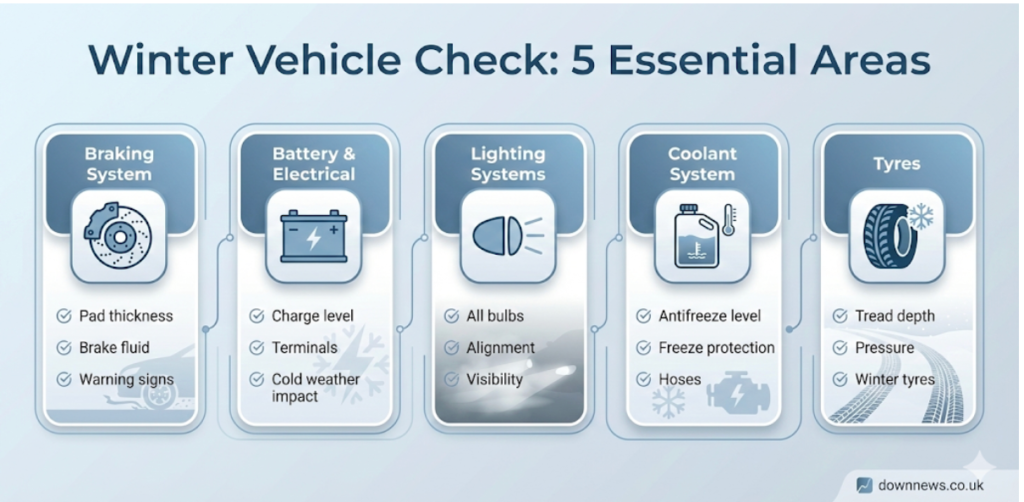
Your braking system deserves special attention before winter arrives. Cold temperatures affect brake performance, and wet or icy conditions demand brakes that respond instantly. Start by checking brake pad thickness – worn pads reduce stopping power and can damage rotors. Listen for unusual noises like squealing or grinding, which signal problems that need immediate attention.
Understanding brake technology helps you maintain your system properly. AUTODOC: “The first drum brakes were patented in 1902 by French automotive pioneer Louis Renault. They laid the foundations for today’s modern braking systems and were the main type of brake for cars until disc brakes were popularised in the mid 1950s.” Today’s vehicles use advanced disc brake systems that provide superior stopping power, especially important during winter driving.
When selecting replacement brake components, quality matters significantly. Reliable manufacturers like NGK, Ridex, and goCORE offer brake parts engineered for consistent performance in all weather conditions. These brands provide options at different price points while maintaining the standards needed for safe winter driving. Check your brake fluid level as well – it should sit between the minimum and maximum marks on the reservoir. Brake fluid absorbs moisture over time, which can freeze in winter temperatures and cause brake failure.
Lighting and Visibility Systems
Winter brings shorter days and reduced visibility, making proper lighting essential. Walk around your vehicle and test every light – headlights on both low and high beam, brake lights, turn signals, and reverse lights. Replace any bulbs that have dimmed or failed. Clean lens covers to remove road grime that blocks light output.
Headlight alignment becomes more important in winter when you need maximum visibility. Misaligned headlights reduce your ability to see the road and can blind oncoming drivers. Many service centres offer quick alignment checks. Also verify your fog lights work properly – they provide crucial visibility during heavy snow or fog when regular headlights reflect off precipitation.
Don’t overlook your windscreen wipers. Replace worn blades that leave streaks or miss sections of glass. Winter-specific wiper blades with rubber boots prevent ice buildup. Fill your washer fluid reservoir with a winter-rated solution that won’t freeze. Regular washer fluid can freeze solid in cold weather, leaving you unable to clear your windscreen.
Battery Health and Electrical System
Cold weather is brutal on car batteries. Chemical reactions inside batteries slow down when temperatures drop, reducing available power just when you need extra energy to start a cold engine. A battery that works fine in summer might fail completely on a freezing morning.
Test your battery’s charge level and overall health. Most auto parts shops offer free battery testing. If your battery is more than three years old or shows signs of weakness, consider replacing it before winter. Check battery terminals for corrosion – white or greenish deposits around connections increase resistance and prevent proper charging. Clean terminals with a wire brush and apply protective spray.
Inspect your alternator belt for cracks or looseness. The alternator charges your battery while driving, and a failing belt can leave you stranded. Modern vehicles have numerous electrical systems running constantly, from heated seats to navigation screens, so a healthy charging system is essential. For professional parts and maintenance advice, resources like www.buycarparts.co.uk offer reliable options for keeping your electrical system running smoothly.
Coolant System and Antifreeze Protection
Your coolant system protects the engine from freezing while maintaining proper operating temperature. Check coolant level when the engine is cold – never open a hot radiator cap as pressurised coolant can cause severe burns. The coolant should reach the full mark on the overflow tank.
Verify your coolant mixture provides adequate freeze protection. Most modern coolants offer protection to around minus 35 degrees Celsius when properly mixed. You can test the mixture using an inexpensive antifreeze tester available at auto shops. If protection levels are insufficient, drain and refill the system with the correct mixture. Old coolant loses effectiveness and should be replaced according to your vehicle’s maintenance schedule.
Inspect all visible coolant hoses for cracks, soft spots, or leaks. Hoses deteriorate over time and can burst when stressed by cold temperatures. Check hose clamps for tightness. A cooling system failure in winter can damage your engine and leave you without heat – a dangerous situation in extreme cold.
Winter Vehicle Check: Key Components at a Glance
| System | What to Check | Warning Signs |
|---|---|---|
| Brakes | Pad thickness, fluid level, pedal response | Squealing noises, soft pedal, grinding sounds |
| Battery | Charge level, terminal condition, age | Slow cranking, dim lights, corrosion |
| Lights | All bulbs, lens clarity, alignment | Dim output, flickering, dark spots |
| Coolant | Level, freeze protection, hose condition | Low level, leaks, cracked hoses |
| Tyres | Tread depth, pressure, overall condition | Worn tread, uneven wear, cracks in sidewalls |
Tyres: Your Connection to the Road
Tyres are your only contact with the road, making them crucial for winter safety. Check tread depth using the penny test – insert a penny into the tread with the queen’s head facing down. If you can see the top of her head, your tyres need replacement. Legal minimum tread depth is 1.6 millimetres, but experts recommend at least 3 millimetres for winter driving.
Verify tyre pressure when tyres are cold. Pressure drops as temperature falls – typically one PSI for every 5 degrees Celsius decrease. Underinflated tyres reduce handling and increase stopping distances on slippery surfaces. Check your vehicle’s manual or the sticker inside the driver’s door for correct pressure values.
Consider winter tyres if you live in an area with regular snow and ice. Winter tyres use special rubber compounds that stay flexible in cold temperatures and feature tread patterns designed to grip snowy roads. They significantly improve traction and control compared to all-season tyres in winter conditions.
Frequently Asked Questions
How often should I check my vehicle in winter?
Check your vehicle at least once a month during winter, and before any long journeys. Cold weather accelerates wear on components and can reveal problems quickly. Weekly visual checks of tyre pressure, lights, and fluid levels take just a few minutes but can prevent breakdowns.
Can I perform these checks myself?
Many winter checks require no special tools or expertise. You can easily check lights, tyre pressure, fluid levels, and battery terminals yourself. However, tasks like brake inspection, coolant testing, and battery load testing benefit from professional equipment. Consider having a mechanic perform a comprehensive winter service if you’re unsure about any aspect.
What should I keep in my car for winter emergencies?
Essential winter emergency items include a warm blanket, torch with spare batteries, ice scraper, de-icer spray, jump leads, phone charger, bottled water, and high-energy snacks. Add a small shovel and a bag of sand or cat litter for traction if you get stuck. Keep these items in your boot throughout winter.
Why do batteries fail more in winter?
Battery capacity decreases significantly in cold temperatures because chemical reactions inside the battery slow down. At the same time, engines need more power to start when cold, and electrical demands increase with heaters and lights running. This combination stresses weak batteries and exposes problems that might not appear in warmer weather. A battery at 50 percent capacity might work in summer but fail completely in winter.
Are winter tyres really necessary?
Winter tyres become beneficial when temperatures regularly drop below 7 degrees Celsius. Their rubber compound remains flexible in cold weather, providing better grip than all-season tyres. If you frequently drive in snow or ice, winter tyres dramatically improve safety and control. In milder winter conditions, quality all-season tyres with good tread depth may suffice, but winter tyres always perform better in cold weather regardless of snow presence.
🌐 Sources
- expresslubehaltom.com – Winterize Car Checklist: 6 Essential Steps for Safe …
- halfords.com – Essential Winter Driving Kit Checklist
- autorepairsandrecovery.co.uk – How to Prepare Your Car for Winter: Essential UK Guide
- clarkedove.co.uk – Free Winter Vehicle Checklist
- theaa.com – Winter car essentials checklist – Snow car kits
- uk.haynes.com – Free 5-Point DIY Winter Car Check List – Haynes Manuals