



Find below a copy of Prime Minister Theresa May’s speech in Belfast today.
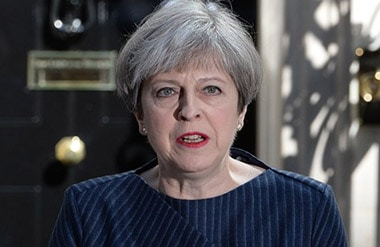
It is 3226 words long. Her rationale about Brexit and over the backstop is included. It is a seminal political tract and deserves a full read, whether you agree or disagree with her position on Brexit. By listening and understanding, we can move out of the morass we are in at the political present moment.
I have read it and reflected on it and my own personal opinions have been further confirmed based on my full reading of this text. It may be too late for the PM to galvanise opinion and find a solution to the issues of Brexit. The damage of the Troubles that was repaired in part by the benefits of the Good Friday Agreement may be undone by a fractious debate, one that has once again divided people in Northern Ireland, and indeed across Ireland and the rest of the UK and beyond.
Only time will tell if the PM will succeed in her quest for the Holy Grail over the next week before she faces the EU once again, a Brexit backstop agreeable to everyone. The clock is ticking.
Prime Minister’s speech in Belfast.
I’m pleased to be back in Belfast today, withxa0underxa08 weeks to go until the UK leaves the EU I recognise that this is a crucial time for Northern Ireland.xa0And ensuring that the unique needs of this part of the UK are met has been one of my chief priorities ever since I became Prime Minister.
Any border that weaves its way through farms and villages, bisects hundreds of roads and lanes, and which is crossed and re-crossed by thousands of people every day would pose a logistical challenge in the context of Brexit.
But when you add to those geographical factors Northern Ireland’s complex history, the different traditions and identities that make up its community, and the long path to peace that the people of Northern Ireland have walked over the last forty years – the challenge is even greater.
Over the last two and half years, we have come a long way towards a solution that works for Northern Ireland and Ireland.
We have agreed mutual protections for citizens’ rights, the maintenance of our common travel area,xa0and set a framework for our future relationship that ensures tariff and quota-free trade and protects our close co-operation on security and law enforcement.
But the UK Parliament rejected the Withdrawal Agreement because of their concerns about the backstop – the legal protocol to prevent no hard border in the event our future relationship is not in place at the end of the implementation period.
I know that many people in Northern Ireland, and indeed across this island, are worried about what Parliament’s rejection of the withdrawal deal means for them.
So I am here today to affirm my commitment, and that of the United Kingdom Government, to all of the people of Northern Ireland, of every background and tradition.
To affirm my commitment to the Belfast/Good Friday Agreement, to its successorsxa0the St Andrew’s Agreement and the Stormont House Agreement, and to the principles they enshrine – which is absolute.
And to affirm my commitment to delivering a Brexit that ensures no return to a hard border between Northern Ireland and Ireland – which is unshakable.
I was 12 when the Troubles began and 41 when the Belfastxa0Agreement was reached; for all my adult life, Northern Ireland has been a central political issue.xa0
The progress of the last few decades – from the Troubles to ceasefire; from ceasefire to political agreement; and from agreement to active participation by unionists and nationalists in institutions that enjoy cross-community support – has been a massive achievement and a landmark in the history of these islands.xa0
From the moment I became Prime Minister of the UK, I knew that one of my most profound responsibilities was to serve the interests of the people of Northern Ireland by doing all I could to protect and sustain that progress.
Successive UK and Irish Governments have played their parts, often working together in close co-operation.
But it has been the political partiesxa0in Northern Ireland – the UUP and the SDLP, the DUP, Sinn Fein, and the Alliance – it has been civil society groups like WAVE and Healing Through Remembering – and above all it has been the people of Northern Ireland who have achieved by far the most.
Violence has not been eliminated. But it has been reduced to levels that would once have seemed impossible to imagine.
Divisions remain entrenched in some communities. But many people, including those from the younger generations, are more and more interested in putting aside those divisions to build a shared future.
Thanks to greater political stability, Northern Ireland is now a leading destination for inward investment, with over 900 international businesses investing in its economic success.xa0
Employment is at a near-record high and unemployment at a near-record low.xa0
And that transformation is reflected in the image that Northern Ireland projects to the rest of the world today.
It is no longer one of violence, butxa0ofxa0dynamism and success.xa0
And the decisive moment in that transformation was the Belfast Agreement in 1998.xa0
Its success was in allowing people of different traditions to feel that those traditions andxa0theirxa0identities were respected, and that they could work together to build a successful future for all the people of Northern Ireland.
It enshrined the principle that it is the ‘birthright of all the people of Northern Ireland to identify themselves and be accepted as Irish or British, or both, as they may so choose.’
And it enshrined the consent principle: that it will always and only be for the people of Northern Ireland to decide what their constitutional future should be – and that the UK Government is solemnly committed to supporting and implementing their democratic wishes.xa0
These principles are the bedrock of peace and stability in Northern Ireland.
And they will forever be honoured by the United Kingdom Government.
A fundamental belief in the Union of Great Britain and Northern Ireland is part of my political heritage as a Conservative and Unionist – and that will never change.
But the Unionism I believe in is one that respects absolutely the central importance of Irish identity to those people in Northern Ireland who claim it.
And the United Kingdom I stand for is an open and tolerant union of nations and people.
A country where every religion, every peaceful and democratic creed, has a place and every man and woman is equal before the law, treated with respect and has the opportunity to get on and succeed.xa0
Indeed, that Union can only ever be secure and prosper if it is built on that respect and acceptance of difference and diversity.xa0
Because the Belfast Agreement is not just the bedrock of stability here in Northern Ireland, its principles are fundamental to the security and success of the whole United Kingdom.
Our absolute commitment to those principles has informed and directed my approach to Brexit – from my first speeches as Prime Minister to my first meetings with the Taoiseach. xa0
And in December 2017, in the Joint Report we agreed with the EU, we committedxa0to protect the 1998 agreement ‘in all its parts…and to the totality of the relationships set out in it.’
…‘to the avoidance of a hard border, including any physical infrastructure or related checks and controls’
…and ‘to preserving the integrity of the UK internal market and Northern Ireland’s place within it.’
These were commitments made in good faith.xa0
Our preferred approach has always been to deliver them through the Future Relationship.
But I accepted the need for an insurance policy or bridging arrangement to guarantee no hard border if the Future Relationship was not in place in time.xa0
And that such a policy had to deliver legal certainty – through what is called a legally operative text – so it would give people and businesses on both sides of the border clarity and confidence over how these commitments would be fulfilled.
That is why I agreed to the backstop in the Withdrawal Agreement.xa0
And unlike the original European Commission proposal, it did not impose a customs border between Northern Ireland and the rest of the UK.
Many people, businesses, farming organisations and voluntary groups in Northern Ireland agreed with me. They spoke out in support of the Withdrawal Agreement and they defended the backstop.xa0
I know that wasn’t an easy thing to do and I am grateful to them for doing so.xa0
I fought hard to make the case for the deal as it stands. I believed it could command a majority in the House of Commons.
But I have had to face up to the fact that in its current form it cannot. And the need for changes to the backstop is the key issue.xa0
While there were those in Northern Ireland who spoke in favour of it,xa0it is also true thatxa0the backstop is not supported by the two main Unionist parties here.
And thisxa0also influenced MPs in England, Scotland and Wales in voting against the deal.xa0
I can only deliver on the commitments we have made if I can get a deal through the UK Parliament.
And meetings with MPs across the House showed that I can only get a deal through Parliament if legal changes are made to the backstop.
And that is why the UK Government – and a majority of MPs from across the House of Commons – supported the amendment from Sir Graham Brady last week.xa0
It reaffirms our desire to leave with a deal and our commitment to no hard border between Northern Ireland and Ireland.xa0
And as Sir Graham himself set out, itxa0would mean replacing the backstop with another arrangement which avoids a hard border or making legally binding changes to the backstop to introduce a time limit or create an exit mechanism.
I know that the prospect of changing the backstop and re-opening the Withdrawal Agreement creates real anxieties here in Northern Ireland and in Ireland. Because it is here that the consequences of whatever is agreed will most be felt.xa0
I recognise, too, that the majority of voters in Northern Ireland voted to remain.xa0
And that many will feel that once again decisions taken in Westminster are having a profound – and in many cases unwanted – impact in Northern Ireland and Ireland.
So I am determined to work towards a solution that can command broader support fromxa0across the community in Northern Ireland.
As we do so, there are a number of commitments that will underpin our approach and which must be part of any alternative arrangements that we seek to negotiate with the EU and pass through the UK Parliament.xa0
First, we stand by our commitment in the Joint Report that there will be no hard border, including any physical infrastructure or related checks and controls.
And this means people on either side of that border will be able to live their lives as they do now.xa0
I have spoken to people in places like Fermanagh who remember the customs border posts, approved roads and security installations of the not-so distant past.xa0
I have spoken to businesses who have supply chains that cross between Great Britain, Northern Ireland and Ireland.xa0
I understand how thousands of people move back and forth between Northern Ireland and Ireland every day – to go to work, to visit family, even to do theirxa0shopping.xa0
I understand what a hard border would mean – not just in terms of the disruption at the border itself, but in terms of trade for the whole island.
The Belfast Agreement delivers “just and equal treatment for the identity, ethos and aspirations of both communities.”xa0And for many a seamless border between Northern Ireland and Ireland is integral to delivering this.
And I know this has been the cornerstone around which the community in Northern Ireland has come together to deliver peace and prosperity.xa0
And I will not do anything to put that at risk.xa0
So while I have said that technology could play a part, and that we will look at alternative arrangements, these must be ones that can be made to work for the particular circumstances of Northern Ireland.
Second, neither will I compromise on my promise to protect Northern Ireland’s integral place in the UK.xa0
When the European Commission proposed a version of the backstop which involved creating a customs border in the Irish Sea, I successfully resisted it.xa0
And I have ruled out any return to such a suggestion.xa0
This would not only damage the integrity of the UK’s internal market which is so vital to businesses across the UK – and not least here in Northern Ireland.
It would also ignore the very real concerns of many people about being cut off from the rest of the UK.xa0
Furthermore, we will also ensure there will be no new regulatory barriers between Northern Ireland and the rest of the UK without Northern Ireland’s institutions having their say. xa0
Third, there will be full protection for all existing cross-border co-operation.xa0
Many areas of cooperation have been identified – both those formally set out by the North South Ministerial Council such as cooperation on health and transport, or keeping the island of Ireland disease-free for animals and plants…
…and informal areas of co-operation such as a single integrated electricity market that supplies power to everyone.
Every area of existing cross-border co-operation must be respected.xa0
If these are ever to change in the future, it will be a matter for Belfast and Dublin in accordance with the three-stranded approach, not as a consequence of our EU exit.
Fourth, we will uphold the rights enshrined in the Belfast Agreement for all the people of Northern Ireland, right across the whole community.xa0
This includes upholding commitments around mutual respect, religious liberties, equality of opportunity, tolerance and rights.
I know that there are some in the nationalist community in particular who worry that some of their existing rights could be eroded when the UK leaves the EU.
So we have already enshrined in the Withdrawal Agreement a legal guarantee of no diminution of equality and rights.
There have also been serious concerns raised about how UK immigration rules treat citizens here exercising their rights under the Agreement to be Irish.
The birth right to identify and be accepted as British, Irish or both, and to hold both British and Irish citizenship is absolutely central to the Agreement.
But I know that in some cases recently, people have encountered difficulties in securing their rights as Irish citizens to bringxa0inxa0family members.xa0
I understand the serious concerns that have been raised.
So I have asked the Home Secretary, working closely with the Secretary of State for Northern Ireland, to review these issues urgently to deliver a long term solution consistent with the letter and spirit of the Belfast Agreement.xa0
Without a devolved Governmentxa0-xa0and with only unionistsxa0represented in the House of Commonsxa0-xa0it is more important than ever that we uphold our duty to ensure allxa0voicesxa0in Northern Ireland are heard.xa0
I take that very seriously indeed and the UK Government will always work in the interests of the whole community.
So tomorrow I will be sitting down with the political parties to discuss the way forward andxa0ensure that we can deliver for all the people of Northern Ireland.
Northern Ireland does not have to rely on the Irish Government or the European Union to prevent a return to borders of the past.xa0
The UK government will not let that happen. I will not let that happen.xa0
At the same time, we must continue to support all efforts that can lead towards the restoration of Northern Ireland’s political institutions.xa0
And the UK Government is absolutely committed to ensuring that when an Executive is restored it will have real influence to speak for all the people of Northern Ireland as we shape the UK’s future relationship with the European Union.xa0
As we work to address the unique challenges that Brexit poses to Northern Ireland, so I also want to ensure that we continue to maintain – and indeed enhance – the strongest possible bilateral partnership between the UK and Ireland.
I have said many times that I want to see a new, deep and special partnership between the UK and the 27 Member States of the European Union.xa0
But our relationship with Ireland is deeper than our relationship with any of the other 27.xa0
It is uniquely rooted in ties of family, history and geography.xa0
The recent past has been a moment of reflection in the UK and Ireland as we have commemorated the centenary of a series of key events in our shared history.xa0
Ireland remembered the centenary of the Easter Rising in an inclusive manner which promoted a greater understanding of our often troubled history.
While our two countries remembered together the shared sacrifice of so many who fought side by side in the First World War.xa0
The ceremony at Messines in 2017, attended by HRH the Duke of Cambridge and former Taoiseach Enda Kenny was particularly poignant, as it remembered the soldiers of the 16th Irish and 36th Ulster Division who both played a key role in the Allied victory in that battle.
Today those ties of family and friendship between our countries are more important than they have ever been.xa0
And I believe there isxa0axa0yearning in the hearts of all the peoples of these islands for a close and trusting relationship between all of us, and an absolute horror that we should take even a single step backwards in the progress we have collectively achieved.
So I want to work closely with thexa0Taoiseach Leo Varadkar and the Irish Government, as so many of our predecessors have before, to strengthen the bilateral relationship we have built.xa0
And this can and should take many forms.xa0xa0
We already have the British Irish Intergovernmental Conference, and regular Summits between UK and Irishxa0politicians.xa0But as we leave the European Union, we will need to establish new ways of coming together to develop further our unique relationship.
For example, the Irish Government has suggested annual meetings where the Prime Minister and Taoiseach, together with senior Ministerial colleagues, come together to discuss the big issues of the day.
We will also want to strengthen our economic relationshipxa0and have already togetherxa0identified areas like construction and smart cities as ripe for enhanced collaboration. xa0
And both the UK and the Irish Governments have already made clear that we would support the tantalising possibility of a joint UK and Ireland World Cup Bid for 2030, should our respective football associations choose to pursue this.
We also want to find creative ways of enhancing the links between all our peoples – and in particular, to build the links between our young people.xa0
I know there is a sense that many British people do notxa0know enough, or understand enough, about the complexity of the long relationship between the UK and Ireland.xa0And a sense that some Irish people are less familiar with the forces and motivations that help to shape views in the UK.xa0
Soxa0as part of these new ways of coming together, I would like to us to look in particular at opportunities for our young people to discuss these issues and others in a structured way and to reflect on their vision for our future relationship.
I know this is a concerning time for many people here in Northern Ireland.xa0
But we will find a way to deliver Brexit that honours our commitments to Northern Ireland…
…that commands broad support across the communitiesxa0in Northern Ireland…xa0
…and that secures a majority in the Westminster Parliament, which is the best way to deliver for the people of Northern Ireland.
As we do so, I hope we can also take steps to move towards the restoration of devolution – so that politicians in Northern Ireland can get back to work on the issues that matter to the people they represent.xa0
For ultimately, the measure of this moment in Northern Ireland’s history must be more than whether we avoid a return to the challenges of the past.xa0
It must be how, together, we move forwards to shape the opportunities of the future.xa0
As Prime Minister of the United Kingdom, it is a profound honour and duty to play my part in shaping that future…xa0
…and to do my utmost to support the peace, prosperity and progress that can give the people of Northern Ireland, the brightest future for generations.