



The Woman Who Strayed
by George Fleetonxa0© 2013
[caption id="attachment_32481" align="alignleft" width="150"]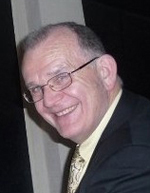 George Fleeton[/caption]
For Lyric Opera’s production of Verdi’sxa0La Traviataxa0(1853), in Dublin’s Gaiety Theatre (June 05, 07 and 08), I was invited to write an article on the opera for the Programme.
It is printed here – with kind permission.
George Fleeton[/caption]
For Lyric Opera’s production of Verdi’sxa0La Traviataxa0(1853), in Dublin’s Gaiety Theatre (June 05, 07 and 08), I was invited to write an article on the opera for the Programme.
It is printed here – with kind permission.arts-culture/fleeton-reviews/
Hisxa0Tribute to Maria Callas -xa0with Norah King soprano, and Anthony Byrne piano – takes place in Calary, Co. Wicklow, on 5 July at 8pm.
George Fleeton[/caption]
For Lyric Opera’s production of Verdi’sxa0La Traviataxa0(1853), in Dublin’s Gaiety Theatre (June 05, 07 and 08), I was invited to write an article on the opera for the Programme.
It is printed here – with kind permission.***
Violetta refers to herself, in Piave’s libretto for Verdi’s opera, asxa0la traviataxa0in her final aria – Addio, del passatoxa0bei sogni ridenti….. ah, della traviata sorridi al desio. (Goodbye to thexa0pleasant dreams of the past … and smile upon the longing of the woman who strayed). Traviarsixa0is an Italian reflexive verb in wider use, than today, before the regularisation of the modern language in the 1940s. It means ‘to be led astray’, and its past participle – feminine singular – istraviata. La Traviataxa0has been on the go for 160 years: Verdi wrote it when he was 40. The story of Italian opera, and indeed that of La Scala, between 1842 and 1893 (Nabuccoxa0toxa0Falstaff), was the story of Verdi. Across the spectrum of his twenty-eight operas he revitalised Italian music drama and gave it an identity as distinctive as that created for German music by Wagner, four and a half months his elder. But the deaths of Verdi’s wife Margherita and their infant children Virginia and Icilio between 1838 and 1840 – the precise period of his first twoxa0operas – almost derailed him completely. He was 27. It took enormous efforts fromxa0his publisher Ricordi and from his lifelong companion and second wife, the soprano Strepponi, to get him back on track. Up until then Italian opera had a greatxa0propensity for being unreal, non-realist at a time when realism was rapidly taking over from romanticism in European art. By 1853 Verdi had shaken out of his music the last vestiges ofxa0bel canto, particularly the shades of Rossini. Rigolettoxa0andxa0Il Trovatore, new approaches to drama and melody, had recently paved the way for that. In these two operas Verdi’s musical language had matured and changed, and no one dared to go back behind the line that he had drawn in the sand. Inxa0Traviata, in my view, he went further: this opera was more sophisticated and fluent than its forerunners, the structure was as tightxa0as axa0well writtenxa0playxa0and the arias added substance to, and impelled rather than braked, the action. Melody now explored, expressed and illustrated character, and so Violetta, Alfredo and Giorgio were defined by their music, and plot was downsized. Verdi’s next work (afterxa0Traviata), and with growing aspirations towards grand opera,xa0would beLes vêpres siciliennes, for Paris, and so the die was cast and he had crossed a personal rubicon. All had changed, not utterly but sufficiently to re-invent opera, both in composition and in performance, for another 70 years, until Puccini died in Turandot’s icy embrace. Single-handedly, it seemed, Verdi had changed opera’s cavalier way with realism. His run-ins with the occupying Austrian censors were many and bitter, recalling Beaumarchais’ dictum from the 1780s that ‘what is too dangerous to say in words can be sung in music’. Yet there were traces of the old rules. Inxa0Traviataxa0Act three, for example, the embedded dynamic of plot-character versus voice-character was still pre-eminent. Plot-Violetta has succumbed to TB, her lungs destroyed, desperately fighting for breath. Voice-Violetta sings on, without evident trouble, robustly producing well-supported, beautiful sounds, even celebrating her imminent death in song. Sopranos of course must never croak or cough at this point; so we accept the fantasy without resisting it: we suspend our disbelief, and opera wins: Noble, simple, with unbroken vitalityxa0and vast natural powers of creation and organisation, Verdi is the voice of a world that is no more. His enormous popularity today is due to the fact that he expressed familiar states of human experience in the most direct terms as Homer, Shakespeare, Ibsen and Tolstoy had done. (Partially quoted from Isaiah Berlin). Of all Verdi’sxa0 operas,xa0La Traviataxa0is probably the most popular, yet in Venice in 1853 it was one of his rare failures, not at all well received, especially when we recall that this was only six or seven weeks after the widely acclaimed opening ofxa0Il Trovatorexa0in Rome. I think it is incorrect to blame the failure ofxa0Traviataxa0on the miscast Violetta, Fanny Salvini-Donatelli. Her physical form didn’t tally with the consumptive character she was portraying. She sang well in Act one and was applauded; but in Act two the baritone (Varesi) had begun to unravel, yelling his head off, and the tenor (Graziani) went hoarse. Evidently the demands of the opera were beyond the talents of its first cast. It was an ordeal for Verdi, standing at the back of the Teatro La Fenice (‘complete fiasco,’ he wrote). By Act three the audience was taking it out on Salvini-Donatelli. This also happened toxa0the equally rotund Luisa Tetrazzini, a remarkable soprano, who had to sit on a chair, when singing Violetta at the Met with John McCormack a hundred years ago. Yes,xa0they were stout, but so too was Maria Callas when she sang Violetta in Venice in January 1953. However, by November 1954, her Chicago Violetta looked like Audrey Hepburn. I believe the real problem about the early reception ofxa0Traviataxa0had more to do with audience expectations not being catered for rather than the soprano’s girth. Bothxa0Rigolettoxa0andxa0Trovatorexa0had sucked audiences into a comfort zone where hot-blooded historical dramas werexa0le plat duxa0jour. In these operas Verdi’s concept of drama was more crude: crashing music, violent contrasts, hard-working choruses – in other words melodrama incarnate (while earlier there had been other examples such asxa0Macbeth,xa0Attilaxa0andxa0Ernani). Traviata, without warning, had changed the game: this was contemporary social realism, albeit glamorous upper-crust realism, with familial strife and disease-blighted love now unprecedentedly fore grounded. The concentration on the three personal dramas defined it as intimate-opera; Verdi’s writing was now at its most economical but it also encompassed an astonishing range of emotions and moods. The new heroine herself was a compound of delicacy and decadence. All this was different and Venice did not like it, and that made Salvini-Donatelli an easy target. Besides, Verdi’s personal approach to the performance of his operas had changed too: He questions everything.xa0He can hear everything at the same time. He walks about the stage, beating time, snapping thumb against middle finger, and this strident terseness is heard above the orchestra and the chorus, goading them on, driving them forward like lashes from a whip. The conductor’s copy of the score would end up blotched by the sweat that dripped from the composer’s brow in rehearsals. (Some remarks attributed to Jules Claretie). Over the yearsxa0that I taught Verdi to music students and others, I have been frequently asked to recommend a great recording ofxa0La Traviataxa0– the one Verdi opera most likely to convert opera virgins into opera veterans. For starters, there is Zeffirelli’s 1983 film, but it has not aged well. Curiously, it was one of the opening night shows (in St Anne’s Cathedral) of the 13thxa0Belfast Film Festival in April. But Domingo is no Alfredo – and poor Teresa Stratas struggles valiantly to stray convincingly in her director’s self-indulgent extravaganza. Next, too many of the CDs on the market are little more than star recitals, with lots of tenor hoot and soprano shrill, and so they are not well thought-out dramatic readings of the score. So, to build a library, look no further than Licia Albanese’s interpretation (she’s 100 next month) conducted by Toscanini in 1946 for RCA Victor. And Joan Sutherland’s reading for Decca in 1962 is also hard to beat. Note that these are both studio recordings. The live recording which I have been using for years is that of Maria Callas (in La Scala’s Visconti production of 1955, for EMI Classics), arguably the best capture of any Verdi opera, with Callas clearly at the peak of her powers. These three Violettas – Albanese, Sutherland and Callas – stray and they stray beautifully. George Fleeton is former Director of Opera Fringe Northern Ireland. He reviews arts and cultural events throughout Ireland for Down News. www.downnews.co.uk/category/