



An opinion piece: the case for field sports in a disconnected age by Cathal Cassidy MB ChB FRCPsych
Modern society is producing a deep crisis of meaning among the young. Schools, families and healthcare services increasingly encounter children and adolescents who are anxious, dislocated, lonely and unsure what their lives are for writes Cathal Cassidy.
Much of this distress is intensified by a culture of permanent online comparison, virtual performance and abstract outrage. Young people are more connected than ever, yet many feel less rooted, less useful and less at home in the world.
Hunting and field sports offer a direct challenge to that malaise. They return the individual to weather, terrain, silence, effort and consequence. They demand patience, discipline, self-restraint and respect for life.
Properly understood, field sports are not a relic of the past; they are one of the most serious antidotes to the unreality and purposelessness of the age.
The case for hunting today is not made by nostalgia or privilege but by stewardship, education and responsibility. The physical beauty of a landscape is not preserved by admiring it from a distance; it is preserved when people know it intimately, work in it, love it and feel answerable for its future.
A morning on a hill, a day in a marsh, or a careful stalk through woodland teaches more than technique. It teaches that nature is not an image, a slogan or an abstraction. It is a living inheritance that requires time, money, skill and care.
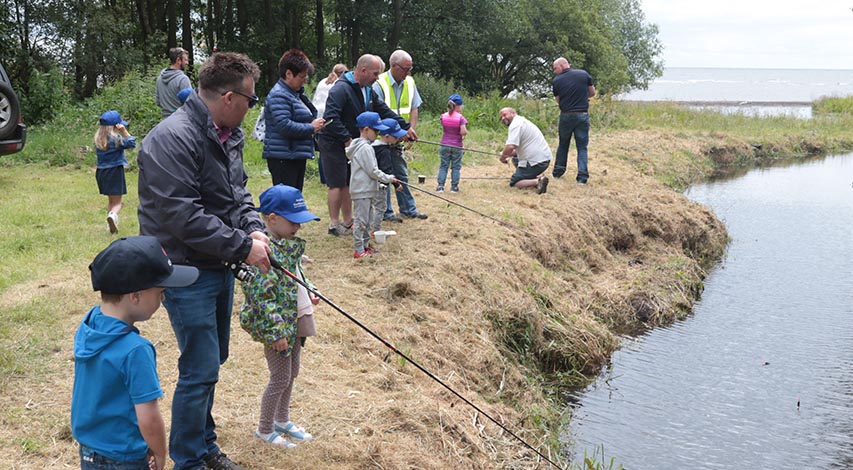
From disenfranchised to connected (earth to Matilda!)
Much contemporary anxiety comes from disembodiment. Social media encourages a life of performance, reaction and spectatorship. Field sports require the opposite.
A participant must rise early, walk difficult ground, read wind and weather, understand animal behaviour, accept discomfort and act with restraint. These are physical and ethical disciplines. They bring a person out of the restless theatre of the self and into attention to the world beyond the self.
For young people especially, this matters because the crisis is not only clinical or educational; it is existential.
Many who present to schools, counsellors, youth services and healthcare settings are not simply short of information or entertainment. They are short of rootedness, capability, responsibility and purpose.
The outdoors gives them a form of confidence that cannot be downloaded. It teaches competence, responsibility and humility.
A young person who learns to identify tracks, handle equipment safely, wait patiently, distinguish species, understand seasons and take part in conservation work is learning a richer vocabulary of belonging. The landscape becomes not a backdrop for recreation but a place of duty and relationship. These lessons transfer to the other spheres of their lives.
Conservation through reciprocity
The strongest defence of hunting is the relationship between use and care. Where rural people, landowners, keepers, farmers and sporting communities depend on healthy habitats and sustainable wildlife populations, they have a direct incentive to invest in them.
They restore hedgerows, manage wetlands, improve woodland edges, monitor predator pressure and take counts of species because they do not merely admire the land from afar; they are immersed in it. The land is stewarded by those whose recreation, livelihood and identity are bound up with its health.
This reciprocity is often misunderstood, and sometimes deliberately misrepresented. Hunting is caricatured as taking from nature, but responsible field sports operate according to a different moral logic.
Harvest is shared and is tied to habitat; enjoyment is tied to obligation; rights are balanced by duties. The result is not exploitation but a practical conservation culture in which local people give their time, knowledge and money to places that might otherwise be neglected, fragmented or managed only from behind a desk.
Community versus isolation
Field sports are also social institutions, and that is one of their greatest modern strengths. They gather generations together: grandparents, parents, young people, neighbours, beaters, pickers-up, farmers, dog handlers and conservation volunteers.
The shared work before and after a day in the field is part of the culture. It creates interdependence, memory and mutual responsibility. Against the loneliness of the virtual lifestyle, field sports offer something far more durable: belonging earned through shared effort.
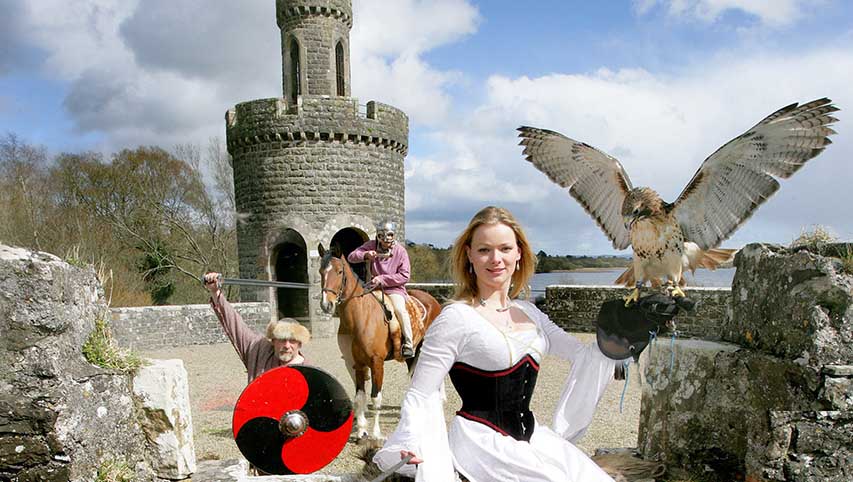
That community dimension is not incidental. It is one of the reasons field sports have survived. They are not simply individual pursuits; they are local traditions through which knowledge is passed on.
The older participant teaches the younger one not only where to stand or how to walk a line, but why restraint matters, why safety is absolute, why the land must be left better, and why gratitude is due when nature provides.
There is another reason this matters now.
Much of modern moral energy is directed towards the remote, the global and the international. Young people are encouraged to feel responsible for crises everywhere, while having little practical responsibility for the stream, woodland, hedgerow, parish, farm or common in front of them.
Field sports reverse that imbalance. They teach that care begins locally, among people and places one can actually know.
The farm, the moorland, the bog and the riverbank become schools of attention. They are antidotes to a politics of distant anxiety because they convert concern into service close to home.

Lessons from Nordic field sport culture
The Nordic countries show that this is not a romantic theory but a workable public culture.
In Denmark, a hunting licence cannot be purchased as a leisure accessory. Prospective hunters must meet formal requirements, including a hunting examination with theoretical and practical elements, and Danish public guidance notes that candidates can enter the hunting test from the calendar year in which they turn 16. Such systems make a crucial point: a society that educates young hunters well can turn field sports into a school of ethics, safety and ecological literacy.
Finland provides an even richer illustration of how young people can be introduced to hunting as part of wilderness education.
Finnish hunting associations run youth initiatives such as Metso camps for 10- to 16-year-olds, where children learn about wildlife, game management, hunting, shooting and hunting dogs.
Mini Metso events introduce even younger children to wildlife themes through practical outdoor activities. Forest education reporting has also described Finnish schoolchildren taking part in local hunt days where they learn about game management, everyman’s rights, fire-making, forest types and species knowledge.
Alongside hunting, Finland’s broader forest culture reinforces the point. The Finnish Wildlife Agency promotes sustainable game husbandry and supports game management associations, while the METSO forest biodiversity programme uses voluntary participation by landowners to protect and restore valuable forest habitats.
These examples matter because they show conservation working through participation rather than alienation: people are encouraged to know the land, manage it, protect it and pass that knowledge on.
The deeper Nordic lesson is that access to wild places, cabins, forests and outdoor culture is treated as a normal part of personal development.
The Finnish idea of the wilderness cabin, whether privately owned, rented or made available through outdoor networks, reflects a culture in which families and young people are expected to spend real time in nature. That expectation forms citizens who are less alienated from landscape and more likely to understand conservation as a practical responsibility.
A modern expression of an ancient practice
The future of hunting and field sports depends on being unapologetic about their value while uncompromising about their standards. Bad practice is to be condemned. Safety, legality, animal welfare and ecological science are non-negotiable.
But a society that cuts itself off from field sports will not become more compassionate or more ecological by default. It may simply become more ignorant of the land, more dependent on distant management, and less willing to accept the discipline and responsibilities that real conservation requires.
That is why the modern case for field sports should be made confidently.
It is a case for reality over simulation, stewardship over detachment, community over isolation, and local duty over abstract preoccupation with the distant and global.
For young people searching for meaning, the field offers lessons that the screen cannot provide: patience, courage, reverence, restraint and gratitude.
For rural communities, it offers a reason to conserve and cultivate the places they love. For society as a whole, it offers a reminder that nature is not a lifestyle image but a demanding gift.
If we want landscapes to be cherished, restored and defended, we should not dismiss the people who know them through disciplined participation.
We should ask how more citizens can be formed in that same ethic of service, beginning not with the whole world in theory but with the parish, the farm, the hill, the river and the wild places nearest to them.
©2026.