



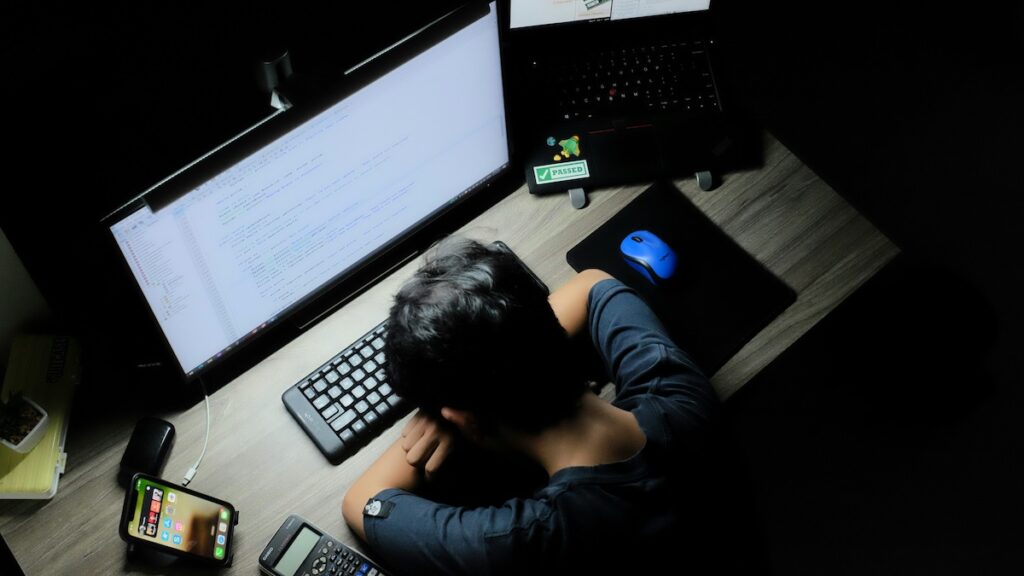
By mid-afternoon, most people working at a screen know exactly what screen fatigue feels like. The eyes feel heavy. Text that was sharp at nine in the morning has started to blur at the edges. There is a dull pressure behind the eyes that is not quite a headache but is heading that way. And the idea of looking at the screen for another two hours feels, for a moment, genuinely unpleasant.
This is not a concentration problem or a motivation problem. It is a physical response to sustained visual demand, and it responds to practical intervention far better than most people realise before they try.
What Is Actually Happening to Your Eyes
Screen fatigue builds from a few things happening simultaneously, and separating them matters because different causes respond to different solutions.
The focusing muscles of the eye, the ciliary muscles that control the shape of the lens, hold a near-focus position continuously during screen work. They were not designed for this. Across a full working day, that sustained contraction produces the same kind of fatigue a clenched hand would. The blurry vision and aching sensation that arrives in the afternoon is largely this muscle fatigue expressing itself.
Alongside this, blink rate drops during concentrated screen use, often to a third of its natural frequency. The tear film that keeps the corneal surface hydrated breaks down faster than it is replenished, producing the dry, gritty discomfort that is one of the most consistent complaints among screen workers.
Then there is the light itself. Screens emit a higher proportion of short-wavelength blue light than natural light sources. This light scatters more inside the eye, requires additional processing effort to resolve into a clear image, and in evening hours suppresses melatonin production in a way that disrupts sleep. This is the specific problem that blue light glasses address, and it sits alongside rather than replacing the other two causes.
Blue Light Glasses in a Working Day
Blue light glasses carry a lens coating that filters a portion of short-wavelength light before it reaches the eye. Good versions also include an anti-reflective element that eliminates the secondary reflections on the lens surface, which removes a layer of low-level visual effort that accumulates quietly across the day.
For the muscle fatigue element of screen strain, blue light glasses alone do not help. Filtering light does not reduce the sustained focus demand. But for the specific effects of blue light exposure, reduced eye fatigue during extended sessions, fewer screen-related headaches, and notably better sleep quality when worn during evening screen use, the evidence is consistent enough to take seriously.
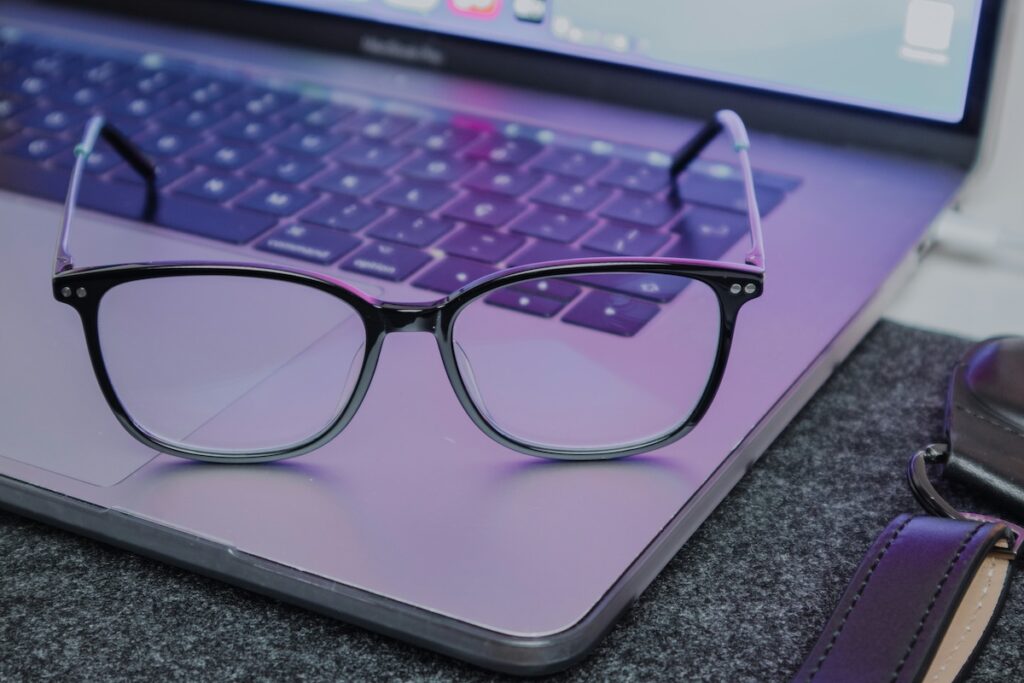
They are available as blue light blocking glasses with no prescription, which suits anyone who does not wear corrective lenses, and as an addition to prescription glasses for those who do. For prescription wearers, having the blue light filtering incorporated into the prescription lens is the cleaner solution, since wearing separate glasses over contact lenses or in addition to standard frames is awkward in practice.
Computer glasses, which are optimised for the intermediate 50 to 70 centimetre screen distance alongside blue light filtering, are worth knowing about if you spend most of the day at a monitor. Standard prescription lenses are ground for distance or reading, not for the intermediate range where screens sit. That mismatch is one of the more underdiagnosed sources of eye strain in people who already wear prescription glasses and assume their vision is adequately corrected for all tasks.
Anti-Glare Measures That Actually Help
Anti glare glasses address a different but related problem. The reflections on a standard lens surface, from overhead lighting, windows behind the user, and the screen itself, create visual noise that the brain manages continuously without registering it as a distinct effort. It contributes to fatigue the same way background noise contributes to cognitive tiredness, quietly and cumulatively.
An anti-reflective coating on any prescription glasses used for screen work removes most of this. It is one of the more evidence-backed interventions in reducing screen-related visual fatigue and is worth specifying as standard on any new prescription lens rather than treating as an optional upgrade.
Screen glare from the monitor itself is a separate issue. Matte screen protectors reduce surface reflections on the display. Repositioning the monitor away from direct window light eliminates the most common source of screen glare entirely. These are physical changes that complement lens coatings rather than replacing them.
Desk Habits That Change How Eyes Feel at Four O’Clock
The 20-20-20 rule is consistently recommended because it works. Every twenty minutes, look at something twenty feet away for twenty seconds. The focusing muscles get a brief recovery window, the blink rate resets momentarily, and the cumulative tension that produces late-afternoon symptoms is interrupted before it becomes the dominant experience of the day.
Setting a timer is the only reliable way to make this happen. Screen work does not have natural pause points that prompt breaks, and the absorbed focus of productive work is precisely the state in which the eye most needs the interruption.
Monitor distance matters more than most people have ever checked against an actual measurement. The optimal viewing distance for screen work is 50 to 70 centimetres, with the top of the screen at or slightly below eye level. A screen too close increases the focal demand on the ciliary muscles across every working hour. A screen too high or too low compounds this with postural loading on the neck. Neither situation feels dramatically wrong, which is why both persist uncorrected in most home and office setups.
Room lighting in relation to screen brightness is the other physical variable worth adjusting. A screen significantly brighter than the room around it creates a contrast boundary that the visual system manages continuously. Matching screen brightness to ambient light, or adding a bias light behind the monitor, removes that contrast load without affecting the usability of the display.
Managing Dry Eyes Through the Day
Lubricating eye drops used once or twice across the working day maintain the tear film that screen-induced reduced blinking breaks down. They work immediately, cost very little, and belong on the desk alongside a water glass rather than in a drawer reserved for emergencies.
Preservative-free versions in single-use vials are worth using over standard multi-dose bottles for anyone applying them regularly during the day, because the preservatives in standard formats can irritate already sensitised eyes with repeated use across a week.
Deliberate full blinks during intensive screen periods are worth the thirty seconds it takes to do them consciously. Full blinks spread the tear film across the corneal surface. The partial blinks that characterise concentrated screen use do not. This is not a dramatic intervention, but it addresses the surface discomfort that dry eye produces in a way that requires nothing except remembering to do it.
The Evening Screen Session
The working day ends and the screen use continues. Streaming, social media, messages, the passive evening consumption that most people use to decompress adds meaningfully to the total daily blue light exposure and directly affects the sleep quality that the following day’s focus depends on.
Blue light glasses worn during evening screen use reduce the melatonin suppression that delays sleep onset. A screen-free period of thirty to sixty minutes before sleeping allows the body’s sleep signalling to function without interference. These two changes address the circadian cost of evening screen exposure in a way that benefits the following day’s visual and cognitive performance, which is the return that makes them worth building into a routine rather than treating as optional wellness additions.
The Bottom Line
Screen fatigue is not inevitable. It is a predictable physical response to conditions that can be modified. Blue light glasses, anti-reflective lenses, a correctly positioned monitor, the 20-20-20 rule, eye drops on the desk, and an evening routine that reduces late-night blue light exposure form a practical set of interventions that together change how eyes feel at the end of a working day considerably more than any single change would.
None of them require significant cost or significant effort. They require the decision to do them, and then the consistency to keep doing them until the habit replaces the fatigue.