


Downpatrick rarely makes the national headlines. That’s exactly why it matters. It’s where future winners learn to dig deep. It’s where jockeys earn their stripes. And it’s where sharp stables make informed decisions that shape entire campaigns.
The past, present, and future of this course aren’t three separate stories as they’re one connected advantage. Here’s how it plays out.
A Legacy Built on Terrain and Timing
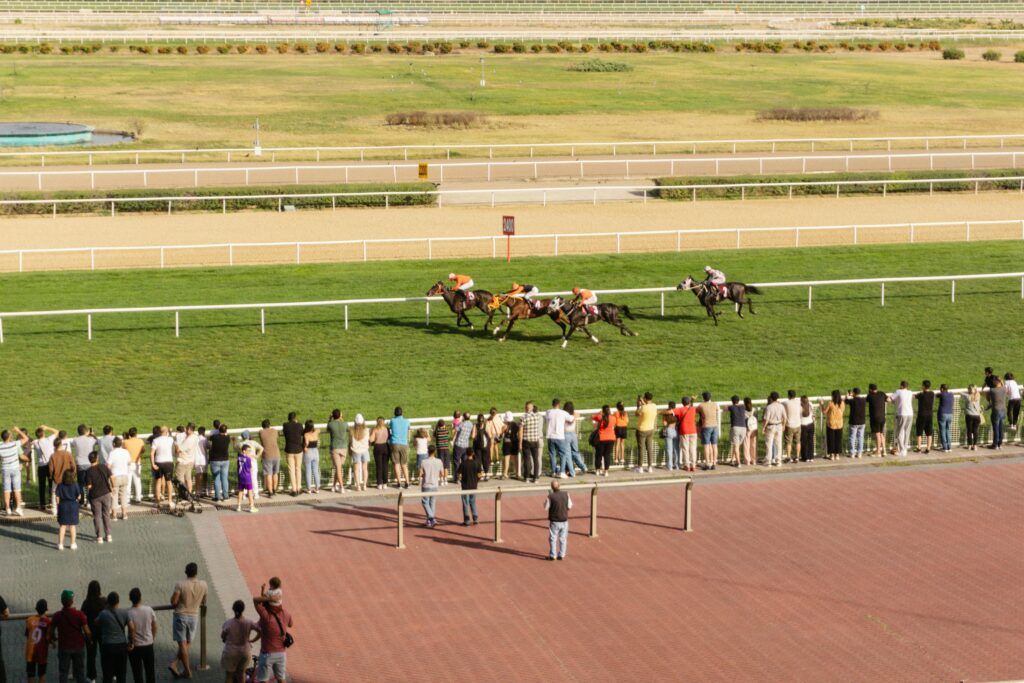
Downpatrick’s historical roots set the tone for how the course has developed both in reputation and technical challenge. The track’s positioning in the rolling hills of County Down adds to the tactical complexity. The right-handed, undulating course demands more than just speed. It forces jockeys and trainers to think three fences ahead, not one.
In the 18th and 19th centuries, this course was a test for emerging talent. It wasn’t forgiving. Flatter tracks allowed more margin for error. Downpatrick didn’t. It exposed weaknesses in balance, conditioning, and timing. Horses that excelled here were built for it and handled by riders who knew how to tackle every inch.
That challenge is still very real today. It’s what makes Downpatrick so appealing to punters who study race flow closely.
With shifting race tempo and tactical changes mid-run, it’s one of the more intriguing tracks for live betting, available on most major platforms. For those looking to capitalise on those split-second insights, FanDuel Racing offers a dedicated space to follow similar races and place wagers with live odds across the card. Watching how a horse handles the climb or a jockey switches lanes can quickly turn sharp instincts into actionable plays, if you’re ready.
Understanding the Modern Profile
In its current form, Downpatrick isn’t attracting the massive headline races. That’s not a weakness but a strategic position.
It’s one of the few courses where developing stayers and maiden hurdlers can learn their trade without being thrown into the deep end too early. The ground is often testing. Conditions fluctuate rapidly. That makes it an ideal environment to assess potential under real stress.
Smart stables don’t send their best-bred animals here for easy wins. They use the track as a filter.
If a horse can navigate Downpatrick’s awkward cambers, cope with the climb from the final bend, and still find something in reserve, it’s ready for tougher circuits.
Trainers know it. Downpatrick isn’t just for show. Win here, and chances are your horse is better than the market thinks. The placement stats in higher-grade races prove it.
Race Planning and Placement Strategy
Getting the race calendar right is half the battle. Downpatrick’s fixtures fall at crucial transition points in the season.
March and August cards, in particular, serve as key litmus tests. Trainers with ambition and foresight use these dates to sharpen fitness or test schooling under pressure.
This creates a pattern that sharp bettors and analysts should watch closely. Horses arriving here fresh off the back of breaks often signal intent, not just in terms of fitness, but also strategic target-setting.
A runner aimed at Galway or Listowel will often start their path here. Look at entry patterns across three years, and the trend is hard to ignore. When a mid-level trainer travels north for a Downpatrick maiden in spring, the move often sets up a campaign tilt, not a one-off gamble.
Jockey Intelligence and Track Craft
The track’s narrow layout and elevation changes make it brutally honest. There’s little room for positioning errors, and not every jockey has mastered its rhythm.
Those who have logged hours here, particularly locals, consistently outperform less familiar names, regardless of horse quality.
Data over the past five seasons confirms that jockeys with substantial experience at Downpatrick tend to post win rates well above the course average. For example, Keith Donoghue (89 rides) strikes at 18%, J. W. Kennedy (63 rides) at 24%, and Mr P. W. Mullins (28 rides) at a remarkable 39%.
Knowing when to sit in, when to press, and how to conserve energy down the back straight are skills that can’t be taught in a textbook. Jockey bookings here are about ability and context.
The edge comes from hands that know the turf, not just the stats. It’s also no coincidence that repeat winners often come under riders with a proven Downpatrick record. That’s because they know how to manage the climb and time the final move with precision.
Still Teaching, Still Testing
Downpatrick racing is where mistakes are punished and preparation pays. If you’re analysing horses, trainers, or form without factoring in the nuances of this course, you’re not seeing the full picture. The past shaped its reputation. The present is where strategy sharpens. And the future belongs to those who understand that this old course still teaches new tricks.