


UK Fisheries Minister meets the Northern Irish industry to discuss the on-going crisis faced by fishermen
The local fishing industry is facing the Perfect Storm. The cumulative impact of the ongoing fuel crisis, issues with availability of work visas for overseas crew, depressed prices for local landings and an ever-increasing reduction in available fishing areas just a few of the challenges currently faced.
The fuel crisis was top of the agenda at a meeting arranged by Jim Shannon MP with the UK Fisheries Minister Stephen Morgan last week.

Fishing industry leaders Dr Lynn Gilmore, CEO of the Northern Ireland Fish Producers Organisation (NIFPO) and Brian Chambers of the Anglo Northern Ireland Fish Producers Organisation (ANIFPO) joined Jim Shannon MP at the meeting in Westminster to make the case for emergency support for the local industry.
They were supported by Mike Cohen of the National Federation of Fishermen’s Organisations (NFFO) as the current crises affect industry across the UK, not just in Northern Ireland.
Jim Shannon MP speaking to Minister Stephen Morgan said: “The cost of fuel is making an increasing number of fishing businesses economically unviable.
“At the current levels, fuel represents at least 50% of operating costs and many local vessel owners have been using their personal savings to pay crew wages, insurance, vessel maintenance costs and harbour dues in the hope that fuel costs will come down to prices seen prior to the conflict in the Middle East.
“Fishermen are price takers and when their overheads increase they cannot add a fuel surcharge or reclaim any of that additional cost from their buyers.”

Dr Lynn Gilmore of the NIFPO also pressed the Minister and said: “France, Spain, Ireland and others are providing financial aid for their fishermen to support them through the fuel crisis.
“This creates unfair competition for local fishermen who are often fishing for the same species, in the same areas with no support.”
Dr Gilmore demonstrated to the Minister that vessels from the Republic of Ireland are significantly better off due to the fuel support schemes that have been available by the Irish Government since March this year.
Mike Cohen (NFFO) highlighted a joint letter that was recently sent to the Chancellor from fishing organisations across the UK (including Northern Ireland) calling for emergency assistance.
Industry representatives were clear with the Fisheries Minister that many local vessel owners are on the brink of giving up and that support is urgently required to survive the existential threats currently face.
Brian Chambers of ANIFPO gave examples of vessels that have now tied up as going to fish risks losing rather than making money.
A recent open letter from local Ardglass fisherman Conrad Zych, which has been widely shared on social media, was provided to the UK Fisheries Minister Stephen Morgan and highlights the personal stress that the industry is facing:
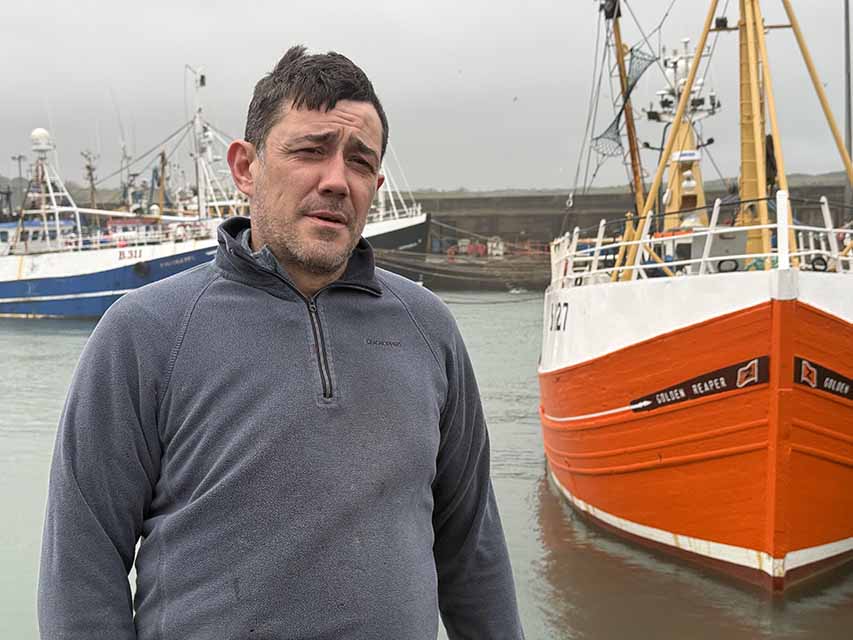
(Photo: Jim Masson/DownNews©),
Conrad Zych said: “I’m reaching out because I don’t know who else to talk to anymore regarding the future of the Northern Ireland Fishing Industry.
Our industry is on its knees, and unless something is done urgently, there won’t be much of a fleet to save.
We have been asking for help for years, yet nothing ever seems to change.
There are three core pressing issues that need to be addressed:
1. Fuel Costs:
The price of fuel is crippling our industry. We are expected to keep our boats working, pay our crews, and cover ever-increasing running costs, yet we received little or no meaningful financial support.
2. Skilled Worker Visas and Crew Shortages.
We are struggling to find crews, and the skilled worker visa system is making an already difficult situation almost impossible.
We have boats capable of fishing but cannot get the crew members needed to work them. We urgently need a practical solution that allows us to recruit and retain experienced fishermen.
3. A Proper Decommissioning Scheme.
If the government is unwilling to provide the support needed to keep our industry afloat, then surely fishermen deserve the opportunity to leave it with some dignity through a fair, properly funded decommissioning scheme. I genuinely believe that if you could ask 100 boat owners across Northern Ireland whether they would sell their vessels tomorrow for a fair price, 99 of them would say yes.
That alone should be an indicator for the government just how serious the situation has become. What makes it even harder to accept is watching the fishing industry in the Republic of Ireland receiving fuel support and decommissioning opportunities while fishermen north of the border feel complete forgotten.
We fish the same seas, face the same rising costs and work just as hard, yet we seem to be treated completely differently.
And to be perfectly honest, we are sick and tired of talking. We have attended meeting after meeting. We have listened to promises, shaken hands and been told that our concerns are understood.
But what has actually changed?
Absolutely nothing that makes a meaningful difference to the fishermen trying to survive. And they aren’t just boats we are talking about. They are family businesses. Livelihoods, and generations of fishing tradition. Entire harbour communities depend on this industry.
Once these boats are gone, they will not come back. The experience, the jobs, the local economy, the communities built around them will change too.
Therefore, we urgently need three things: meaningful help, assistance with fuel costs, and a fair decommissioning scheme for those who simply cannot carry on.
We need action now before there is no fishing fleet left to fight for.
I would appreciate anything that you can do to help us in our hour of need.
Yours,
Conrad Zych,
Ardglass Skipper/Boat Owner.
22nd November 2026“.
***
Minister Stephen Morgan was clear that neither fuel nor visas are within the control of Defra, but as Fisheries Minister he agreed to add his support to industry calls for help from the Treasury on fuel prices and also offered to follow up with the Home Office on the issues being faced on skilled worker visas.
The Minister also accepted an invitation to visit the County Down ports to hear directly from industry in the new year.
Overall, fishermen in Northern Ireland are deeply frustrated and fearful at the progressive loss of fishing grounds from the Clyde Estuary, the Isle of Man, restrictions from the ROI government, and not being able to fish within the 12-mile limit with foreign crews.

The high cost of operating with foreign crews too is a burden as local people generally do not want to work in the fishing industry.
The fishermen have experienced too the setting up of Marine Conservation Zones (MCZs) which further complicates their fishing operations.
And some would even welcome a decommissioning scheme which would help to lower prawn supply and therefore maintain better prices.
Some solutions may be found in Northern Ireland to the current difficulties, but much lies in the corridors of power in Westminster, and the question is, have the mandarins there the will to help the fishermen in their hour of need?
The fishermen also provide food security for the country which in these changing global circumstances is important.
The prawn season starts again slowly in April, and runs through until September. The danger period for the fishermen and boat owners is staying afloat financially for almost five months until their income firms up again into 2027.