

What Are Indices? The Complete Guide to Stock Market Indices for UK Readers in 2026 

Switch on any financial news programme, open any newspaper business section, or glance at a trading platform, and within seconds you will encounter references to indices. The FTSE 100 closed higher. The S&P 500 hit a new record. The Nasdaq fell sharply on technology selling. These terms get reported as though everyone already understands them. But if you are new to financial markets, you might reasonably be asking: what are indices and why does everyone talk about them as though they carry such importance? 

The answer starts with a practical problem. Stock markets are complex places. The London Stock Exchange alone lists hundreds of companies. The New York Stock Exchange and Nasdaq together list thousands. Trying to understand how the market as a whole is performing by looking at individual share prices is not practical; the numbers would be overwhelming and often contradictory, with some stocks rising while others fallsimultaneously. What financial markets needed was a way to summarise overall performance in a single number that could be tracked and compared over time. That is exactly what an index provides. 

Image by <a href="https://pixabay.com/users/geralt-9301/?utm_source=link-attribution&utm_medium=referral&utm_campaign=image&utm_content=2553884">Gerd Altmann</a> from <a href="https://pixabay.com//?utm_source=link-attribution&utm_medium=referral&utm_campaign=image&utm_content=2553884">Pixabay</a>

A stock market index is a measure of the performance of a selected group of stocks. The companies included are chosen according to specific criteria, and their individual price movements are combined into a single figure using a defined calculation methodology. When the index rises, it means that, on balance, the shares within it have increased in value. When it falls, they have declined. The absolute level of the index number is somewhatarbitrary; what matters is whether it is higher or lower than it was yesterday, last month, or last year, and by how much. 

The FTSE 100 is the best-known example in the UK. The Financial Times Stock Exchange 100 Index represents the 100 most highly capitalised companies listed on the London Stock Exchange. It was launched on 3 January 1984 at a base level of 1,000. As of May 2026, the index has risen to around 10,267 points, remaining approximately 19 per cent higher than it was a year ago. When people in Britain refer to how the market isdoing, they almost always mean the FTSE 100. Its performance is treated as a proxy for the health of British business, though that analogy has important limitations. 

The way an index is calculated has a significant impact on what it actually represents. The most common method used by major indices including the FTSE 100 and the S&P 500 is market capitalisation weighting, whereeach company’s influence on the index is proportional to its total market value. The largest companies by market capitalisation have the greatest effect on where the index moves. This means that when a handful of giantcompanies have a bad day, the whole index can fall significantly even if the majority of the other constituents are holding steady or rising. 

Different indices serve different purposes and capture different parts of the market. The FTSE 250 covers the 101st to 350th largest companies on the London Stock Exchange and is generally considered a betterbarometer of the domestic UK economy than the FTSE 100, because it contains a higher proportion of companies that earn most of their revenue within Britain. Many FTSE 100 constituents are large multinationals whosefortunes depend more on global conditions than domestic ones. Shell and BP, for example, respond primarily to the oil price rather than to what is happening in the British economy. 

Globally, the most closely watched indices include the S&P 500 in the United States, which covers 500 large American companies and is widely considered the most important gauge of US stock market performance. The Dow Jones Industrial Average, one of the oldest indices in the world, tracks just 30 large American companies. The Nasdaq Composite is heavily weighted toward technology stocks and has been one of the most volatile major indices in 2026 as artificial intelligence enthusiasm and profit-taking have alternated in driving sentiment. The DAX 40 in Germany is the main European benchmark, covering the 40 largest companies on the Frankfurt Stock Exchange. 

One important reason indices matter for traders rather than just long-term investors is that they can be traded directly as financial instruments. Through products such as contracts for difference and exchange-traded funds, traders can take positions on the direction of an entire index rather than picking individual stocks. Trading an index offers a degree of built-in diversification; a single company can collapse entirely, but an index of 100companies absorbs individual failures without being destroyed. In 2026, for instance, a significant number of individual S&P 500 stocks experienced drawdowns exceeding 40 per cent during a volatile period in the first quarter, yet the index itself declined far less than that because losses in some constituents were offset by gains in others. 

Index constituent changes also create trading opportunities. The composition of major indices is reviewed quarterly, and when a company is added to or removed from an index, it triggers mechanical buying or selling by the large index-tracking funds that must adjust their holdings to match the index. Traders who anticipate these changes can position themselves ahead of the institutional flows. 

Understanding what indices are and how they work is genuinely foundational knowledge for anyone who wants to engage with financial markets intelligently, whether as a long-term investor building wealth over decades or as a more active trader looking to capitalise on shorter-term market movements. The numbers that scroll across financial news tickers every day are not arbitrary; they are the distilled story of how millions of individual price decisions aggregate into a single measure of collective market sentiment.

Hazzard: Strangford Bridge Could Unlock Down

Strangford Lough bridge would be the key to drive economic and social development across East Down says Hazzard

Sinn Féin MP Chris Hazzard has welcomed a positive meeting with Infrastructure Minister Liz Kimmins, during which he outlined the case for a feasibility study into a fixed link between Portaferry and Strangford.

The South Down MP said: “Strangford Lough needs a modern, reliable transport connection to improve lives and unlock economic potential, and I was glad to have the opportunity to make that case directly to the Minister during her visit to Strangford this week.

Sinn Féin South Down MP Chris Hazzard has brought the issue of the Strangford Bridge to The Infrastructure Minister Liz Kimmins seeking funding for a feasibility study.

“A fixed link would ensure people and businesses on both sides of the lough can rely on a dependable 24-hour connection, making a real difference to communities across the Ards Peninsula and Lecale.

“Following discussions with local campaigners, it is clear there is strong support for an evidence-based approach to improving regional infrastructure.

“This project also offers a unique opportunity to enhance climate resilience and integrate green technology.

“A study could explore the feasibility of harnessing the powerful tidal currents of the Narrows for renewable energy, while also incorporating active travel provision for cyclists and pedestrians.”

Mr Hazzard added: “An evidence-based feasibility study is the next logical step to properly examine transport needs, environmental considerations, cost and design options.

“I welcome the Minister’s openness to engaging further on this issue and her commitment to gathering as much information as possible to help inform the next steps.

Newcastle Hotel Receptionist Receives Award

Award success for Newcastle Hotel at NIHF Receptionist Awards

The winners of the 2026 NIHF (Northern Ireland Hotel Federation) Receptionist Awards have been revealed, celebrating front-of-house team members whose skill, adaptability and professionalism play a vital role in delivering outstanding guest experiences across Northern Ireland’s hotels.

The competition continues to attract a remarkable number of entries and this year marks the 20th staging of the awards, reflecting the strength and depth of talent within the sector.

The Team Category winner was selected through an independent mystery shopping assessment carried out by Insight6. Those competing for the Receptionist of the Year titles undertook a series of practical challenges organised by Life Adventure Company, together with an industry knowledge test and formal interview process.

Fiachra Doyle from Burrendale Hotel, Country Club & Spa, runner-up in the Most Promising Receptionist category.

After months of deliberation, the awards were announced by compere Pamela Ballantine at a glittering ceremony on 13th May 2026 at the Armagh City Hotel.

The winner of the ‘Reception Team of the Year’, supported by Net Affinity, was Shipquay Boutique Hotel in Derry-Londonderry. Dunluce Lodge in Portrush was awarded second place, with Corick House Hotel & Spa in County Tyrone taking third place.

In the ‘Most Promising Receptionist’ category, supported by Tourism Northern Ireland, Thomas Keeley-Henderson from the Stormont Hotel in Belfast was named winner.

Fiachra Doyle from the Burrendale Hotel, Country Club & Spa in Newcastle was runner-up, with Samantha Forsythe from Crowne Plaza Belfast in third place.

The ‘Receptionist of the Year’ award, supported by Access Hospitality, was presented to Tracey Forbes from The Lodge Hotel in Coleraine. Kristen McFeely from the Waterfoot Hotel in Derry-Londonderry was runner-up, with Clare Sweeney from Bishop’s Gate Hotel in Derry-Londonderry taking third place.

Northern Ireland Hotels Federation (NIHF) President Vicky Green congratulated all the winners and finalist and said: “Reaching the final of the NIHF Receptionist Awards is a significant achievement and reflects the dedication, professionalism and skill demonstrated by all participants throughout a rigorous process.

Ringing Success at the NIHF 2026 Reception Awards: Winners of the 2026 NIHF Receptionist Awards were revealed by compere Pamela Ballantine at a ceremony hosted by the Northern Ireland Hotels Federation (NIHF) on Wednesday 13th May at the Armagh City Hotel. Fiachra Doyle from Burrendale Hotel, Country Club & Spa, runner-up in the Most Promising Receptionist category, pictured with his team.

“Hotels are, and always will be, a people business, and reception teams play a vital role in shaping the guest experience. They set the tone from the moment a guest arrives and are central to the success of every hotel.

“What stood out this year was the confidence, passion and professionalism shown by all our finalists. Their commitment to hospitality and to delivering outstanding guest experiences highlights the strength of talent across our industry.

“The awards also provide an important platform to recognise excellence, share best practice and showcase career opportunities within our sector. My own career began at reception, and I know first-hand the impact this role can have in building a successful career in hospitality.”

Vicky added: “We are grateful to our sponsors and partners for their continued support, including Tourism Northern Ireland, Access Hospitality, Net Affinity, Armagh City, Banbridge & Craigavon Borough Council, Life Adventure Company and Insight6.

“We also thank the Armagh City Hotel for hosting the awards dinner and the Clayton Hotel for the assessment day.”

The competition, organised by the Northern Ireland Hotels Federation, was launched in 2004 and has grown in popularity over the years.

How Property Owners are Future-Proofing Outdoor Spaces 

Outdoor spaces across the UK are undergoing a quiet transformation. From private gardens to shared courtyards and commercial plots, property owners are rethinking how these areas are designed, and not just for today’s conditions but for the decades ahead. 

Photo by Tierra Mallorca on Unsplash
  1. Designing for Wetter, Wilder Weather 

Heavier and more frequent rainfall is changing how property owners approach drainage, surfaces, and layout. Sustainable drainage systems (SuDS) are central to this shift, slowing and filtering water instead of sending it straight into already-strained sewers. According to the House of Commons Library, the government updated the National Planning Policy Framework in 2024 to strengthen SuDS requirements and introduced new national standards in June 2025, which is the first major update in a decade. For property owners, permeable paving and planted drainage features are no longer niche choices; they’re becoming the expected baseline. 

  1. Greener Spaces That Work Harder 

Wildlife-friendly design has moved from aspiration to obligation. Biodiversity Net Gain (BNG) became mandatory for developments in England from February 2024. Now, a measurable 10% improvement in biodiversity value is a condition of planning permission, as set out in government guidance. In practice, this is encouraging features like rain gardens, planted borders, and native trees in outdoor spaces that might previously have been left as hard standing. The upshot for property owners is that greener design now carries genuine planning weight, not just aesthetic appeal. 

  1. Making Outdoor Areas Heat Resilient 

Summers are getting hotter. The UK recorded its highest-ever temperature in July 2022, and prolonged heatwaves are now factored into long-term property planning. Shade trees, lighter surface materials, and water features are all being incorporated into outdoor spaces to keep them usable during hot spells. Green walls and canopy cover are gaining traction in urban courtyards where heat island effects are most pronounced. 

  1. Choosing Materials That Last 

With outdoor spaces expected to withstand both heavy downpours and intense heat, material choice matters more than ever. Concrete paving slabs are a practical choice for this environment. They’re solid, low-maintenance, and capable of handling freeze-thaw cycles and surface water runoff without warping or cracking. For landlords and commercial property owners, especially, surfaces that hold up under variable conditions without constant upkeep are an ideal long-term investment. 

The shift towards future-proofed outdoor spaces is gathering pace across the UK. Whether driven by planning requirements, climate pressures, or a simple desire for spaces that stay functional year-round, property owners who plan ahead now are likely to avoid costly remediation work later. 

Preakness Stakes 2026 Betting Guide and Top Contenders

The Preakness Stakes rarely lacks drama, though the 2026 edition feels especially unusual. For the first time in the modern era, the race will move from Pimlico Race Course to Laurel Park during Pimlico’s major renovation project.

That venue change alters more than tradition. Laurel Park’s different layout could reshape race tactics, pace scenarios, and betting strategies throughout the field. Fresh contenders, uncertain Derby participation, and unfamiliar track dynamics have created a fascinating handicapping challenge ahead of the 151st Preakness Stakes on May 16, 2026.

Photo by Keith Luke on Unsplash

Why the 2026 Preakness Stakes Feels Different

Triple Crown races always bring urgency, though the Preakness intensifies it with a quick two-week turnaround after the Kentucky Derby. Horses, trainers, and bettors must all adapt quickly before the second leg of the Triple Crown.

The 2026 edition feels even more unusual because the race will temporarily move from Pimlico to Laurel Park during Pimlico’s ongoing renovation ahead of its planned return in 2027. That shift could significantly influence both race tactics and betting strategy.

Pimlico traditionally favors early speed, while Laurel’s wider turns and longer stretch may favor stalking horses and late closers. A smaller 14-horse field and increased emphasis on track familiarity only add to this year’s unpredictability.

Understanding Preakness Odds

The Preakness attracts casual viewers every year, though experienced horseplayers know the race often rewards flexibility. Kentucky Derby hype tends to dominate the headlines, while strong betting opportunities can emerge elsewhere on the board.

Horse racing odds may seem complicated at first, but the basics are straightforward. Morning-line odds establish expectations before betting begins, giving bettors an early sense of how the field may be viewed heading into race week.

Live odds movement often reflects shifting public sentiment after workouts, post positions, and track reports are released. Many bettors follow updated contender movement and race-week pricing on FanDuel, using it as a way to track how the market is reacting in real time as opinions and money flow into different horses.

Popular Preakness Betting Options

Preakness weekend generates heavy interest in exotic wagers because the race often combines heavily backed favorites with dangerous longshots. That combination can lead to more volatile payouts across exotic tickets.

Popular betting options include:

  • Win bets for picking the outright winner,
  • Exactas requiring the top two finishers in order,
  • Trifectas covering the top three finishers,
  • Daily doubles linking winners across consecutive races.

Each wager offers a different level of difficulty and potential return. Straight win bets remain popular with casual bettors, while exactas and trifectas appeal to players pursuing larger payouts in unpredictable Triple Crown races.

The Horses Everyone Will Be Talking About

Early odds only tell part of the story. Form, freshness, trainer patterns, and track suitability all become critical once the gates open, especially in a 2026 Preakness field shaped by unusual circumstances at Laurel Park.

Several contenders enter with advantages already influencing betting conversations:

  • Crude Velocity, the unbeaten colt trained by Bob Baffert, has drawn attention with elite speed figures and early 4-1 support. Bettors will be watching whether his speed can hold through Laurel’s longer stretch.
  • Taj Mahal brings valuable local experience, entering undefeated in three starts at Laurel Park, including a Federico Tesio Stakes victory. That familiarity with the track could prove significant against horses making their first appearance at the venue.
  • Silent Tactic has also emerged as a notable contender after skipping the Kentucky Derby. With competitive speed figures and fresher legs, he represents the growing trend of Preakness runners entering with less wear than Derby horses.

Public attention will focus on Derby headlines and high-profile trainers, but experienced bettors often look beyond reputation. In a field this unpredictable, freshness, local experience, and pace setup could matter more than name recognition.

2026 Angels Bettors Should Watch

Successful Preakness betting rarely comes from blindly backing the biggest name. Strong wagering strategies usually emerge from identifying situations the broader market undervalues.

The Local Track Advantage

Laurel Park experience could matter more than national headlines in 2026. The temporary venue change has created unfamiliar conditions for much of the field ahead of this unusual Triple Crown test.

Taj Mahal’s local success stands out because many contenders have never faced Laurel Park under Triple Crown pressure. Horses familiar with the track’s turns, stretch, and racing rhythm could gain an important edge.

Pace Could Decide Everything

Pace handicapping becomes especially important at Laurel Park, where the longer stretch could create more opportunities for stalking horses and late closers. Pure front-runners may struggle if they push the pace too aggressively early.

Mid-pack runners capable of settling early and accelerating late could become attractive betting targets. Bettors who correctly anticipate the race’s pace setup before the broader market reacts may uncover stronger betting opportunities.

The Case for Overlooked Contenders

Longshots deserve attention in races shaped by public hype and unfamiliar conditions at Laurel Park. Horses with improving form, local experience, or underrated trainers can become more competitive than their odds suggest. Many experienced bettors look beyond the favorites and focus on contenders whose odds may not fully reflect recent form, track conditions, or projected pace setup.

Race Week Storylines That Could Shift the Odds

Odds rarely stay static during Triple Crown week. News, workouts, and post positions can quickly reshape public sentiment as bettors react to fresh information ahead of race day and final pre-race developments at Laurel Park.

The May 11 post-position draw could impact betting strategy immediately. Inside posts may help tactical speed horses save ground early, while wider draws could force more aggressive positioning into the first turn at Laurel Park during the early stages.

Betting markets also tend to shift rapidly after standout workouts or positive trainer comments. Public enthusiasm can quickly drive attention toward certain contenders, especially during Triple Crown races where momentum and headlines often shape the conversation.

A Preakness Unlike Recent Years

The 2026 Preakness Stakes feels more unpredictable than most recent editions. Laurel Park’s temporary hosting role and uncertain Derby participation have created a far different betting environment than usual.

Track familiarity, fresher contenders, and tactical versatility could become more important than reputation alone. Many bettors will closely watch how horses adapt to Laurel’s unique setup and changing pace dynamics during the race itself.

One thing feels certain heading into May 16: this year’s Preakness is unlikely to unfold like a traditional Triple Crown race with so many shifting variables.

*Content reflects information available as of 06/05/2026; subject to change

The Balmoral Show 2026 Is Buzzing

Day 2 at the Balmoral Show at the Eikon Centre and the crowds roll in

Amelia, Caleb and Remi Gordon from Ballygowan at the Refillution station at the Eikon Centre at the Balmoral Show.

Look Who’s Joining the Refillution at the Balmoral Show.

Visitors to the Balmoral Show are being encouraged to join NI Water’s growing ‘Tap Refillution’ by choosing reusable water bottles and refilling from the tap.

The Tap House offers showgoers a chance to enjoy fresh, high-quality drinking water, learn more about how water is treated and tested, and pick up a free reusable bottle.

The initiative aims to tackle the estimated 420 million single-use plastic bottles used across Northern Ireland each year.

Since launching in 2019, NI Water’s Refillution campaign has distributed more than 50,000 reusable bottles, helping to reduce plastic pollution and protect waterways and marine life.

Visitors are invited to stop by stand EK101, refill, relax and play their part in cutting waste by choosing tap water over single-use plastics.

Find out more at:

 www.niwater.com/refillution-join/

Pictured are Amelia, Caleb and Remi Gordon from Ballygowan showing their support for the campaign at NI Water’s Tap House stand in the Eikon Exhibition Centre.

Michael and Lara Harrison from Kircubbin show their support for teh Refillution initiative by NI Water to encourage less empty bottles being discarded and everyone being properly hydrated.

***

Local experts urge farming community to prioritise their own health at Balmoral Show – not just their animals’

A local farmer says he used to prioritise his cattle’s health over his own until an accident at his farm left him vulnerable to eye damage.

As Balmoral Show continues, Lewis Williamson from Scarva is sharing his story after a piece of metal shrapnel became embedded in his eye, just weeks before his wedding to fiancée Chloe Woods, a supervisor at Specsavers Newry.

While carrying out welding work on his farm, Lewis removed his protective mask, only for an unexpected spark to send the fragment into his eye.

Lewis Williamson at work on the farm.

Following a visit to his local Specsavers, the shrapnel was removed by optician director, Will Stevenson, using NI PEARS (Primary Eyecare Assessment and Referrals Services), and Lewis was able to return to the farm on the same day with prescribed eye drops to support his recovery.

Will Stevenson from Specsavers Newry explained; “The fragment was causing irritation, and if left untreated, could have led to further inflammation and complications. 

“I was able to extract the piece of metal from Lewis’s eye using a sterile needle, reducing the risk of infection or long-term damage.

“We were very happy that we were able to help ensure Lewis could see Chloe walking down the aisle on their wedding day, and avoid red, irritated eyes in their wedding photos.”

Since the incident, Lewis has made his own health and safety a priority, consistently wearing protective eyewear and attends regular eye tests in-store.

At this year’s Show, which runs until Saturday 16th May at the Eikon, Balmoral Park, Specsavers will be on hand with free hearing screenings, sight simulators and a team of local experts, including their local Home Visits service, to raise awareness of the importance of eye and hearing health in farming environments, urging the agri-community to prioritise their own health alongside their animals.

The Specsavers team at the Balmoral Show.

Natalie Latham, store partner at Specsavers Lisburn commented; “Farming involves daily exposure to airborne debris such as grass, stones, metal fragments and dust, often travelling at high speed.

“Without proper protection, these can cause serious eye injuries from minor scratches to permanent vision damage.

“There is also exposure to chemicals such as pesticides, fertilisers and cleaning agents, and working with animals and organic materials which can carry bacteria.

“Prevention is always the best approach, and our range of prescription safety glasses and goggles, available through our 2 for 1 offer can help agricultural workers access protection easily. 

“It is equally important that people know local opticians, like Specsavers, can provide immediate care or onward referral if needed.”

There are 24 locally owned and run Specsavers stores in towns and cities across Northern Ireland, with Home Visits teams covering the entire region for customers who are unable to attend a store in person.

Visitors can find Specsavers at stand EK69 in the Eikon Shopping Village throughout the Balmoral Show.

For tickets, visit:

balmoralshow.co.uk 

and to find your nearest Specsavers store, visit specsavers.co.uk.

Nesbitt Says No To Cervical Screening Inquiry

Colin McGrath MLA says the Cervical screening public inquiry decision will cause further hurt

SDLP Opposition Health Spokesperson Colin McGrath MLA has said a decision by the Health Minister not to hold a public inquiry into the cervical screening scandal in the Southern Trust “will cause further hurt to those affected.”

He acknowledged the findings of the independent expert review by Professor Sir Frank Atherton, but said many impacted by misread smear test results would still be left with unanswered questions.

South Down MLA Colin McGrath said: “Today’s statement will be deeply difficult for many of the women and families who have spent years campaigning for answers and accountability.

South Down MLA Colin McGrath has expressed his concerns at Health Minister Mike Nesbitt’s decision not to call a public inquiry into the cervical screening issues.

“While the report identifies serious failings in oversight and governance, many people will be disappointed by the Minister’s decision not to establish a public inquiry.

“For the women involved, this has always been about trust in the health system and whether their concerns were properly heard and acted upon. This decision will leave many feeling that their voices have once again gone unheard.

“The report raises serious issues involving both the Southern Trust and the Public Health Agency and those findings must now lead to meaningful change.

“These failings can never be repeated and while I accept progress has been made, there is still significant work to do to rebuild public confidence.

“I want to pay tribute to the Ladies with Letters campaign for their strength, dignity and persistence in ensuring this scandal was properly investigated.

“The very least they deserve is to have their concerns treated seriously and with respect.

“Because of their efforts, more women should feel confident coming forward for screening and it is vital that trust in these services continues to be rebuilt.”

Health Report On The Prevalence Of Autism

• Publication of The Prevalence of Autism (including Aspergers Syndrome) in School Age Children in Northern Ireland Annual report 2026

The Department of Health has today published The Prevalence of Autism (including Aspergers Syndrome) in School age Children in Northern Ireland. Annual report 2026. These figures have been extracted from the Northern Ireland School Census provided by the Department of Education.

Boys are 2.3 times more likely to be autistic than girls according to a Department of Education report.

Key Facts and Figures:

• The estimated prevalence of autism within the school aged population in Northern Ireland was 6.2% in 2025/26.

• There was a marked difference in the prevalence rates of autism between the sexes, with males 2.3 times more likely to be identified with autism than females.

• The Northern Ireland urban population has a statistically significant higher prevalence rate of autism than the rural population.

• Using the Northern Ireland Multiple Deprivation Measure (MDM) ranking, in 2025/26 the rate of autism in the most deprived MDM decile was over 38% higher than the Northern Ireland average.

• In 2025/26, 19% of children diagnosed with autism did not have any special educational needs, and 65% were classified at Stage 3 of the Special Educational Needs (SEN) Assessment, indicating they had a Statement of SEN.

This information was collated by Community Information Branch within the Department of Health.

This publication is available online at: 

www.health-ni.gov.uk/articles/autism-statistics.  

***

Help re-shape SEN classroom support

More than 2,200 submissions have been received on planned reforms to special educational needs classroom support.

And there’s still time to have your say, with the public consultation running until Friday May 22nd.

Information on the Education Authority consultation and how to submit a response can be found at: Enhanced Support Model – Public Consultation | Education Authority Northern Ireland.

The aim of the planned reforms is to improve outcomes for children and young people with SEN.

EA has set out how this can be achieved through changing current rigid approaches to classroom support.

The EA is proposing to give schools more flexibility to tailor support to individual needs. Rather than adopting the current “one size fits all” model with its over reliance on individual classroom assistants at all stages, schools will be able to adapt support to the needs of their pupils with SEN at each stage of their development. 

As part of the public consultation process, a series of information sessions has been held, both online and in-person.

Tomas Adell, EA’s Chief Transformation Officer, said: “We are very encouraged by the strong interest in the public consultation and the positive engagement with stakeholders.

“I would encourage everyone with an interest in SEN education to make their voices heard.

“This is a really important opportunity to make lasting changes that benefit children and young people.”

Muir Confirms Farming With Nature Next Stage

Minister Muir announces the next phase of Farming with Nature

DAERA Minister Andrew Muir has announced the next phase of the Farming with Nature (FwN) Package

During today’s Balmoral Show (14 5 26), the Minister confirmed, subject to final approvals, the second year of the Farming with Nature Transition scheme will open next month.

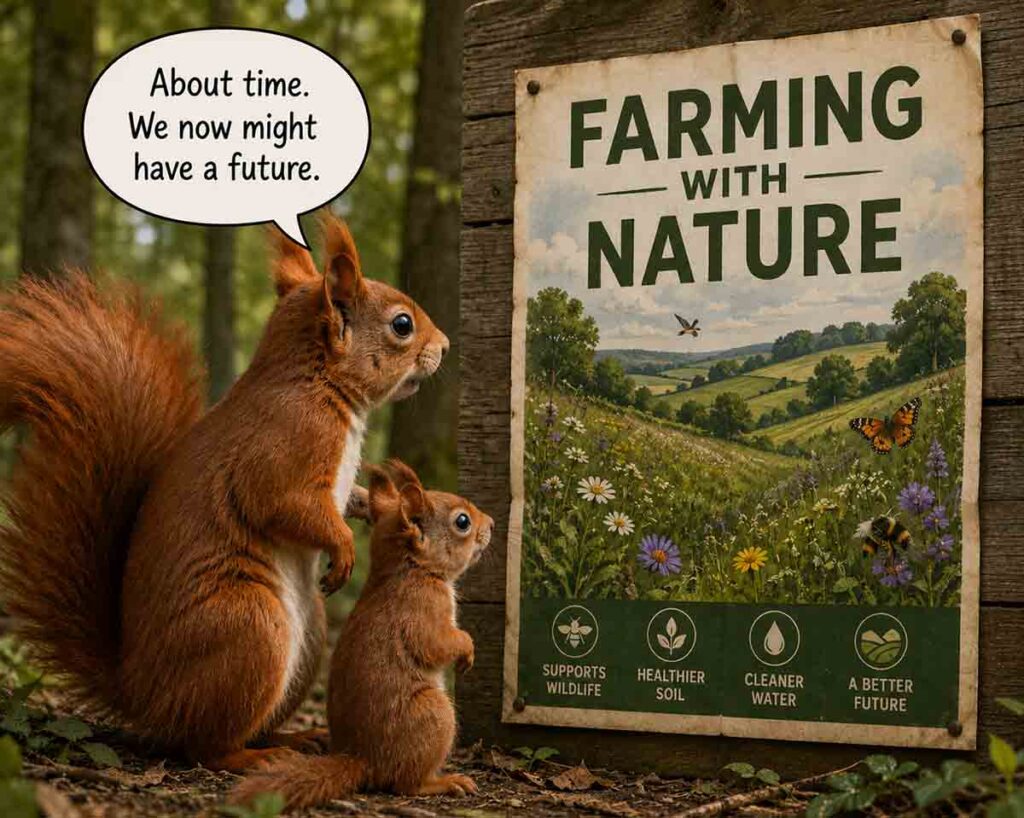
Farming with Nature is a pivotal programme to improve biodiversity on Northern Ireland farms and will expand the range of environmental actions available to farmers.

Minister Muir said today: “Farming with Nature is a key priority within my Department’s Sustainable Agriculture Programme reflecting our shared ambition to support an environmentally sustainable, resilient and thriving farming sector.  

“I am delighted to announce that, subject to final approvals, Year 2 of the Farming with Nature Transition Scheme will open in June, offering farmers an expanded range of environmental actions with increased support available.”

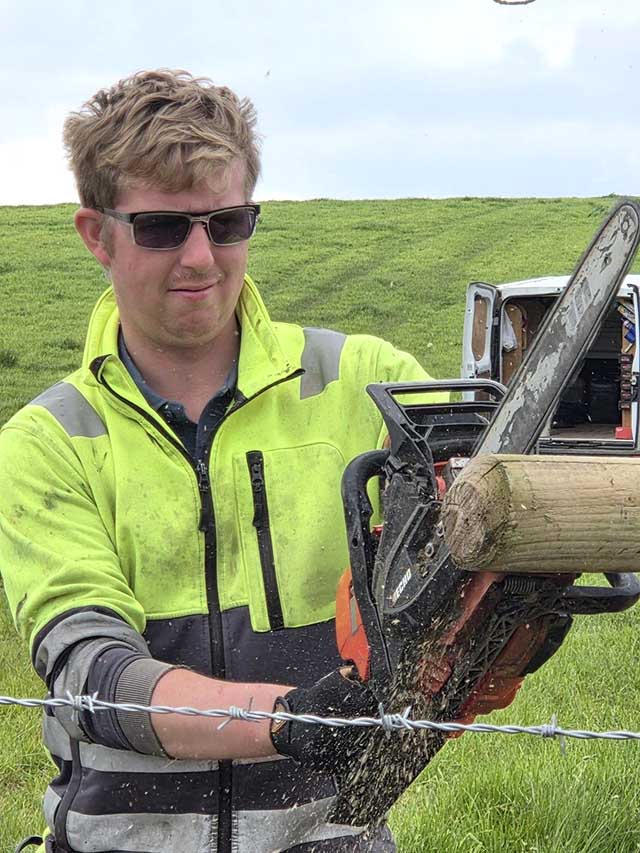
DAERA Minister has announced the next stages in the Farming With Nature initiative while on a visit to the Balmoral Show. (Photo: JimMasson/DownNews- ai ©.)

The additional actions planned for Year 2 will include the establishment of herbal leys, the creation of arable field margins and the ongoing management of habitats created under Year 1 of the scheme. 

These measures will help improve the extent, condition and connectivity of habitats on farmed land across Northern Ireland, delivering lasting benefits for nature and society.

Minister Muir also confirmed plans for further phases of FwN: “I intend to introduce additional strands of the Farming with Nature Package in 2026, including support to farmers and other stakeholders to work together on landscape‑scale environmental projects.

“In addition, a scheme focusing on priority habitats and designated sites is planned for 2026. This scheme will initially prioritise those businesses that have ended their Environmental Farming Scheme (Higher) agreements ”

The FwN Package has been shaped through close and constructive engagement with stakeholders across the agricultural, environmental and wider rural sectors. 

Minister Muir added: “I want to sincerely thank the members of the Farming with Nature stakeholder forum, including the Ulster Farmers’ Union (UFU), the Northern Ireland Agricultural Producers’ Association (NIAPA) and Northern Ireland Environment Link (NIEL), for their ongoing commitment, expertise and collaborative approach.

“Their input has been invaluable in ensuring the FwN is practical for farmers while delivering real benefits for nature and the wider public.”

As a pillar of DAERA’s Sustainable Agriculture Programme, Farming with Nature is designed to support farmers to deliver environmental benefits alongside sustainable food production.  

It aims to enhance biodiversity, strengthen ecosystem resilience and contribute to wider societal benefits such as improved water quality, climate action and thriving rural landscapes.

The rollout of the Package commenced in 2025 with the successful launch of the Farming with Nature Transition Scheme, supporting farmers towards more nature‑friendly farming practices.

Commenting on the announcement Peter McEvoy, Chair, NIEL Sustainable Agriculture Policy Working Group said: “We welcome the opening of the expanded Farming with Nature Transition scheme for 2026, which recognises the importance of agri environment support in rewarding farmers for protecting the ecosystems on which we all depend.  

“We look forward to seeing the Farming with Nature scheme scaled up rapidly to cover priority habitats and landscapes across Northern Ireland and will continue to work constructively with DAERA and industry partners as it develops.”

James Lowe, NIAPA Chair, added: “NIAPA is very supportive of the Farming with Nature package and the expanded list of actions for the scheme in 2026.

“We continue to support further development of the package as it seeks to address environmental pressures whilst supporting profitable farming systems.”

Further details on the opening of Year 2 of the Farming with Nature Transition Scheme will be announced in due course.

Mason Says Irish Language Strategy Must Run

Latest reports on Irish Language Strategy ‘a deliberate, provocative and intolerant approach’ by Gordon Lyons says Cathy Mason MLA

Commenting on reports that Gordon Lyons’ Department for Communities will not bring forward an Irish language strategy before the end of the mandate, Sinn Féin MLA for South Down Cathy Mason said: “This is the latest example of a deliberate, provocative and intolerant approach by Gordon Lyons towards the Irish language.

“The DUP has once again launched an assault on the Irish language in an attempt to shore up its electoral base and win back support from the extreme right of unionism.

Communities MInister Gordon Lyons has been challenged by Cathy Mason MLA to implement the Irish Language Strategy.

“The DUP Deputy First Minister, in recent days waxed lyrical about standing and speaking up for everyone in the north, the reality is that the DUP would rather stand against those in the Irish Language community and will go to any lengths to delay, deter and deny them their rights.

“No amount of political point-scoring will weaken the determination of Sinn Féin or the wider Irish language community to stand up for fairness, equality and rights.

“We support calls for legal action to compel the Communities Minister to introduce an Irish language strategy without any further delays.

“Political unionism’s direction is clear: lurch further to the right, lash out at minority rights, and undermine the spirit of powersharing agreed in 1998 through arrogance and calculated cynicism.”