


26 new Emergency Department consultants are to bolster the hospitals across Northern Ireland
The Health Minister has welcomed the recruitment of up to 26 new Emergency Medicine Consultants who are taking up posts in hospitals across Northern Ireland.
The recruitment is the result of work involving the Department of Health, the Health and Social Care (HSC) Trusts and the Royal College of Emergency Medicine (RCEM) to ensure there are pathways in place for newly qualified Consultants to find employment in the HSC.
Funding for these new posts has been provided by a reduction in spending on locum doctors within Emergency Departments.
Some of the new Emergency Medicine Consultants are already in post, while others are currently going through recruitment processes.
Up to 26 additional consultants should be in post by the end of this year. The new consultants will take up posts across all five geographic Health and Social Care Trusts and will be deployed according to clinical and staffing need.
Health Minister Mike Nesbitt said: “We’re all acutely aware of the very significant pressures on our hospital Emergency Departments. Both staff and patients want us to do all we can to alleviate those pressures and that’s been a central focus for my Department and Trusts in recent months.
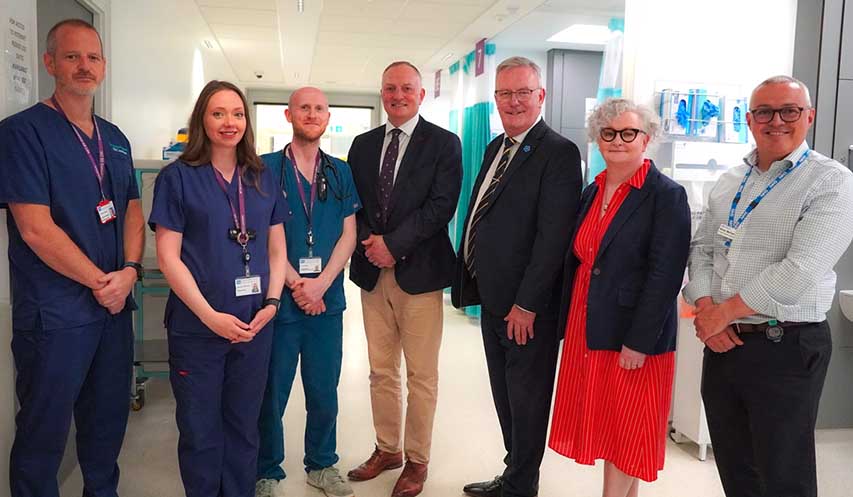
“Stabilising our current workforce and strengthening our future workforce is an important part of our work across the HSC system.
“At a meeting with the RCEM [Royal College of Emergency Medicine] last year, I recognised that it was incongruous for the HSC to be putting specialist Emergency Medicine doctors through training and then having no vacancies for them when they qualified, while at the same time spending around £30m a year on locum cover for Emergency Departments.
“I asked Departmental officials to work with the Trusts and the RCEM with the aim of offering posts to the newly qualified Consultants when their training was completed, funded from within Trusts’ current budgets.”
Welcoming the recent recruitment Professor Lourda Geoghegan, Deputy Chief Medical Officer, said: “I am very encouraged by early reports from Trusts where new Consultants have taken up post.
“This is not only a reduction in spending on medical locums, but also the added benefit of increasing the presence of senior decision-making in EDs where staff continue to work under considerable pressure.
“I think there is merit in extending this very effective approach to other specialties and disciplines.”
Dr Russell McLaughlin, Vice President for RCEM Northern Ireland said: “We would like to thank the Health Minister and the Department of Health for responding to our call to strengthen the consultant workforce and future proof the Emergency Medicine specialty.
“Our census, carried out last year, revealed a critical shortage of these highly skilled healthcare professionals, with only half the recommended number of Emergency Medicine consultants in place – with just one per 7,786 ED attendances.
“The need for expansion is clear – it’s vital our departments have these senior decision makers, who are qualified and ready to step into these roles, which are critical for patient safety.”
The Clinical Director of Unscheduled Care in the South Eastern Health and Social Care Trust, Dr Andrew Dobbin welcomed the Health Minister’s focus on the recruitment of Emergency Medicine Consultants and said: “In the past six months, five new Emergency Medicine consultants have been recruited in the Trust, working across the Downe, Lagan Valley and Ulster Hospitals.
“These are doctors who have undertaken a robust training scheme over a minimum of six years, across many sites, gaining specialised expertise.
“Their expertise means they can make faster, more accurate decisions about patient care, improving waiting times and patient outcomes as well as reducing admissions to hospital, which can relieve the significant pressure on the wider hospital system.”