


Julie Holland from Millisle talks about her journey with Parkinson’s Disease to help others
A brave lady from Millisle has shared her experience with Parkinson’s Disease on World Parkinson’s Day.
The South Eastern Trust is delighted that Julie Mulholland from Millisle is chatting about her journey with Parkinson’s Disease and that she is who raising awareness about the realities of living with this illness.
Parkinson’s Disease is a progressive neurodegenerative condition that affects the brain and causes movement problems such as tremor, stiffness and slowness.
Julie was diagnosed with Parkinson’s in June 2021, after more than a year of troubling symptoms. She said: “I first noticed something wasn’t right around 2020,”
Julie recalled. “I had pain and stiffness in my joints, I couldn’t sleep and when I tried to pick up my phone, I realised my hand was shaking.
“I initially thought it was a trapped nerve, so I went to Physiotherapy repeatedly. They mentioned frozen shoulder and calcification, but nothing was improving.”
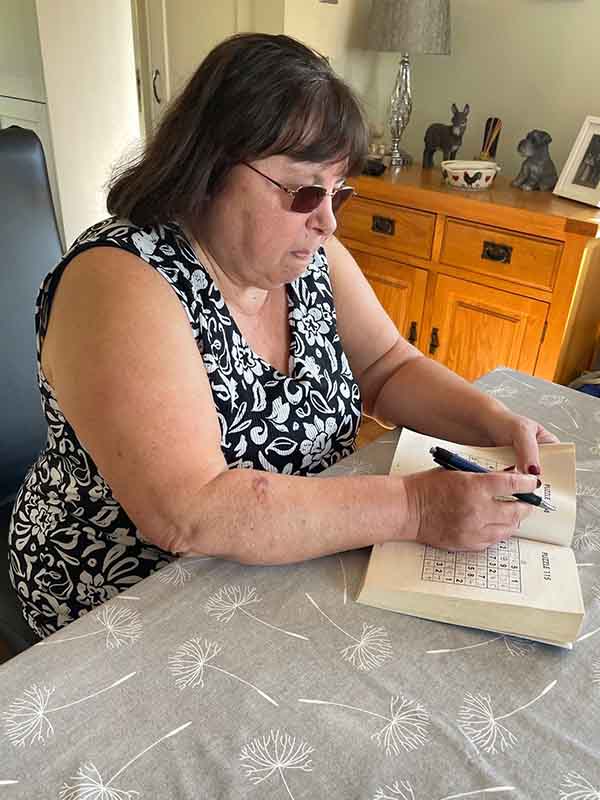
Then came the exhaustion. “I would leave work in tears because I could barely walk to my car.
“I was anxious every night thinking about getting up for work the next day. Eventually, the Physiotherapist said, ‘I can’t do anything more for you, xa0I think there is something else going on, I would advise you to go back to your doctor’”
Julie was referred to Neurology at the Ulster Hospital and it was during her first appointment that the Registrar delivered the life-changing diagnosis, “You have Parkinson’s Disease.”
Julia saiod: “I had heard of Parkinson’s but didn’t know much about it. When I got home and read the leaflet, I could tick every symptom on the list. My colleagues in work had noticed too. They said I looked like I was about to cry when walking up the corridor, even though I thought I was smiling.
“My handwriting was changing, my balance was off, xa0I would open the fridge and fall backwards. I couldn’t bend down to tie the children’s shoes, they had to help me and that is when I knew something really wasn’t right.”
Julie found relief in finally getting a diagnosis. “I was thinking it could be Diabetes, Rheumatoid Arthritis, the Menopause and even a brain tumour. Hearing it was Parkinson’s was actually a relief. I thought, ‘Now I can do something about it.’”
Julie continues to manage her condition with regular medication and vital support from the Parkinson’s Nurse at the Ulster Hospital. “She is brilliant, a real lifeline. If I am struggling, I can phone her and she will see me. She’s so specialised and understands the condition inside and out.”
Julie is also a member of the North Down Parkinson’s Support Group, which meets monthly. She added: “That has been a huge help. Talking to others who are going through the same thing really lifts your spirits.
“We also do a physiotherapy exercise class every Wednesday morning, I realised that I am not the only one struggling and that has helped me not to feel alone.”
Julie admits she was nervous walking into her first support group meeting. “There were people in wheelchairs and I thought, is this what’s ahead of me? But everyone’s symptoms are different and that gave me hope. My aim now is to stay positive and keep pushing through the pain.”
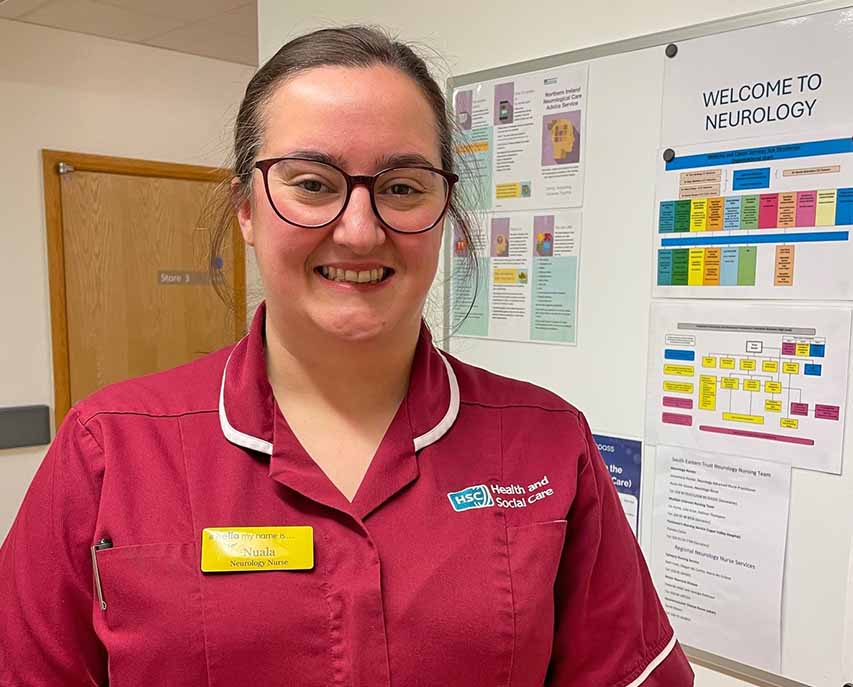
South Eastern Trust Neurology Specialist Nurse, Nuala McKeown, said: “Parkinson’s Disease is a chronic, progressive neurodegenerative condition. Symptoms typically include tremor, muscle stiffness, slowness of movement, postural instability and problems with balance and coordination.
“People may also experience speech and writing difficulties, along with mood changes.”
“While there is currently no cure, treatment is focused on managing symptoms. Medications can help increase dopamine levels in the brain. Physiotherapy and regular physical activity also play a vital role in improving quality of life.”
Highlighting the support available, Nuala added: “We have dedicated Parkinson’s Nurses within the Trust who offer ongoing guidance and support.
“We also encourage patients to contact Parkinson’s UK, they havexa0really useful resources and also provide local information on services and advisors to support patients with Parkinson’s Disease.”
Further information on Parkinson’s Disease can be found at: