


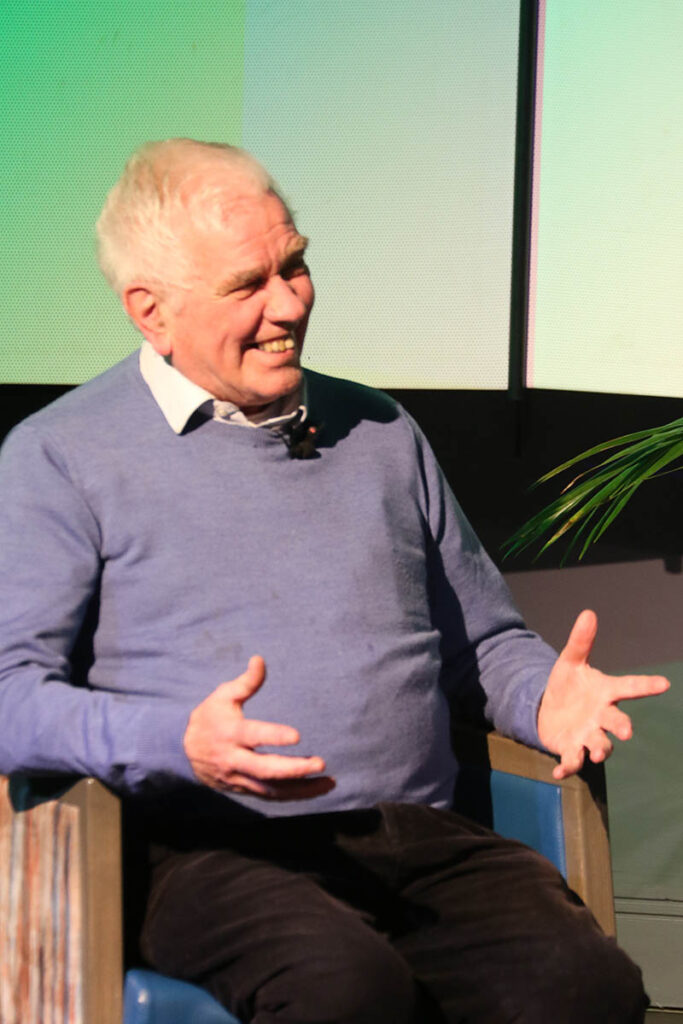
Fr Peter McVerry SJ interviewed at St Patrick Centre, Downpatrick, by journalist Martin O’Brien on his mission to address homelessness
Fr Peter McVerry, a Jesuit priest, Belfast born, but who grew up in Newry, was a very special guest at the St Patrick Centre in Downpatrick chatting about his life and times in the ‘Conversations’ series to journalist Martin O’Brien in front of a packed audience.
The 81-year old priest had driven up from Dublin and was heading back down after the event, such was his devotion to the passion that drives him.
Fr Peter has dedicated his life to helping the homeless in Dublin and those suffering from addiction and psychological trauma because of their social isolation.
It’s not everyday you get to meet a giant of a man, a priest steeped in humility and driven by compassion and faith and focussed on his task in hand, helping the homeless and the needy.
Interviewing Fr Peter was Martin O’Brien, a journalist, speech writer, building on the series of video-recorded ‘Conversations’ that are held every few weeks at the St Patrick Centre in Downpatrick.
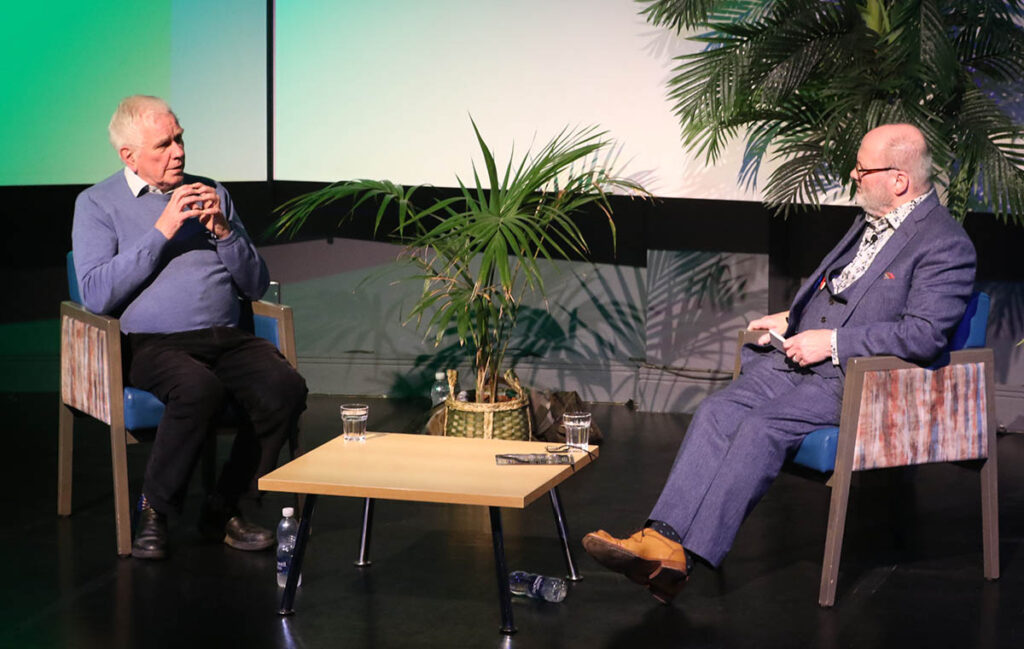
Martin O’Brien asked questions initially about Fr Peter’s early days.
“From an early age I wanted to join the Jesuits but there were none in the North so I went down to Dublin. I grew up beside the Down/Armagh border.
“We lived next to a coal yard but my early memory was that it was blown up by the IRA. We had to leave our home in the middle of the night.
“My father was a hard-working GP on call through the day and night. Sometimes he was out a couple of times in the night. He never complained.
“And my mother was actually a Welsh Protestant, but she converted to Catholicism, rather than being destined to hell for all eternity” Fr Peter joked. “And like many converts she became more Catholic that the Catholics.
“When I decided to be a priest, my family were very supportive.”
Martin “O’Brien asked if he had an early calling to God. Fr Peter said: “I had gone to a Jesuit school, and knew and respected the teachers. I gradually got the idea of becoming a teacher.”
Fr Peter explained that on his journey as a priest he got involved in working in inner city Dublin. He described the buildings as a Victorian slum still standing up until the 80s. He said there were rats everywhere.
“I can remember after I moved into an upstairs flat there, I could hear them gnawing in the walls and ceilings,
“Sometimes they chewed through the wiring, and you could hear them fighting and squealing. The housing conditions were terrible. But they were demolished in the 80s eventually.”
Martin O’Brien asked him to explain why he decided to live in an area of squalor when he had grown up in a middle class environment.
Fr Peter said: “I went to work in this inner city area to help the homeless. There was high unemployment. In the 60s and 70s there had been containerisation and this led to widespread unemployment among the dockers.
“There was no point for many in staying on at school and many left at 12 years old often into a life of crime and a lot of them going to jail at 16.
“I was teaching in Belvedere College but was in the beginning unaware of what was really happening. And then I was shocked.
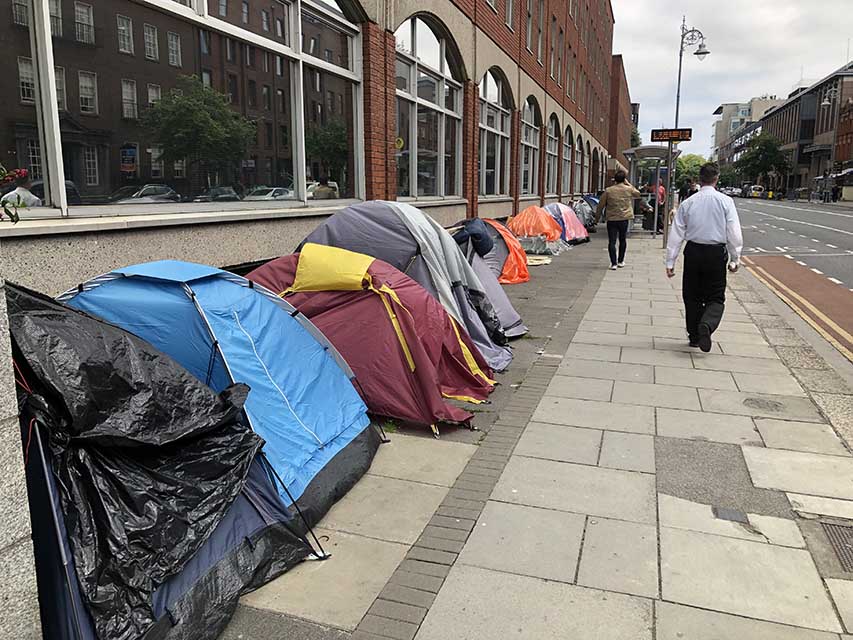
“So I opened up a craft shop to begin with and it created a few jobs and we sold the crafts. Society had just written these young boys off.
“I got to know the people there and they were oppressed by the upper layers of sociery and there was a great lack of opportunity for them.”
“But what motivated you?” asked Martin O’Brien pressing Fr Peter, drilling down into what was making him really tick.
“I was offered a flat in Summerhill and I looked, saw and stayed. I loved working with the kids in this very deprived area.
“Then I got offered the top flat in a tenement and opened up a youth club and there may have been 40-50 youngsters going up and down the stairs every night. We again made crafts and sold them.
“Eventually we all moved to Ballymun. Homelessness was actually a smaller problem then. But we managed to get a house and took in 6-14 year olds who were sleeping on the street. There were no girls sleeping rough back then.
“The authorities were not supporting us very much, but eventually they saw what we were doing and did support us.
“Back then there was a lot of robbery going on, car theft, drugs, and bag snatching from cars was also a big issue. Eventually when asked by the authorities what was required to address the problems I said 100% support… and a mini bus! We got it at last.
“In South America the Jesuits had reached out to the poor, to those cast aside. Working with the poor was an integral part of being a Jesuit.
“Through the gospels we were challenging political leadership which was strong in the 70s and 80s.
“The Liberation Theology that we practised also had the potential to split the Catholic Church.
“Pope John Paul II saw this as a potential area of split and was cautious. He saw a need for unity in the church to challenge the establishment.”
Martin O’Brien asked Fr Peter “were you a Holy Joe ?”
Fr Peter said: “Back then we saw this as an effort to make responsible members of society. There was something wrong with our moral code.
“Many of the youngsters had been on the streets since they were young. They lived with violence, neglect, drugs and crime. Reaching out to these young people in distress was compassion.
‘Basically many of us had got locked into our comfort zones and Liberation Theology challenges us to beyond this. John Paul II was socially progressive, but Pope Francis did much for the poor and for immigrants. For example, he set up a centre, provided showers and food.
“So society has ignored the back story. You can condemn the behaviour but not the person. There was one harrowing story I must tell.
“One evening I saw a 11-year old on the streets and I asked him if he should go home to his parents. He said: ‘I can’t’. I chatted to him further, and he refused.
“Eventually I said I’d run him home. He was at first very reluctant. But when we arrived at his house, he would not go in. I asked him why. He said “I can’t”. And after further discussion, it transpired that he was the subject of huge abuse.
“His parents had sent him out on to the streets to prostitute himself for money and come home with it. We then cared for him from then on.
“Today that individual [who was a 11-year old in the 60s] is now in sheltered accommodation that we own and is supported by nursing and social care staff there. But he is now blind.”
Fr Peter said he never saw clerical abuse in the ranks of the Jesuits and was shocked when revelations came to the surface about sexual abuse in the priesthood generally.
“Did all those horrors not shake your faith ? asked Martin O’Brien.
“No.” Fr Peter replied, adding: “I serve mass every Sunday in the prisons, and people are also abused in these institutions. They bare me no animosity and take me as I am.
“To date from a simple beginning, we have now set up:
• 25 hostels;
l• we look after 800 homeless people a day;
• we have 600 apartments;
• we have three detox centres;
• we have a walk in centre;
• and a school for dropouts where 95% of the children stay on.
• we have around 500 staff and volunteers and a €50 Million turnover each year.
“I get 60 to 80 telephone calls a day and provide, advice support and help with funding.
“So looking again at Pope Leo, he has just passed an Exhortation and although he is not as charismatic as Pope Francis, he is still committed to an agenda of supporting the poor and needy. The Church was quite top down in the way it worked, which led to a whole lot of problems.
“The Church in the future will be smaller and more community focussed. We believe the Church is the people of God. People from below in society will be more empowered to make decisions.
“Over the years the Church has been focussed on sacramental maintainance. Today many young people feel alienated.
“The Church hasn’t gone the whole way in challenging the structural causes of poverty.”
In ending the talk, Fr Peter discussed the importance of young people in working in hospitals and other areas where people are in need, and reaching out to them. This is what Christian faith is asking us to do. Basically do what Jesus did as in the gospels.
In responding to a question from the audience, Fr Peter explained that that we need to welcome immigrants who may have come from war torn and oppressed countries. He said: “We have an obligation to focus on the problems, not the immigrants. They are innocent victims.”
In conclusion, journalist Martin O’Brien said: “You look like a happy person and you exude happiness. You got on with your mission with the hand of Jesus working with the homeless.”
Fr Peter said: “They are wonderful people and when you get to know the gospels this challenges me to be the compassion of God. My faith confirms what I am doing.
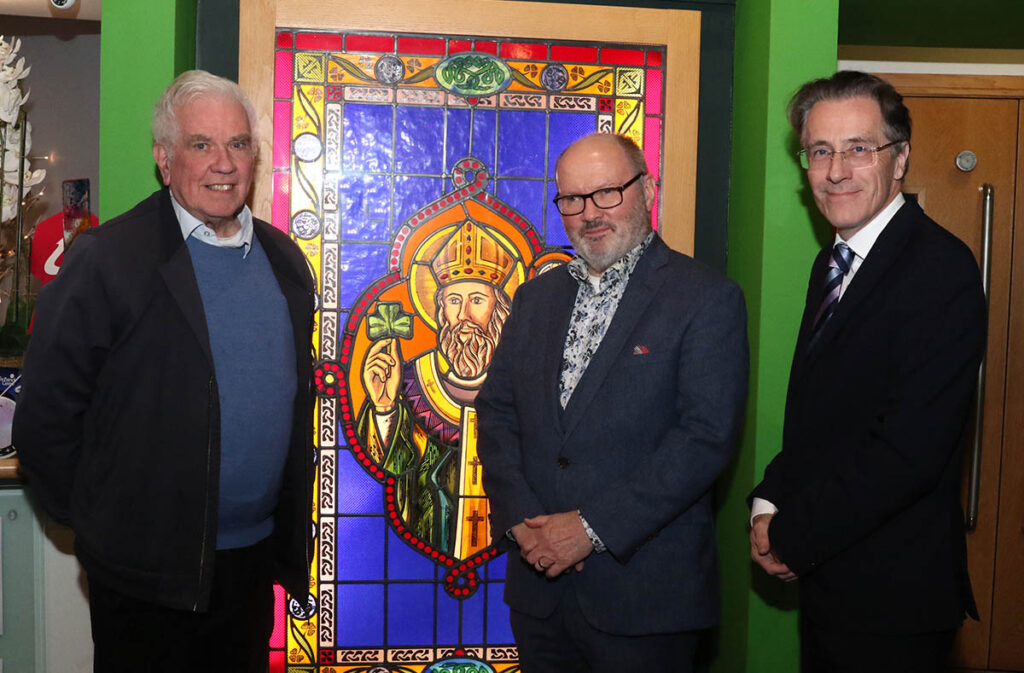
Dr Tim Campbell, Director at the St Patrick Centre, thanked Fr Peter for his interesting conversation with journalist Martin O’Brien.
Fr Peter McVerry, also an author, avoided chatting about his interviews such as on the Tommy Tiernan Show and his meeting with Irish President Michael D Higgins such is his great humilty. He is held in very high regard in Irish society as a paragon of compassion helping the homeless and needy.
To find out more about the work of Fr Peter McVerry who has written several books challenging our moral and religious compasses, click HERE