


The foreign exchange market is the largest and most liquid financial market in the world, with daily trading volumes exceeding $7 trillion. To navigate this vast and volatile landscape, traders rely on a diverse arsenal of tools – from charting platforms and economic calendars to sentiment indicators and automated trading systems. Understanding what these tools do and how to use them effectively can be the difference between consistent profitability and costly mistakes.
Charting Platforms and Technical Analysis Tools
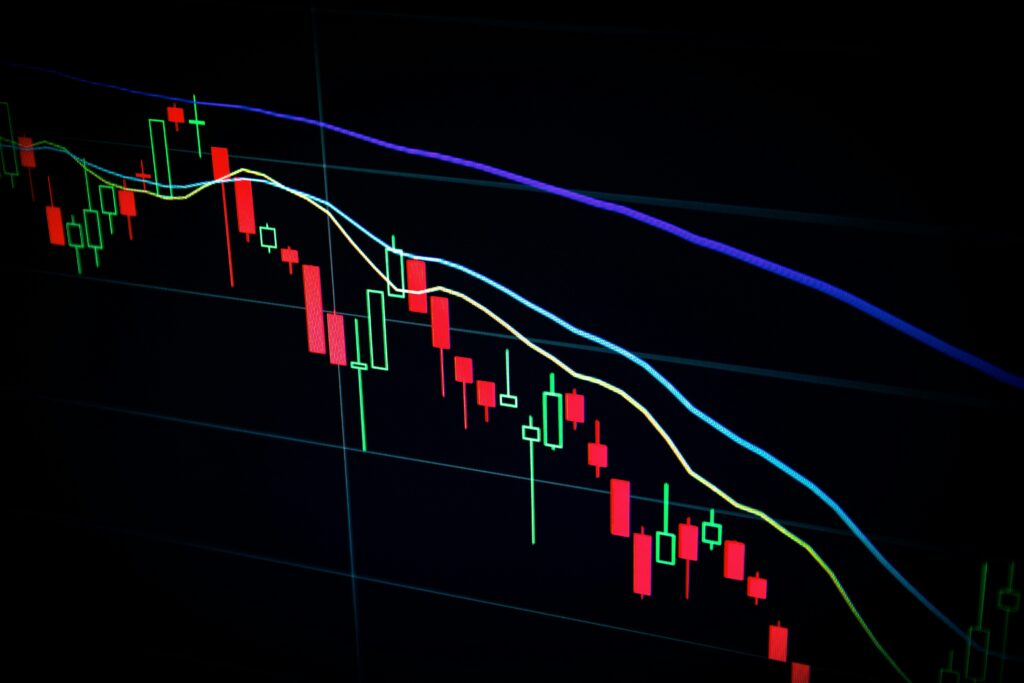
At the heart of any forex trading workflow is a charting platform. These tools allow traders to visualize price movements, identify patterns, and apply technical indicators. A well-designed gbp/usd chart, for example, can reveal weeks or months of price behavior at a glance, helping traders pinpoint key support and resistance levels, trend reversals, and momentum shifts.
Most charting platforms offer a wide range of built-in indicators: moving averages, Bollinger Bands, RSI (Relative Strength Index), MACD (Moving Average Convergence Divergence), and Fibonacci retracements, among others. The quality of a charting tool is often judged by how customizable it is, how many timeframes it supports, and whether it provides real-time data.
Popular standalone charting platforms include TradingView and MetaTrader 4/5. However, many brokers now embed advanced charting capabilities directly into their trading interfaces – eliminating the need to juggle multiple windows.
Economic Calendars
No technical setup is complete without an awareness of fundamental drivers. Economic calendars list scheduled news releases — central bank decisions, employment reports, inflation data, GDP figures — that can trigger sharp moves in currency pairs. A trader who ignores an upcoming Federal Reserve statement or a UK inflation print risks being caught on the wrong side of a sudden spike.
Good economic calendars not only list events but also show the expected consensus figures and allow traders to filter by impact level (low, medium, high). Some platforms integrate calendars directly into the trading environment, automatically highlighting high-impact events on charts.
Trading Platforms and Order Management
While charting tools help traders decide what to do, trading platforms execute those decisions. The MetaTrader ecosystem (MT4 and MT5) remains the industry standard, offering one-click trading, pending orders, stop-losses, take-profits, and algorithmic trading via Expert Advisors (EAs). cTrader is another popular choice, known for its cleaner interface and more transparent order execution.
These platforms also provide access to depth-of-market (DOM) data, which shows the buy and sell orders queued at various price levels — useful for scalpers and high-frequency traders who need to understand short-term liquidity.
Dukascopy: A Comprehensive Toolset in One Ecosystem
Among the brokers and platforms that take tool access seriously, Dukascopy stands out for the breadth and depth of what they offer to traders of all levels. Dukascopy provides one of the most extensive sets of tools available from a single provider in the retail forex space.
Their JForex platform gives traders access to advanced fx charts with full customization — multiple chart types, dozens of technical indicators, and deep historical data going back years. This is particularly useful for strategy backtesting, where the quality of historical data directly determines the reliability of test results.
Beyond charts, Dukascopy offers a built-in economic calendar, live news feeds, a trading contest community, and a social trading component called SWFX (Swiss Forex Marketplace), which aggregates liquidity from a wide network of participants. Their mobile app mirrors much of the desktop functionality, which is increasingly important as traders move between devices throughout the day.
Dukascopy also provides a free demo environment, allowing traders to explore the full suite of tools without committing capital — a valuable resource for those learning the platform or testing new strategies.
Sentiment and Positioning Data
One category of tools that many retail traders overlook is sentiment analysis. The COT (Commitment of Traders) report, published weekly by the CFTC, reveals how large institutional players — hedge funds, asset managers, commercial hedgers — are positioned in futures markets. Shifts in these positions can signal upcoming trend changes before they fully develop on a price chart.
Some brokers provide proprietary sentiment tools showing the percentage of their own clients currently long or short a given pair. While these figures reflect a single broker’s client base, they can still offer a useful contrarian signal.
Automated Trading and Backtesting Tools
Algorithmic trading has moved well beyond institutional desks. Retail traders can now build, test, and deploy automated strategies using tools available on most major platforms. MetaTrader’s MQL language, for instance, allows traders to code EAs that open and close positions based on predefined rules — without manual intervention.
Backtesting engines let traders simulate how a strategy would have performed on historical data. The more robust the data and the more rigorous the testing methodology, the more meaningful the results. Walk-forward optimization, Monte Carlo simulation, and out-of-sample testing are techniques used to stress-test strategies before going live.
Risk Management Calculators
Perhaps the most underappreciated tool in a trader’s kit is the position size calculator. Given a defined risk per trade (typically 1–2% of account equity), a stop-loss distance, and the current exchange rate, these calculators determine the correct lot size to trade. Using proper position sizing consistently is foundational to long-term capital preservation.
Many brokers and independent websites offer free calculators for this purpose. Some advanced platforms integrate them directly into the order entry window, making precise risk management the default — not an afterthought.
Conclusion
The modern forex trader has access to an extraordinary range of tools. The key is not to collect as many as possible, but to build a coherent, integrated workflow — one where each tool serves a clear purpose. Whether you use a standalone charting platform, a broker-integrated suite like the one offered by Dukascopy, or a combination of both, what matters most is mastering the tools you choose and applying them with discipline and consistency.