



Sinn Féin ME, MLA and Councillors Visit Ardglass and Kilkeel Harbours
The fishing industry in the North is under pressure at the moment across a number of fronts and there is no easement of this looking over the horizon.
Sinn Féin representatives visited Ardglass and Kilkeel to hear first-hand of the fishermen’s dire plights, many facing ruin and possible bankruptcy.
When the UK was in the EU before Brexit, the allocation of quotas was always a key sticking point with County Down trawlers, but today the issues have broadened and deepened to the point of being a full-blown, existential crisis. Fishermen feel they have nowhere to turn to.
Gone are the carefree days when they could have gone to sea and pointed their boats to the fishing grounds.
Down News sets out the issues arising from the meeting clearly in bullet points as it is a very complex and integrated nightmare for the fishermen day on day.
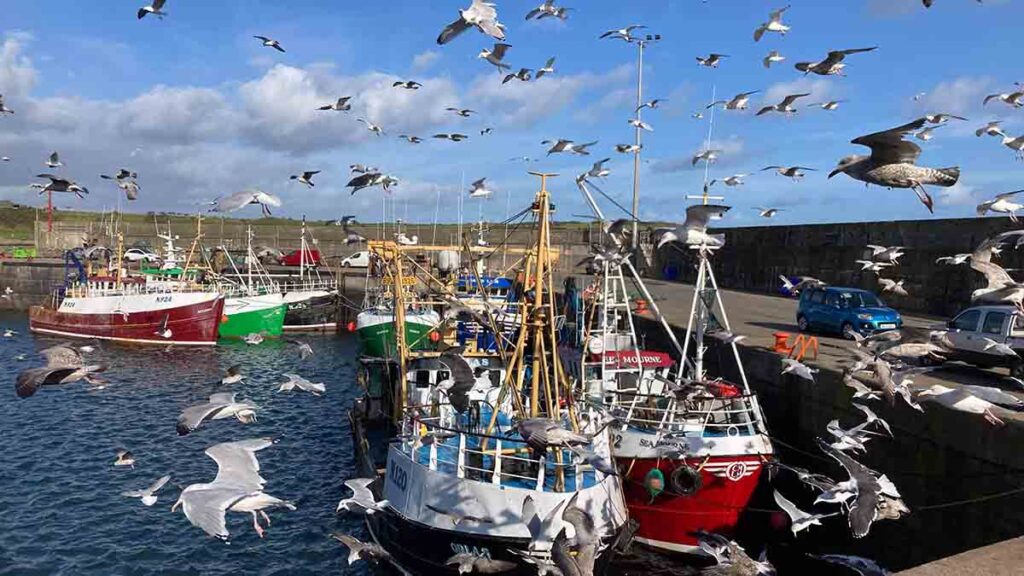
(Photo: Jim Masson/DownNews©).
• fishermen have had to agree to use certain net and mesh sizes insisted on by fisheries authorities, and even a minor non-compliance is penalised. Measuring mesh on nets requires specialised equipment, and fishermen do not have this so small variations in a mesh eg a fraction of a millimetre, can cause serious issues with the fisheries inspectors.
• previous agreement to swop mackerel quota for prawn quota between the ROI and the North has stalled leaving the pelagic processsors short of supply for this year on mackerel.
• the Clyde fishery is prohibiting vessels over 60 feet, and moving towards regulating boats from the North to those only that have historic fishing in the Clyde estuary.
• The Isle Of Man imposed restrictions on vessels from the North fishing within their 12-mile limit two years ago and this is being examined through the courts. Fishermen say they only have a strip in the middle of the Irish Sea outsid ethe 12-mile limit they can fish while they have foreign crews aboard.
• Also, MCZs (Marine Conservation Zones) off the Northern coast also inhibit fishing.
• The ROI government has restricted the Dundalk Bay area for Northern fishermen and this impacts the Kilkeel prawn boats mostly.
• The price of diesel is going through the roof because of the war between Iran and the USA and the world market is voilatile. The North’s fishermen get a part-reduction in subsidy on red diesel while their conterparts in the ROI get the EU subisdy.
• The price of prawns is about the same as the fishermen were getting decades ago whilst the supermarkets and other sectors have not reduced their prices. The primary production sector is losing out to the tertiary sector.
• The Ardglass fleet particularly is probably the oldest fleet in Ireland consisting of many wooden-hulled boats in poor shape and there is no decommissioning scheme on the table by DAERA.
• but the biggest thorn in the side of the North’s fishing fleet is the UK government’s rigidity in enforcing rules that are making fishing almost impossible where each foreign crew member may cost £35,000 a year plus flights home.
• And DAERA has employed the services of several environmental officers recently to police the fishing fleet on top of the work of the fisheries’ officers and the Border Agency. These layers of administrative authority are crippling the fishing fleet fishermen argue. (One fisherman/boat owner has faced a £280,000 fine for breach of the rules.
• with the changes in NI Secretaries and parties, it has been difficult for the fishermen to build rapport with these political leaders.
• and, there may be competition issues within the fishing industry. This needs to be fully examined by an independent body. The fishermen and the boat owners are at the bottom of the food chain.
• there is not a great deal of effort being made to change people’s eating habits in the North to encourage them to eat seafood of which there is an abundance (eg mussels, oysters, shellfish, nephrops (prawns), white fish, and pelegic fish.) The multiplier effect in the fishing communities is being reduced greatly.
• Lastly, there is a key issue of food security. Without a fishing industry, there is one less food source in a crisis (whatever that may be).
The outcome of this is that the wider communities of Ardglass, Kilkeel and Portavogie will suffer decline as a consequence of the failure of government action.
The above is a summary of the key issues set out clearly in bullet points which amount to a perfect storm for the North’s fishing industry which mainly fishes for prawns, with a smaller white fish by-catch. There are 3 larger vessels which fish for pelagic species such as herring and mackerel and these are process in 2 factories in Ardglass and i in Kilkeel.
These were the key points raised at the meeting in Ardglass on the 24th September with Sinn Féin and local fishermen. Underpinning this whole complex mesh of problems facing the fishing industry, it was noted that the mental health of fishermen was under pressure given the constant pressures from government officials ‘doing their job’.
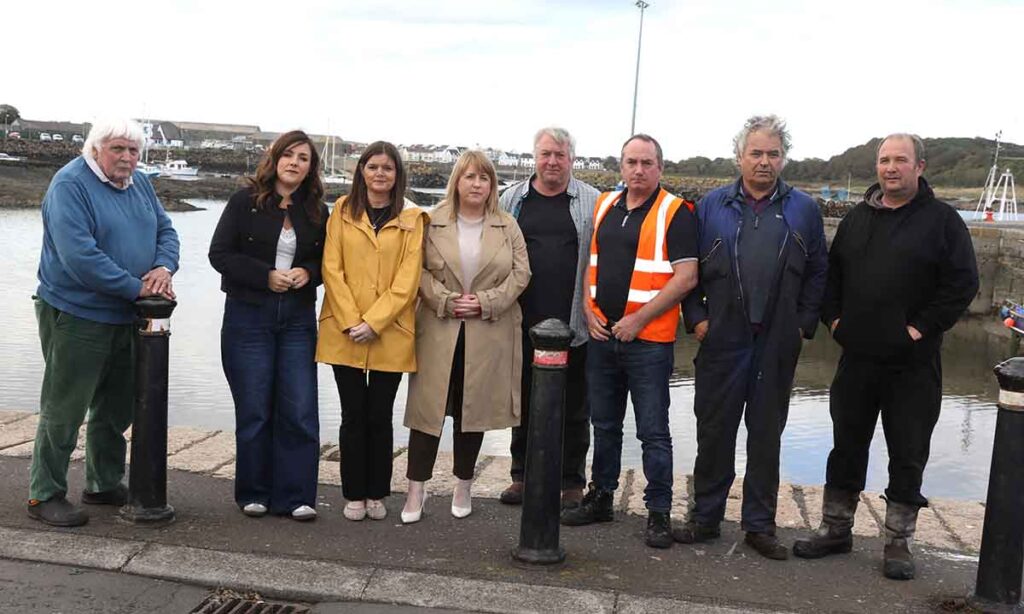
Sinn Féin Representatives Recognise The Complex Nature Of The Issues Facing The North’s Fishing Fleet
Sinn Féin MEP Kathleen Funchion joined party colleagues Cathy Mason MLA and Cllr. Oonagh in Ardglass and Cllr Michael Rice in Kilkeel to meet with representatives of the local fishing industry in South Down and discuss the growing pressures facing the sector in the decade since the Brexit referendum.
The South Down MLA Cathy Mason said: “Since Britain’s exit from the EU, combined with over a decade of political mismanagement by successive British governments, small local fishing businesses across the North continue to face significant pressures that are undermining the long‑term sustainability of the fishing industry.
“Our fishing fleets are under growing pressure from rising fuel costs, ongoing challenges with worker visas, and operational constraints that have significantly reduced the available fishing grounds.
“The removal of core EU funding has created a significant void that is deeply impacting the fisheries and aquaculture sector.
“Paired with the lack of meaningful support from the British Government, these limitations restrict how fleets can operate, creating real uncertainty across the sector.
“The British government’s £360 million Fishing and Coastal Growth Fund will only allocate £10 million over 12 years to the North. These reckless and thoughtless decisions are generating uncertainty for generations of family‑run fishing fleets.
“I have written to the Alliance DAERA Minister outlining the concerns of fishing fleets across South Down, pressing for meaningful support that will lift the burden on local fishing boats and protect their ability to fish on a fair, sustainable footing.
Cllr. Michael Rice added: “Brexit has been disastrous for our local fishing industry, robbing it of essential funding and support.
“Regulatory changes following Brexit, combined with Isle of Man’s restrictive licensing, mean that vessels from the North can no longer rely on historic access arrangements effectively squeezing them out of traditional fishing grounds.
“These constraints have significantly reduced the effective fishing area available creating operational uncertainty.
“The price of fuel has spiralled out of control, making business even harder for already hard‑pressed vessels. The British government has the levers to mitigate this deepening cost of living and fuel emergency, they must act now to help struggling workers and families.