


Doctors in the rest of the UK are treated more favourable that the doctors in NI claims the BMA
The doctor’s strike explained.
Doctors across Northern Ireland are taking part in industrial action because they say they are paid less than their counterparts elsewhere in the UK, face worsening working conditions, and believe the Health and Social Care (HSC) system is struggling to recruit and retain enough doctors.
The British Medical Association (BMA), which represents the doctors, argues that unless these issues are addressed, patient care will continue to deteriorate.
So why are doctors striking?
The dispute centres on several key issues.
1. Pay parity (“parity of esteem”)
The BMA says doctors in Northern Ireland are not paid on an equal footing with colleagues in England, Scotland and Wales.
Although the Department of Health has accepted the independent Doctors’ and Dentists’ Pay Review Body recommendation of a 3.5% pay rise for 2026-27, the BMA argues this merely increases an already lower salary and does not restore parity.
Doctors also point to:
- years of below-inflation pay awards
- delayed implementation of previous pay increases
- significant erosion of real-terms earnings over almost two decades.
2. Recruitment and retention
The BMA argues Northern Ireland is losing doctors because:
- doctors can earn substantially more elsewhere in the UK
- salaries in the Republic of Ireland are often higher
- working conditions are viewed as more attractive elsewhere.
As a result:
- newly qualified doctors leave Northern Ireland
- consultants retire early
- others reduce their hours to avoid burnout.
This creates additional pressure on those who remain.
3. Working conditions
Doctors say they are working in:
- understaffed hospitals
- increasingly complex clinical environments
- services with long waiting lists
- hospitals where vacancies remain unfilled.
They argue the NHS in Northern Ireland has become dependent on staff goodwill rather than sustainable workforce planning.
When are the strikes?
The BMA organised two separate periods of industrial action.
Thursday 25 June 2026
Consultants and Specialist, Associate Specialist and Specialty (SAS) doctors provided “Christmas Day cover” only.
This meant:
- emergency care continued
- routine clinics were cancelled
- many elective operations were postponed.
Monday 29 June 2026
Resident doctors began a 24-hour full walkout, from:
- 7.00 am Monday
- until 7.00 am Tuesday.
Emergency services remained available through consultant-led cover.
Where is the strike taking place?
Industrial action affects all five Health and Social Care Trusts in Northern Ireland:
- Belfast Trust
- South Eastern Trust
- Southern Trust
- Northern Trust
- Western Trust.
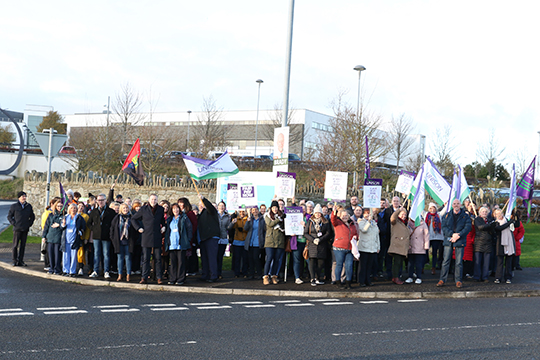
Doctors have also held pickets and demonstrations outside major hospitals, including the Royal Victoria Hospital in Belfast, where they highlighted concerns over staffing, pay and retention.
What are doctors demanding?
The BMA says it wants:
The BMA says it wants:
- full pay parity with doctors elsewhere in the UK
- restoration of real-terms pay lost over many years
- timely implementation of agreed pay awards
- improved recruitment and retention
- action to reduce burnout
- sustainable staffing levels
- meaningful negotiations with the Department of Health.
What does the Department of Health say?
Health Minister Mike Nesbitt says he is disappointed the strikes are taking place.

He argues:
- the recommended 3.5% pay increase is already higher than many other public-sector settlements
- any increase above that would require additional Executive funding
- his department does not currently have sufficient budget to offer more.
He has also pointed out that doctors have received cumulative pay increases over recent years averaging around:
- 30% for resident doctors
- 25% for SAS doctors
- 24% for consultants.
However, the BMA says these increases have not eliminated the underlying pay gap or reversed long-term pay erosion.
Impact on patients
The strikes are expected to result in:
- postponement of routine operations
- cancellation of outpatient clinics
- delays to non-urgent treatments.
However:
- emergency departments remain open
- intensive care continues
- emergency surgery continues
- cancer and other urgent services are prioritised where possible. More than 90% of HSC services are expected to continue operating, although some local disruption has occurred.
Ballot results
The level of support among BMA members was strong:
- 92% of resident doctors voted in favour of strike action.
- 79% of consultants voted in favour.
- Around 90% of SAS doctors who voted also supported industrial action.
The wider issue: “Parity of esteem”
For many doctors, “parity of esteem” means more than receiving the same percentage pay rise as colleagues elsewhere. They argue that they should receive equal overall pay and recognition for doing the same work under similar conditions as doctors in England, Scotland and Wales.
The BMA also links pay to wider concerns about recruitment, retention and the long-term sustainability of healthcare in Northern Ireland, arguing that competitive pay is essential to keep experienced doctors in the HSC system.