


Heritage Railway Urges DfI Minister Liz Kimmins To Treat Greenways And Heritage Rail Equally
The Downpatrick and County Down Railway has urged Infrastructure Minister Liz Kimmins to ensure greenway projects and heritage railways are treated on an equal footing, following the announcement of funding for feasibility and design work for a proposed greenway along the former Downpatrick to Ardglass railway line.
The railway said the use of the old trackbed for a greenway could have a significant impact on the operation and long-term viability of the existing heritage railway corridor.
Robert Gardiner, chairman of the Downpatrick and County Down Railway, said: “We are not opposed to greenways in principle. Well-planned greenways can deliver real benefits for communities, active travel and tourism.
“Our concern is specifically about proposals that would place a greenway on or immediately alongside a single-track operational heritage railway.”
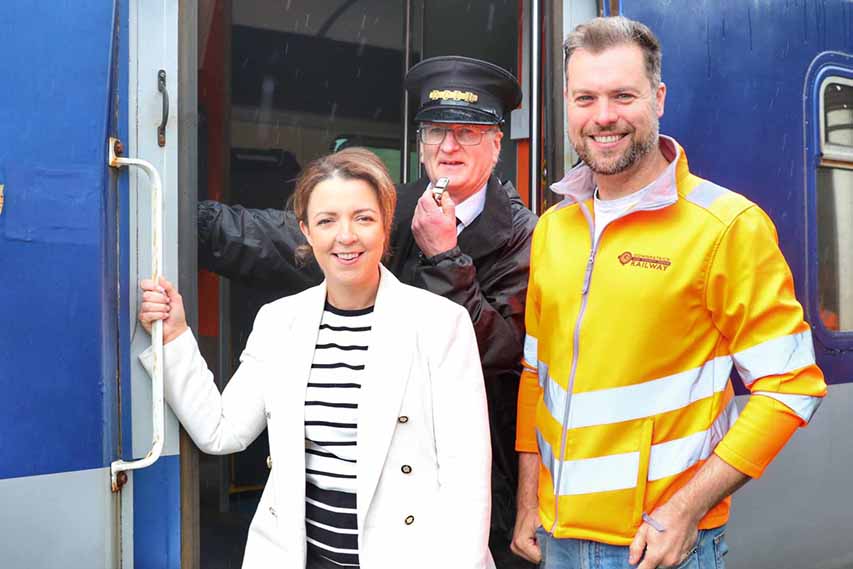
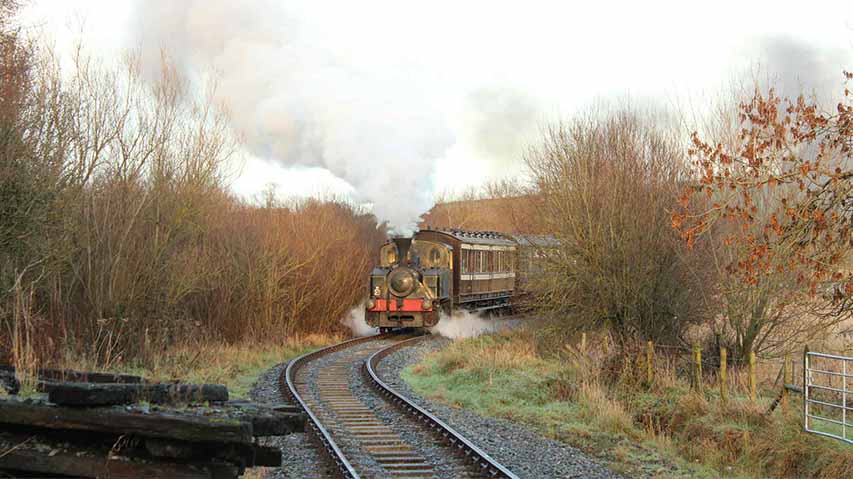
The Downpatrick and County Down Railway, founded in 1985 and recently celebrating its 40th anniversary, has rebuilt and operates a section of the former Belfast and County Down Railway, which closed in 1950.
he railway now functions as a working heritage railway, tourist attraction and charitable social enterprise. Run largely by volunteers, the railway was crowned Northern Ireland’s Social Enterprise of the Year in 2024 and recently received The King’s Award for Voluntary Service, the highest honour for volunteer-led organisations.
Mr Gardiner added that the announcement came as a surprise given previous engagement with the Department for Infrastructure.
He said: “We had received clear assurances from both Infrastructure Ministers John O’Dowd and Liz Kimmins in person, as well as written confirmation from the Department, that there were no plans for greenways affecting this corridor
“Against that background, it is difficult to understand how a competing use has now progressed to publicly funded feasibility and design work without further engagement.”
The railway has highlighted a wider structural issue around the imbalance in public support for different uses of former transport corridors. Mr Gardiner said that while greenway proposals are able to access Stormont-backed funding for feasibility and design work, there is no equivalent mechanism to support the development of heritage rail proposals using those same corridors.
As a result, heritage railways are placed in direct competition with publicly funded alternatives, despite having to rely almost entirely on charitable income and unpaid volunteer effort.
“This creates a fundamentally uneven playing field,” Mr Gardiner said. “One option is supported and advanced using public funds, while the other is expected to compete for space, legitimacy and attention without any comparable support,” adding, “If only one option is assessed in detail, then it’s difficult to come to a fair decision on the best use of that route.”
The railway pointed to its own experience as a clear illustration of this imbalance. Where heritage railways wish to explore even modest development or future use of a corridor, they are typically required to commission and fund detailed business cases, technical studies and assessments themselves.
For a volunteer-run charity, the cost of such work can run into tens or even hundreds of thousands of pounds and may be entirely unaffordable, effectively removing heritage rail proposals from consideration at a very early stage.
“We are expected to fund full business cases and technical studies ourselves simply to be part of the conversation,” Mr Gardiner said. “At the same time, competing greenway proposals are able to access public funding to explore feasibility and design. That imbalance can determine which uses of a corridor are ever seriously examined.”
Mr Gardiner added that this imbalance is compounded by the Department for Infrastructure’s stated position that it has no statutory remit to support heritage transport, a position the railway says it has encountered repeatedly when seeking assistance or engagement.
“We have been told on a number of occasions that DfI does not have a statutory responsibility to assist the heritage sector. That may be the Department’s position, but in practice it means heritage railways are expected to stand aside while a competing use of the same corridor is actively supported and progressed.”
The railway has also highlighted a number of practical issues that would need to be addressed, including safety, security, maintenance responsibility and long-term planning impacts. Heritage railways operate in a tightly regulated environment where access to the line is deliberately controlled, and significant effort is invested in preventing trespass, vandalism and unauthorised access.
Introducing a parallel public route beside the railway could undermine those controls and increase liability, particularly where space is limited.
“In practical terms, there is simply not sufficient width along much of the corridor to accommodate both a modern shared-use path for walkers and cyclists and the required safety envelope for trains without compromising the safety of one or both,” Mr Gardiner said.
The railway also notes that once a greenway is established as a public amenity, experience shows it is extremely difficult to alter or remove, even where future transport or heritage use might otherwise be feasible.
“While we are not actively pursuing any significant extension along this particular route at present, it is important that any development along the corridor remains compatible with potential future railway use, rather than permanently ruling it out,” Mr Gardiner said.
At the same time, the railway has acknowledged that an adjacent greenway could offer benefits if it is designed sympathetically and developed collaboratively.
“If approached properly, there could be opportunities for shared tourism appeal, greater awareness and opportunities to improve shared infrastructure,” Mr Gardiner said. “However, experience in England shows these are far from guaranteed and can be marginal when set against the additional risks and constraints placed on an operational heritage railway.”
“We want to engage constructively. If this feasibility work is genuinely about exploring options, then it is essential that existing railway operations, safety requirements and long-term heritage value are fully considered from the outset, rather than treated as constraints after decisions have already been made.”
The Downpatrick and County Down Railway has indicated that it will continue to engage positively with Newry, Mourne and Down District Council and the Department for Infrastructure as the feasibility work progresses.