



NIAS ambulances will leave patients after 2 hours in care of the EDs to free up cover for 999 calls
The Northern Ireland Ambulance Service (NIAS)s drawing a line at 2 hours to activate patient handovers at Emergency Departments across the hospital trusts in Northern Ireland.
The NIAS as a health trust has made the move in order to free up its ambulances to fulfil their role in front-line care of patients on getting them to the Emergency Departments (EDs) on time for subsequent care.
Everyone needs to be familiar with these new operating procedures to that patient care is optimised and when an emergency does arise and 999 is rung, that the boundaries and expectations of our healthcare are understood and respected.
However, in recent years, waiting times for ambulances have escalated due to ambulance drivers having to care for patients untiil ED medical staff were available to provide care for the patient. This involved often elderly patients lying on trolleys or sitting in chairs for hours.
Or, at worst, patients not being collected for hours while they be in critical or undiagnosed states of health and an ambulance was not readily available.
The standard operating procedure (SOP) to be adopted by the NIAS will begin on 24th April 2026.
When a patient is booked on the trust system, the clock will be ticking. This system is separate from nurse triage which happens when the ED prioritises patient care according to severity of illness.
Withing 15 minutes of arrival, a patient will be registed at the admin desk by the ambulance crew and the clock starts ticking at this point. A triange nurse will then assess the patient within 15 minutes.
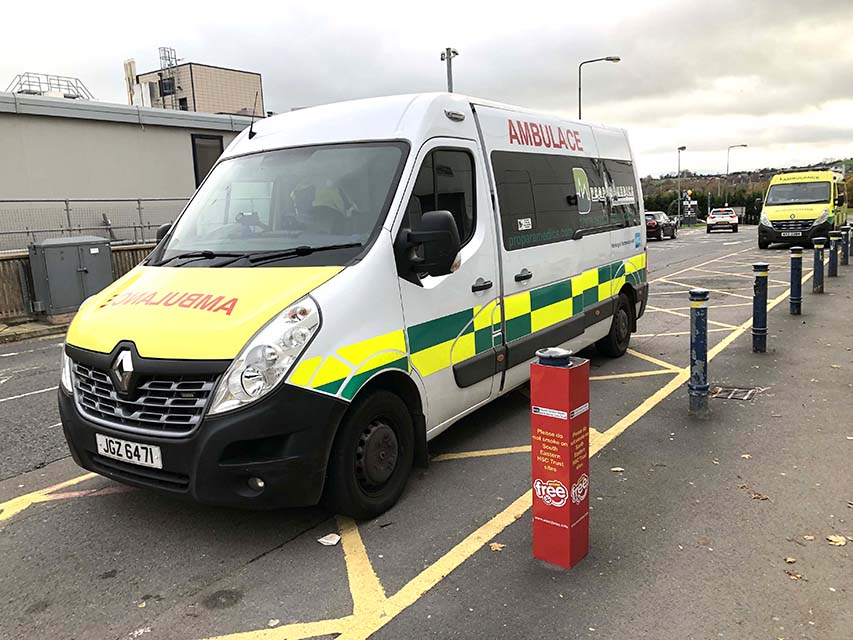
The handover will be completed within a 2-hour framework from arrival. And the members of trust staff must record the handover time on the ePCR system. A HALO system will be in place to monitor escalating patient cover needs, check patient queuing and help improve communication.
The ambulance crew will remain with the patient until the changeover takes place this could be a maximum of two hours.
The handover is the ‘clinical responsibility’ of the hospital trust and ED clinician and releases the ambulance for a 15-minute preparation to then be back on active duty receiving calls and directions from the Emergency Ambulance Control Centre.
Ambulance staff are expected to ensure that patients are accommodated on chairs or trolleys promptly
Once the patient is on the hospital system, the nurse in charge of ED patient flow takes over.
A caveat to this is that if a patient is deemed so ill, the patient will remain in the ambulance initially maintaining with the NIAS staff, immediately contacting the trust staff. This allows for the patient handover plan to be completed and the ambulance is therefore freed up for further 999 calls.
As a comparison, in the NHS England model, Yorkshire trusts have to operate this scheme within a 45 minute window compared to the 2-hour window in Northern Ireland. But as the system settles, there may be room to tighten up the changeover efficiency and reduce that window.
If there are delays over 15 minutes in patient handover, there are further protocols in place to address this. Crews must ensure they have made every effort the patient is safe and on a chair or trolley. The NIAS crews may also discuss any changes in a patent’s condition with trust medical staff. A Deteriorating Patient protocol must be addressed by medical staff following consultation with triage staff.
Through the upwards of a 2-hour period, while waiting for medical treatment, NIAS staff must monitor the patient and report any deteriorating to the trust staff.
At the 90-minute point, the trust staff are expected to provide feedback to the NIAS staff on the patient.
If after 2-hours the NIAS crew may leave the ED but they have to notify the ED coordinator where the patient is and that they are leaving.
At this point, the coordinating trust nurse must confirm this critical change and register it on the rPCR computer system.
In the standard operating procedure (SOP), NIAS crew have a professional responsibility to ensure safe effective, and accountable transfer of patient care when handing patients over to the receiving Emergency Department (ED).
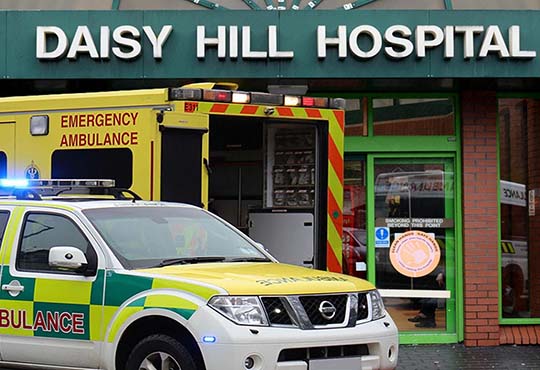
The NIAS SOP states that “Ambualnce clinicians must balance two key professional responsibilities ie ensuring a safe and accountable transfer of care into th ED, and supporting the effective use of emergency ambulance resources for the wider community.”
The critical shortage of ambulance cover across Northern Ireland has been mainly as a result of anulances and theuir crew shaving to wait for extended perios of time literally taking them out of service.
Long delays of responses by ambulance crews to emergency calls are associated with:
• delays in pain relief and sepsis treatment
• increased risk of deterioration
• breaches in privacy and infection control
• delayed administration of time-critical medications
• challenges with providing nutrition for those to require surgery / requiring SALT assessment.
The NIA SOP futher states that all delays will be considered as possible safety events and will be addressed accordingly.
Also, if a patient is detoriating and a conflict arises between NIAS staff and ED staff, the HALO / line management system will kick in. The ED is expected to respond immediately to issues of airways, ventilation, acute stroke, sepsis, ECG changes, etc.
The NIAS staff can assist with pain relief within scope, but the ED must assist if pain persists or time-critical medications are due.
And in terms of personal care for patients eg supporting hydration, nutrition, toileting and pressure area care, the role of the NIAS staff is to assist but not to lead which is the ED staff responsibility.
The above details are the Standard Operating Protocol planned to come into effect from on 24th April 2026.
This change should make a huge difference releasing ambulances to address 999 calls and reduce response times.
But a critical question is, are the hospital trust themselves prepared for he change in handing over patients to the EDs and are sufficient resources in place?
***
Southern Trust Says new System Will take Time To Embed
A spokesperson for the Southern HSC Trust said: “From Monday 27th April, the six Health and Social Care Trusts in Northern Ireland will begin to implement a ‘release to rescue’ protocol which seeks to ensure that ambulance crews are able to hand over patients to the clinical care of Emergency Department staff within two hours of arrival.
“The aim is to free up Northern Ireland Ambulance Service (NIAS) crews so they are available for the next emergency.
“This is the first phase of a whole system change and introducing Release to Rescue won’t be a quick fix and will take time to embed.
“It will be challenging at times for staff but it is an important and necessary step to ensure the safety of patients both in EDs and in the community.
“Internal engagement and communication with our staff has been on-going in recent weeks and will continue in the run up to implementation and in the months ahead.”
South Eastern HDSC Trust Repsonds Saying It May Be Challenging At Times
A spokesperson for the South Eastern HSC Trust said: “From Monday 27th April, every Health and Social Care Trust in the Region will begin to implement the ‘Release to Rescue’ protocol.
“It aims to ensure that ambulance crews are able to hand over patients to the clinical care of Emergency Department staff within two hours of arrival, so they are available for the next emergency response in the community.
“It is important to stress that many handovers already happen within two hours and this protocol is only targeted at those that take longer.
“The South Eastern Trust has been working hard with all its staff, both in our hospitals and in the community, to help implement this initiative.”







 is drawing a line at 2 hours to activate patient handovers at Emergency Departments across)