



Autumn re-seeding is key to dairy farm profitability says CAFRE adviser
Grass remains the foundation of profitable milk production on Northern Ireland dairy farms, but grassland productivity and persistence can decline over time as weeds, poaching damage and less productive grass species become established.
According to Wilson Marshall, Dairy Adviser with the College of Agriculture, Food and Rural Enterprise (CAFRE), autumn provides farmers with an ideal opportunity to assess grassland performance and undertake rejuvenation or reseeding work that will maximise future forage production.
“Timing is critical when carrying out grassland improvement work,” says Wilson. “Early autumn generally offers favourable conditions for successful establishment, allowing new grass to develop sufficient growth before colder weather arrives.
“A useful benchmark for dairy farms is to reseed approximately 10% of the grazing platform each year. Fields containing less than 70% perennial ryegrass should be assessed for improvement, particularly where weed levels are increasing, weed grasses have established or sward density has declined.
“Grazing records and grass measurement data can also help identify under-performing fields that may be limiting overall farm productivity.”
However, a full reseed is not always necessary. In many situations, over-seeding can provide a cost-effective alternative.
This approach can improve ryegrass content in swards that remain reasonably productive but contain patches of poorer-quality grass or areas affected by poaching damage.
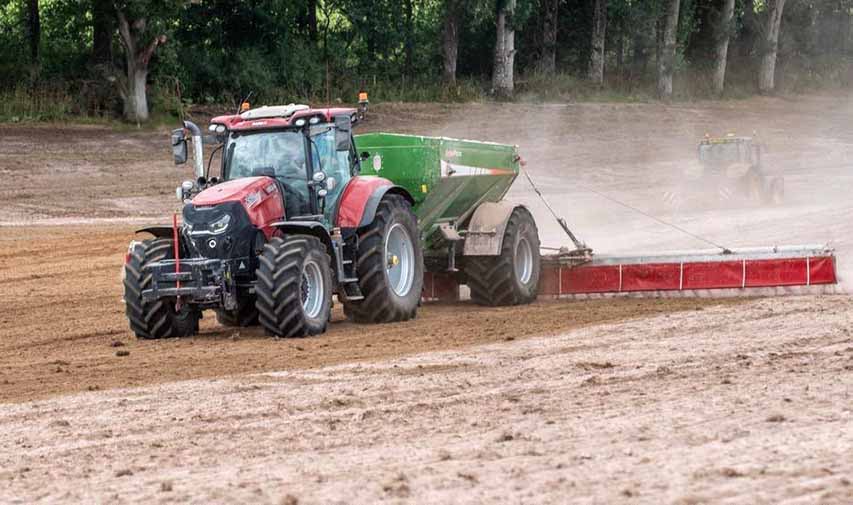
Wilson added: “The success of over-seeding depends largely on achieving good seed-to-soil contact and reducing competition from the existing sward. Tight grazing before sowing, followed by light harrowing and rolling where appropriate, can significantly improve establishment rates.”
Over-seeding is most likely to succeed in open swards where there is sufficient exposed soil to promote good seed-to-soil contact. In denser swards, slot-seeding equipment may provide better establishment.
Seed rates should follow the recommendations for the chosen mixture and sowing method, with approximately 10 kg/acre commonly used for ryegrass overseeding.
Seed and sowing costs typically range from £55 to £80 per acre, depending on seed mixture, seed rate and contractor charges. Additional expenditure may be required for lime, fertiliser, weed control and other field operations.
A successful overseeding programme can improve sward quality and increase grass production, although responses will vary according to soil fertility, sward condition, establishment success and subsequent management.
Fields that have suffered more substantial deterioration contain less than approximately 50% perennial ryegrass or have significant weed burdens may be better suited to a full reseed.
Although reseeding requires a greater initial investment, it provides an opportunity to establish modern perennial ryegrass varieties with superior yield potential, digestibility and persistence.
Research continues to demonstrate that well-managed perennial ryegrass swards can produce significantly more utilisable dry matter than older, poorly performing grassland. Increased grass production can help reduce purchased feed requirements and support improved milk output from home-grown forage.
The use of grass measurement software such as Agrinet, alongside regular plate meter assessments, allows farmers to accurately monitor grass growth and utilisation.
This information can be used to identify underperforming fields and measure the benefits achieved through reseeding. Comparing annual grass production before and after renovation helps determine the return on investment and ensures reseeding budgets are targeted where the greatest gains can be achieved.
Before any reseeding or over-seeding takes place, farmers should assess soil fertility. DAERA Soil Nutrient Health Scheme results, where available, together with routine soil analysis undertaken at least every four years, should be used to determine soil pH and phosphorus (P) and potassium (K) status.
“Correcting soil fertility issues before reseeding is essential if farmers want to maximise establishment success and achieve the full benefits of improved grass varieties,” says Wilson.
Grassland performs best when soil fertility is maintained at optimum levels. Farmers should aim to maintain mineral soils at approximately pH 6.3 and peat soils within the range of pH 5.5 to 5.8. Phosphorus should be maintained at Index 2 and potassium at Index 2-, in line with soil analysis recommendations.
Where pH levels are below target, lime remains one of the most cost-effective inputs available to livestock farmers. Correcting soil acidity improves nutrient availability, enhances fertiliser efficiency and supports improved grass growth.
“Maintaining the correct soil pH is the foundation of productive grassland management,” says Wilson. “On acidic mineral soils, increasing soil pH from 5.5 to 6.3 can increase grass production by at least one tonne of dry matter per hectare annually.”
The additional grass grown can be worth approximately £60 per acre each year.
Furthermore, restoring soil pH can improve the availability of phosphorus and potassium and may release up to 60 units of nitrogen per acre annually from soil reserves, reducing the need for purchased fertiliser. The size of the response will vary depending on soil type, organic matter levels and management practices.
Variety selection also plays a crucial role in the success of any reseeding programme. Farmers should choose varieties based on seasonal growth characteristics, digestibility and persistence, while selecting seed mixtures to suit their intended system, whether grazing, silage production or a combination of both.
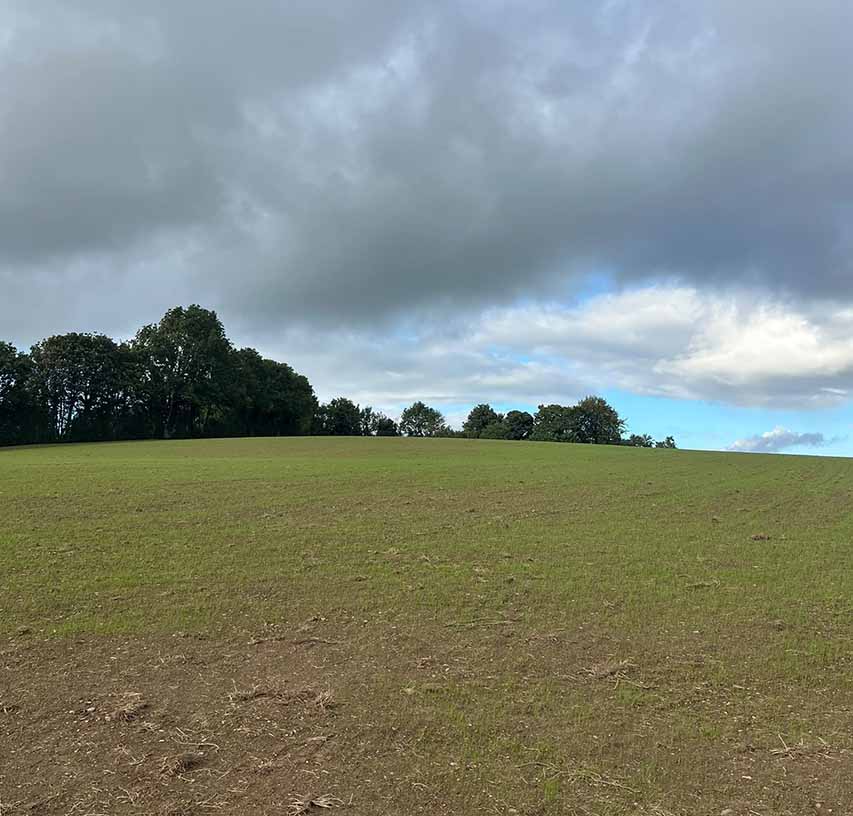
Preference should always be given to independently evaluated varieties included on recognised recommended lists. Increasing numbers of dairy farmers are also incorporating white clover into reseeding mixtures to improve forage quality and support biological nitrogen fixation.
Where clover is included, particular attention should be paid to maintaining soil fertility and adjusting nitrogen fertiliser applications accordingly.
With feed and fertiliser costs continuing to influence dairy farm profitability, maintaining productive grassland remains one of the best investments available to livestock farmers.
“Northern Ireland’s climate gives dairy farmers a natural advantage when it comes to grass production,” comments Wilson. “By investing in soil fertility, liming, grass measurement and high-performing grass and clover varieties, farmers can grow and utilise more high-quality forage.
“In a period of volatile feed and fertiliser costs, productive grassland remains one of the most cost-effective investments available to dairy businesses.
“Improving grassland productivity will help farms reduce costs, improve resilience and support long-term profitability while making better use of our greatest natural resource.
“In an increasingly challenging economic and regulatory environment, growing and utilising more high-quality grass remains one of the most sustainable routes to future dairy farm success,” concludes Wilson.
Have you completed Soil Nutrient Health Scheme Training? There’s still the opportunity to attend training courses delivered by Countryside Services Ltd or visit:
www.cafre.ac.uk to complete the online training programme at a time and pace to suit you.