


Son of Ragnar killed on an island duel on Strangford Lough in 877 AD
An infamous Viking was killed in the late ninth century after a brutal duel with a rival Northman on a tiny island in Strangford Lough, according to an author.
Paul Harper has written a new book investigating the legend of Ragnar Lothbrok and his famous sons including a Viking called Halfdan who was killed on an island not far from Killyleagh in Strangford Lough.
His research into the Vikings 12 centuries ago has uncovered some interesting information about Ragnar and his sons.
Paul is a former journalist now based in England whose grandmother came from Blessington in Ireland and she was an O’Neill. He said: “History is my passion and I have just loved researching and writing ‘Sons of Ragnar’. The research extends back over a number of years and it became just a real labour of love for me.
“I have worked in public relations at a university for some time and have always been fascinated by historical mysteries.
“My first book called ‘Cerdic‘, was about the king of Wessex which eventually became England. I have identified his possible burial place and I’m trying to raise the funds for a non-invasive, geo-physical, ground survey.”
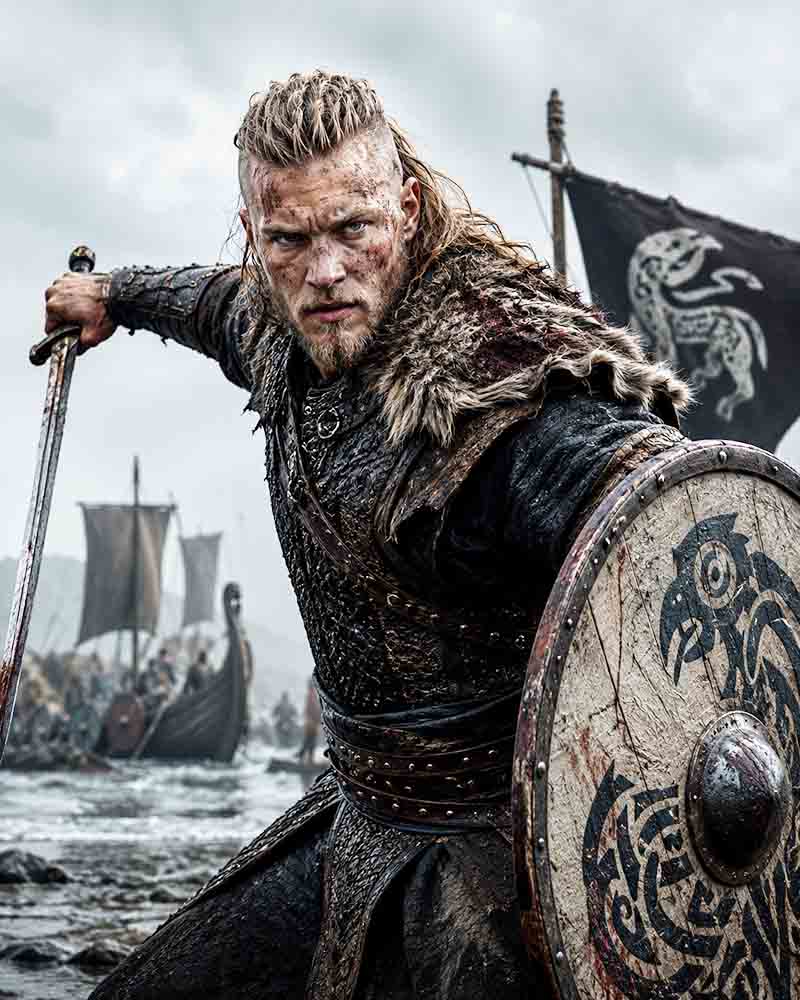
For Lecale and local historians, Paul’s book delves deep into local Viking characters around 8-900 AD and is supported by extensive research into primary documents and sources.
One contemporary Old Irish text called the Annals of Ulster said that Halfdan whom it calls ‘Albann’ and who led a group known as ‘the dark heathens’ was killed after a skirmish on Loch Cuan (Strangford Lough) in 877.
A twelfth-century medieval Irish text called the Cogadh Gaedhel re Gallaibh (The Wars of the Irish with the Foreigners) says that Halfdan’s opponent was a Barid who was seriously injured and left “lame ever after”. It refers to Halfdan as “a son of Ragnall” which is a possible reference to Ragnar Lohtbrok.
While the actual battle site has remained a mystery in Strangford Lough, the largest inlet in the UK, Harper found there was a major clue in Old Norse sagas which refer to a ‘Holmganga’ as legal duel for two warring Vikings to resolve their dispute.
These duels, which could result in death, were staged in roped off bounded areas resembling a modern boxing ring and crucially on small islands.
Derived from the Old Norse word Holmr, meaning ‘small island or inlet’ , Holm Bay is situated across from Dunnyneill Island in Strangford Lough and has been designated in Northern Ireland’s Historic Environment Records (HERs) as an ‘archaeologically sensitive area’ because of the potential Viking association. (Interesting point: the Ballyholme placename is a mixture of Irish and Viking!).
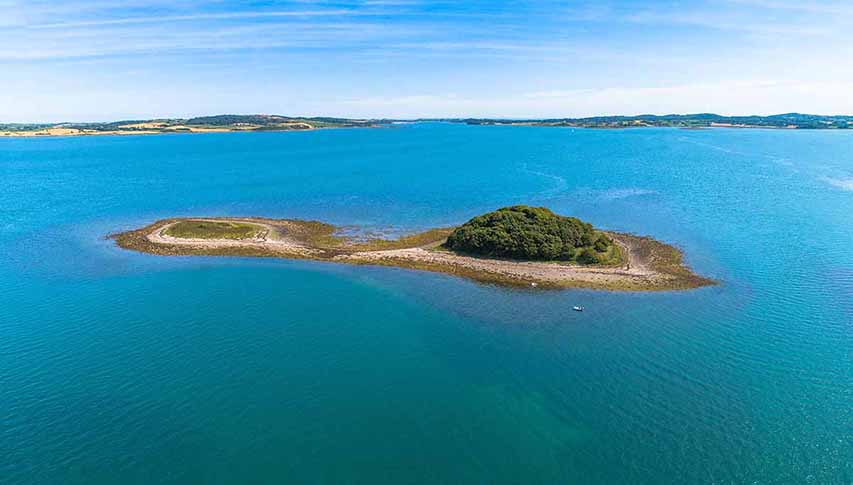
At one point during the sixth and seventh centuries, Dunnyneill Island, which measures just 100m (328ft) in length, was a thriving trading site for merchants from across Europe.
There is archaeological evidence that a large sub-rectangular structure was occupied on the island during the late ninth century and the people living there were involved in a wide range of craft activities, including metalworking.
Harper believes the island, just two miles from the entrance of the lough, would have been the perfect place for Halfdan and his opponent Barid, who led a rival group known by the Irish as the ‘fair foreigners or heathens’, to contest a Holmganga duel.
At the time Halfdan was the leader of the infamous Great Heathen Army which was in control of most of modern England and he also wanted power over the Viking groups in Ireland after the death of his brother Ivar the Boneless.
According to the Annals of Ulster, Halfdan had also ‘treacherously killed’ another Irish Viking leader called Eysteinn, the son of a powerful Northman called Olaf the White, a year before his demise.
Harper said: “I believe that Dunnyneill Island was the setting for a bloody duel which saw the slaying of Halfdan, one of the most notorious Vikings to ever set foot in Britain and Ireland.
The Holmganga was a violent and legalised way for Vikings to settle disputes and the circumstances fit with Halfdan and Barid battling for control over the different Viking gangs in Ireland and there was the perfect location in Dunnyneil Island across from Holm Bay to settle the score.
“Even by Viking standards Halfdan was extremely warlike, always seeking conflict and plunder, but his luck ran out at Strangford Lough.”
According to Old Norse tales, Halfdan and other sons of Ragnar Lothbrok had led the Great Heathen Army into what is now England to avenge their father’s death after he was thrown into a snake pit by the Northumbrian king Aella.
The notorious Scandinavian family are the main characters in the hit television series Vikings, and Halfdan is known as Hvitserk (ie white shirt).
Strangford Lough was part of the Ulaid kingdom territory in north-eastern Ireland, roughly equivalent to modern-day Down and Antrim. With the presence of rich monastic sites at Downpatrick, Nendrum and Bangor, the Ulaid kingdom suffered from repeated Viking raids throughout the ninth century.
Descendants of Halfdan’s brother Ivar, who was known as Ímair in Old Irish and his dynasty was called the Uí Ímair, remained a powerful force in Ireland with control of Dublin until the Battle of Clontarf in 1014.
One of Ivar’s descendants Sigtrygg Silkbeard was defeated by Brian Boru at the battle and the dynasty’s power began to dramatically decline over the next forty years.
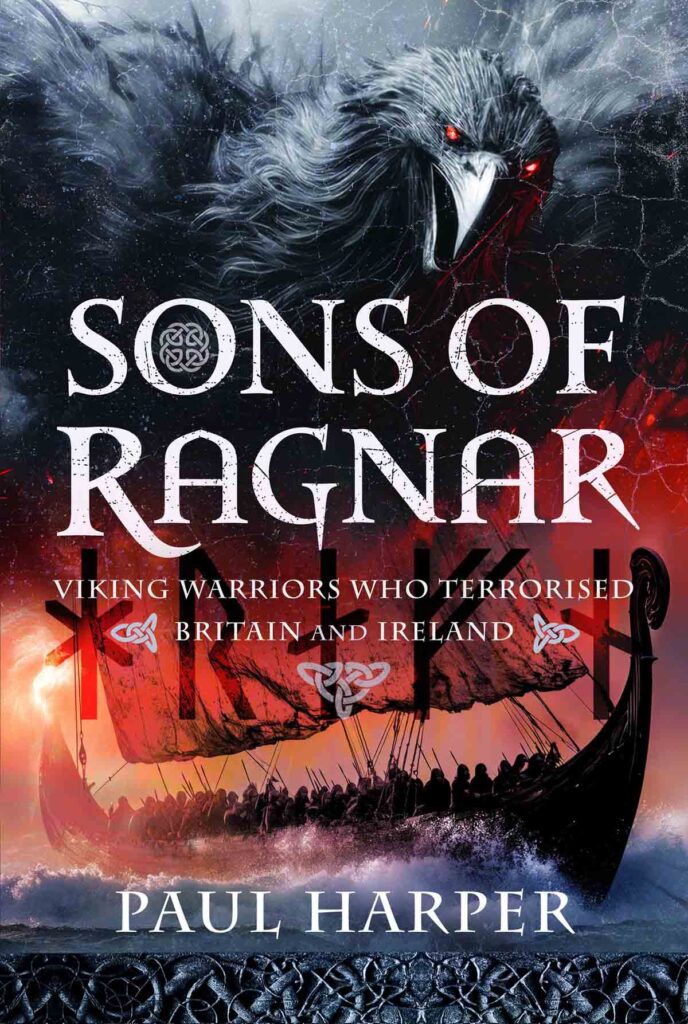
Paul Harper’s book Sons of Ragnar: Viking Warriors who Terrorised Britain and Ireland by Pen & Sword, is out now:
https://www.pen-and-sword.co.uk/Sons-of-Ragnar-Hardback/p/61528.