



Read on if youxa0are a trained nurse or midwife and would like to become as a health visitor.
 Northern Ireland’s Chief Nursing Officer Charlotte McArdle is backing a new recruitment campaign to encourage trained nurses and midwives with two or more years’ experience to consider a career change as a health visitor.
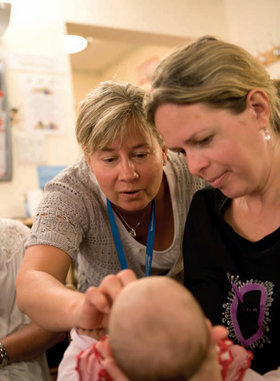 Nurses and midwives have an opportunity to train as a health visitor.[/caption]
Over the next 10 years, the health and social care service in Northern Ireland will continue to build its focus on preventive approaches, with greater emphasis on community-based services as laid out in Transforming Your Care policy document.
One such role is that of a health visitor who, through their important work supporting families and children, can make a difference to parents and children alike.
Mrs McArdle said: “Parenting is a lifelong commitment and providing sufficient support throughout pregnancy and a child’s early years is vital. We must as a society ensure we give children the best possible start in life.
“This in turn will ensure a good basis for healthy adulthood and better long-term outcomes in later life. The role of health visitors is vital in achieving this.
“Health Visitors provide targeted support to families with additional health needs. They also provide help and support to mothers with postnatal depression and mental health problems and are there to provide advice and support on Child Protection issues and Domestic Violence.
“It is a job that requires high levels of skill, judgement, initiative, professional knowledge and leadership.”
Mrs McArdle added: xa0“I would encourage any nurse or midwife with the relevant experience, who are interested in children and families and who think they can make a difference in people’s lives, to consider applying now to train as a health visitor.”
All training places at the University of Ulster are fully funded.
To apply to train as a Health Visitor throughout all trust areas and for more information search “SCPHN (Health Visitor Option) Training Posts” on:
Mrs McArdle concluded: “Early childhood interventions are a particularly important area that can help reduce the societal inequalities rooted in poverty by providing young children from disadvantaged backgrounds with a more equitable start in life. This investment in early childhood also has the potential to multiply returns over the life-course. Health visitors are crucial in the implementation of this strategy.”
xa0
]]>