



Dido and Aeneas
xa0La voix humaine
Opera Northxa0at the Grand Opera House Belfast
Reviewed byxa0George Fleetonxa0© 2013
[caption id="attachment_32481" align="alignleft" width="150"]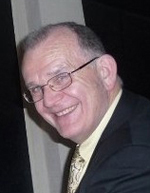 George Fleeton[/caption]
Having written extensively, in recent months, about other productions of both Verdi’sxa0Otello¹ and Mozart’sxa0Clemenza di Tito², I wish to focus on that part of Opera North’s recent visit to Belfast which included the double bill of Poulenc’sxa0Voix humainexa0and Purcell’sxa0Dido and Aeneasxa0(seen back to back on March 08).
Fully-staged opera in Belfast is still something of a rarity.
Most recently we have had N.I. Opera’sxa0Flying Dutchman³ and Scottish Opera’sxa0Magicxa0Flute²ª.
The next scheduled production willxa0 be Ellen Kent’sxa0Carmenxa0in the Waterfront Hall on April 02.
Dido and Aeneas
Leeds-based Opera North’s four-night stand in the Grand Opera House (March 06-09) was therefore a most welcome oasis in relatively arid terrain.
Their production of Purcell’s one true, all sung opera,xa0Dido and Aeneasxa0(which dates from around 1689), was one of the most imaginative seen in a long time.
Remember this was only 45 years after the death of Monteverdi and a generation before the colonisation of London by Handel’s Italian operas.
Yetxa0after Purcell’s death, it would be exactly 250 years until another English composer, Britten, wrote a major opera (Peter Grimes) that could hold its own amongst the great European operatic traditions, which themselves has effectively tailed off with the death of Puccini in 1924.
Purcell was an exceptional musician on so many levels.
Throughout the 17thxa0century, as Monteverdi and Cavalli (in Italy) and Lully and Charpentier (in France) were originating and developing this new art form,xa0dramma per musica, Purcell, in splendid isolation from his European contemporaries, only had time to write one, unique chamber opera before his early death at about age 36.
He had been essentially a prolific composer not only of sacred music, but also of incidental music for the theatre of others, which included his four so-called ‘semi-operas’.
Dido, which lasts about an hour, was most convincingly directed and choreographed for Opera North by Aletta Collins, and splendidly sung by Pamela Helen Stephen, and the dramatic density of the piece was palpable.
The concept of multiple Didos – the exteriorisation of her inner demons, perhaps? – dressed and coiffed as red-headed look-alikes was a fascinating touch, in a neutral setting, robustly lit.
Of the many recordings, do try Janet Baker’s Dido (for Decca in 1961).
La voix humaine
Lesley Garrett had chosen this short piece by Francis Poulenc from 1959 (here sung in English) as her operatic comeback.
It is eight years since we last saw her as The Merry Widow, then touring with Welsh National Opera.
Since her appearances at Wexford over 30 years ago her operatic career has been sporadic, safely managed but eclectic, allowing her to develop her fine voice more as a cross-over artiste and television personality.
Her choice ofxa0La voix humaine, in a well intentioned effort to restore her operatic viability, was ill-advised.
This is a merciless piece of music drama, largely unknown in these parts, or anywhere else for that matter, in which the singing actress has nowhere to hide.
Poulenc, who died in Paris exactly 50 years ago, was a Surrealist-manqué, and a good friend of Jean Cocteau whose text he set to music for this odd opera.
But Menotti’s little operaxa0The Telephonexa0(1947), the exact antithesis ofxa0Voix humaine, had already tackled the sit-com aspect of the telephone-as-prop, and with a well-chosen baritone in tow, that opera would have been an ideal vehicle for Ms Garrett’s return to form.
La voix humainexa0was Poulenc’s final opera, and it graphically depicts the psychological disintegration of a desperate woman being dumped, on the telephone, by her callous lover.
It’s raw, honest and painful, and all that is well caught in Aletta Collins’ direction of this extremely demanding monologue.
Garrett is not a dramatic soprano and this piece needed a darker voice.
There is an EMI CD, conducted by Georges Prêtre in 1959, with the originalxa0 Elle (Denise Duval), sung in French of course, and it may well leave you reeling.
George Fleeton[/caption]
Having written extensively, in recent months, about other productions of both Verdi’sxa0Otello¹ and Mozart’sxa0Clemenza di Tito², I wish to focus on that part of Opera North’s recent visit to Belfast which included the double bill of Poulenc’sxa0Voix humainexa0and Purcell’sxa0Dido and Aeneasxa0(seen back to back on March 08).
Fully-staged opera in Belfast is still something of a rarity.
Most recently we have had N.I. Opera’sxa0Flying Dutchman³ and Scottish Opera’sxa0Magicxa0Flute²ª.
The next scheduled production willxa0 be Ellen Kent’sxa0Carmenxa0in the Waterfront Hall on April 02.
Dido and Aeneas
Leeds-based Opera North’s four-night stand in the Grand Opera House (March 06-09) was therefore a most welcome oasis in relatively arid terrain.
Their production of Purcell’s one true, all sung opera,xa0Dido and Aeneasxa0(which dates from around 1689), was one of the most imaginative seen in a long time.
Remember this was only 45 years after the death of Monteverdi and a generation before the colonisation of London by Handel’s Italian operas.
Yetxa0after Purcell’s death, it would be exactly 250 years until another English composer, Britten, wrote a major opera (Peter Grimes) that could hold its own amongst the great European operatic traditions, which themselves has effectively tailed off with the death of Puccini in 1924.
Purcell was an exceptional musician on so many levels.
Throughout the 17thxa0century, as Monteverdi and Cavalli (in Italy) and Lully and Charpentier (in France) were originating and developing this new art form,xa0dramma per musica, Purcell, in splendid isolation from his European contemporaries, only had time to write one, unique chamber opera before his early death at about age 36.
He had been essentially a prolific composer not only of sacred music, but also of incidental music for the theatre of others, which included his four so-called ‘semi-operas’.
Dido, which lasts about an hour, was most convincingly directed and choreographed for Opera North by Aletta Collins, and splendidly sung by Pamela Helen Stephen, and the dramatic density of the piece was palpable.
The concept of multiple Didos – the exteriorisation of her inner demons, perhaps? – dressed and coiffed as red-headed look-alikes was a fascinating touch, in a neutral setting, robustly lit.
Of the many recordings, do try Janet Baker’s Dido (for Decca in 1961).
La voix humaine
Lesley Garrett had chosen this short piece by Francis Poulenc from 1959 (here sung in English) as her operatic comeback.
It is eight years since we last saw her as The Merry Widow, then touring with Welsh National Opera.
Since her appearances at Wexford over 30 years ago her operatic career has been sporadic, safely managed but eclectic, allowing her to develop her fine voice more as a cross-over artiste and television personality.
Her choice ofxa0La voix humaine, in a well intentioned effort to restore her operatic viability, was ill-advised.
This is a merciless piece of music drama, largely unknown in these parts, or anywhere else for that matter, in which the singing actress has nowhere to hide.
Poulenc, who died in Paris exactly 50 years ago, was a Surrealist-manqué, and a good friend of Jean Cocteau whose text he set to music for this odd opera.
But Menotti’s little operaxa0The Telephonexa0(1947), the exact antithesis ofxa0Voix humaine, had already tackled the sit-com aspect of the telephone-as-prop, and with a well-chosen baritone in tow, that opera would have been an ideal vehicle for Ms Garrett’s return to form.
La voix humainexa0was Poulenc’s final opera, and it graphically depicts the psychological disintegration of a desperate woman being dumped, on the telephone, by her callous lover.
It’s raw, honest and painful, and all that is well caught in Aletta Collins’ direction of this extremely demanding monologue.
Garrett is not a dramatic soprano and this piece needed a darker voice.
There is an EMI CD, conducted by Georges Prêtre in 1959, with the originalxa0 Elle (Denise Duval), sung in French of course, and it may well leave you reeling.
***
George Fleeton’s next promotion/productionxa0takes place in St Patrick’s Church, Downpatrick,xa0on March 24 at 3pm: