



Historic Silent Valley landmark of Superintendent’s House restored for future generations
One of Silent Valley’s most recognisable historic buildings has been given a new lease of life following the completion of a major conservation and restoration project by NI Water.
The Superintendent’s House, a listed building which has stood at the entrance to the Silent Valley Estate for more than 120 years, has undergone an extensive programme of restoration as part of NI Water’s Historic Estate Project.
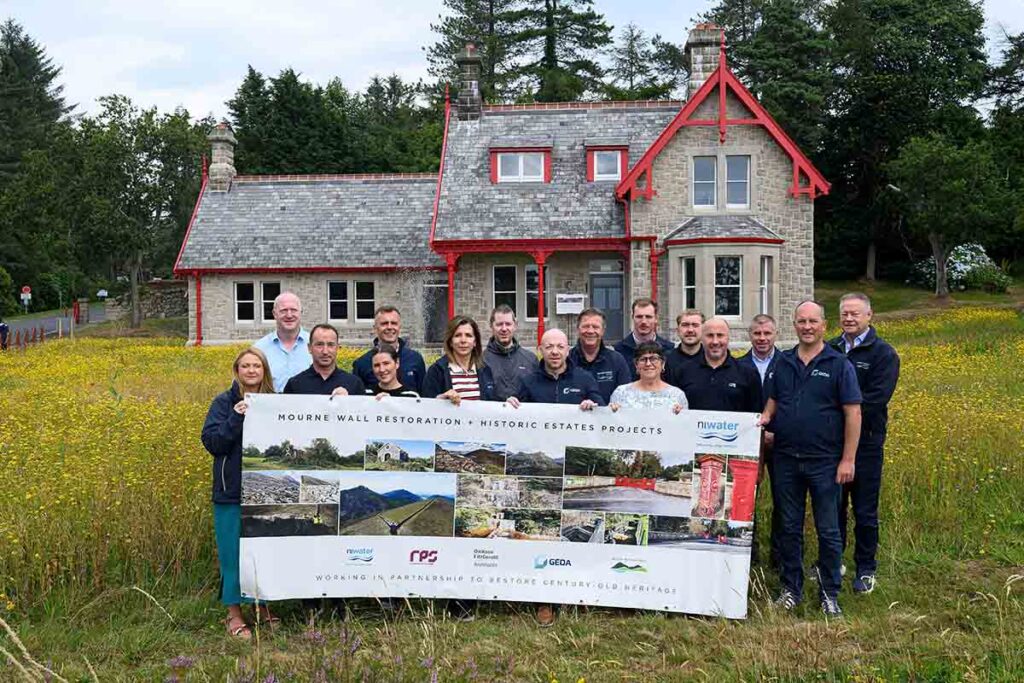
Originally built to house the Water Commissioner’s Superintendent and his family during the construction of the iconic Silent Valley Reservoir, the property has been sensitively conserved to support those caring for the Mournes for generations to come.
The project, carried out by GEDA Construction and managed by Tetra Tech in partnership with Dickson Fitzgerald Architects, has restored many of the building’s original architectural features while sensitively introducing modern facilities to support its ongoing use by Mourne Heritage Trust (MHT) and the staff and volunteers who work to protect the Mourne landscape.
Speaking following the completion of the project, NI Water Senior Project Manager, Michael Donnelly said: “The completion of the Superintendent’s House marks another important milestone in NI Water’s Historic Estate Project – a rolling programme of work to survey, protect and care for listed assets within NI Water’s ownership.
Our aim has always been to protect the unique heritage of this remarkable building while ensuring it remains fit for purpose for generations to come.
“Throughout the restoration our project partners – GEDA, Tetra Tech and Dickson Fitzgerald Architects – have worked closely with the Department for Communities’ Historic Environment Division to retain as much of the building’s original character as possible.
“Traditional conservation techniques have been combined with carefully considered modern improvements, allowing us to preserve the building’s history while creating a practical workspace for those who continue to look after this special landscape.”
The restoration has seen original sash windows carefully repaired and upgraded, decorative timber features conserved, historic chimneys rebuilt using traditional methods, reclaimed timber transformed into new flooring and heritage materials used throughout the building.
Specialist archive, meeting and welfare facilities have also been created, ensuring the building can continue supporting conservation work across the Mournes while retaining its historic character.
A key feature of the project was the use of local expertise, with specialist subcontractors, craftspeople and suppliers contributing traditional conservation skills including lime plastering, bespoke joinery, furniture restoration, heritage glazing and stone conservation.
Wherever possible, materials and services were sourced locally, supporting the regional economy while helping to preserve specialist heritage skills.
Michael added: “Projects like this rely on specialist skills and we’re extremely proud that so much of that expertise could be found here in the Mournes area as well as other parts of Northern Ireland.
“From local joiners and stonemasons to flooring specialists and conservation contractors, every organisation involved has played an important role in bringing this historic building back to life.
“The Superintendent’s House has witnessed more than a century of the Mourne Water Supply Scheme, and thanks to this restoration it will continue to play an important role in supporting the people who work every day to protect and care for the Mournes.”
The Superintendent’s House is one of 44 listed assets in NI Water’s care, alongside landmarks including the Mourne Wall, Silent Valley Red Gates and Dunnywater Aqueduct.
The restoration forms part of NI Water’s ongoing commitment to conserving these important historic structures while ensuring they remain valued assets for future generations.