



Trust initiative of cutting caffeine helps significantly reduce falls
Falls are one of the most common sources of injury in Health and Safety and taking too many cuppas could seriously contribute to your trips and falls and ending up in the A&E.
A simple switch to a decaffeinated cup of tea or coffee is helping make a significant difference to South Eastern Trust patient safety.
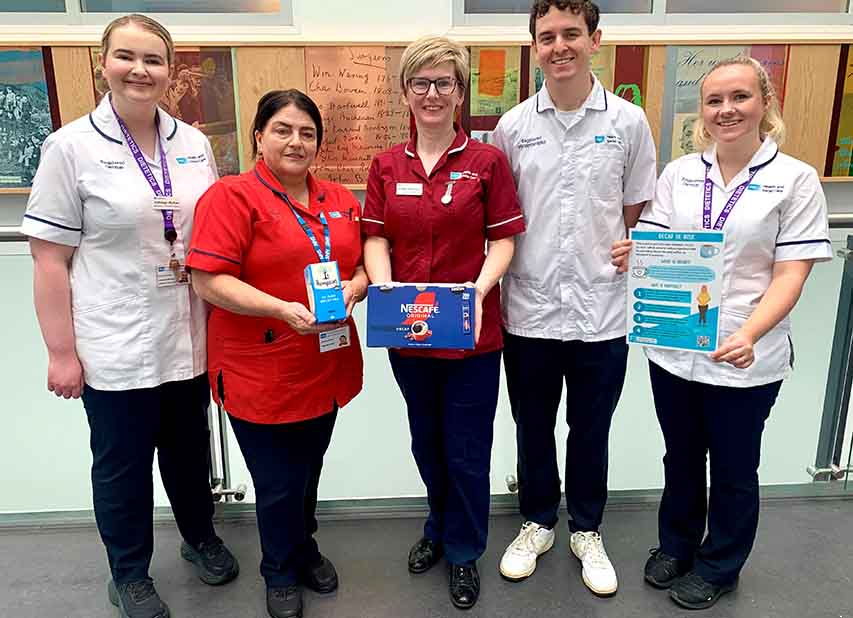
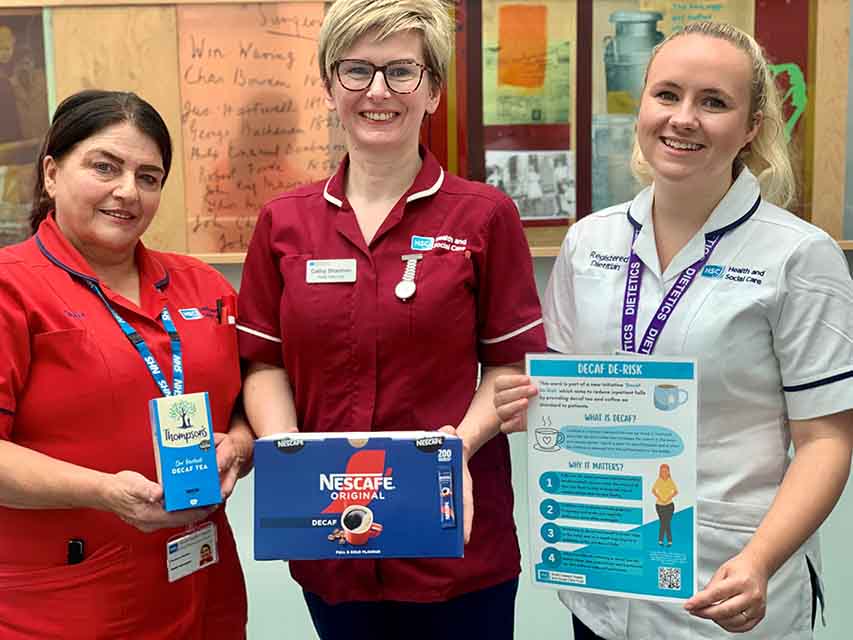
The Downe Hospital’s ‘Decaf De-Risk’ initiative, introduced on the wards in June, – has seen an incredible 21 per cent reduction in falls in one of its wards.
Studies have shown how caffeine can increase urinary urgency frequency during the day and night.
By switching to decaf, it can result in fewer trips to the toilet and improve sleep at night and as a result reduce the number of times a person may need to get up which reduces their risk of falls.
Other benefits of switching to decaf can be better sleep, less palpitations and a potential for less caffeine induced headaches.
South Eastern Trust, Acute Falls Lead, Nurse Cathy Shannon explained how by eliminating caffeine from the diet of their patients, “We are reducing the risk of unnecessary trips to the toilet and night time disturbance. Caffeine stimulates the bowel, the bladder and can cause restlessness.
“By giving our patients decaf tea and coffee, it should help reduce falls on our inpatient wards, where we have initially undertaken the project.”
Cathy added: “This project was undertaken by an incontinence Nurse in England and we have built on her research with our Dieticians, our Catering Team and tried to translate the findings to our setting, here in the Downe Hospital.
“Since June, the switch to decaf for our patients has been successful with a 21 per cent reduction in the number of falls recorded on one of our wards.
“Our emerging coffee culture means that ‘decaf’ is more readily accepted and more widely available.
“We have worked very closely with the Wards here at the Downe Hospital to educate the staff about the project and we have had good buy-in from them. It is a great project to be a part of.”
Ward Manager Suzanne Madine stressed “Patient safety is our priority.”
“When we first heard about the project, we did think that it would benefit us. Since the implementation of it in June, everyone is onboard. It is very heartening and positive to hear the reduction in falls on the wards since we started.”
Dietitian Amy Webb added, “We have been liaising with the Falls and Catering Team to make this happen on a ward level.
“It is really good to see and hear of the positive impact it is making and that reduction in falls.”
So, the message is clear. If you want to stay safe and prevent falls, reduce your caffeine intake or better still, stop it altogether.