



Tracks like Ascot and Epsom have kept their special feel while adding new tech, better media coverage, and things fans now expect, mixing old tradition with what today’s crowds want.
Key Takeaways
- Big festivals like Cheltenham, Royal Ascot and the Epsom Derby created traditions that still define British racing.
- Racing in Britain goes back centuries, with Ascot starting in 1711 and the Derby in 1780.
- These events are now more than just races. They’re big sporting and cultural occasions that bring in fans of all ages.
- Old tracks have kept their character while adapting to modern fans, media and tech.
- Bettors can use the history of these events to help when studying form, course records and festival performance, whether at a UK track or a place like Del Mar.
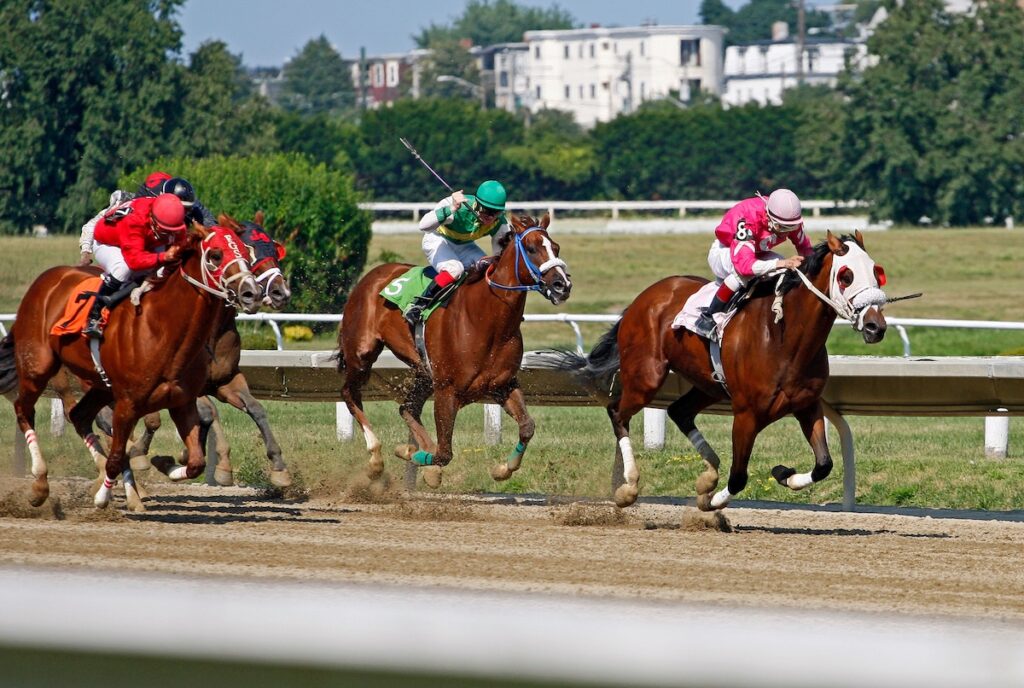
Why Historic Horse Racing Festivals Still Matter
Horse racing traditions in Great Britain run deep. This is actually the country where the sport was structured and shaped into the form we recognise today, and that British horse racing history is what built the foundation. Early events had strong backing from royalty. Kings like Charles II turned Newmarket into the cradle of turf, while events like Royal Ascot, founded by Queen Anne in 1711, helped cement the sport in the popular imagination. Horse racing is Britain’s second most popular sport after football, and events like the Cheltenham Festival and the Grand National still bring the social calendar to a halt and pull in international audiences.
Part of the appeal is that a festival works differently than a single race. An individual race is about speed and personal victory. A festival is a community and a culture shared across generations, where the event itself often matters more than who actually wins. That local heritage and shared culture is something you don’t really find in other sports, and it’s held up for centuries.
The Festivals That Defined British Racing
Festivals keep old customs alive and connect older generations with newer ones in ways that are genuinely unique to this sport.
Cheltenham and the Tradition of Jump Racing
Official records from The Jockey Club trace the origin of racing in Cheltenham back to 1815, with flat racing on Nottingham Hill. It later moved to Cleeve Hill, where it drew massive crowds.
Its rising popularity soon hit a serious roadblock. In 1829, the local parish priest, Reverend Francis Close, began preaching aggressively against the “evils” of horse racing, gambling, and drinking. The venue was eventually burned down by an angry mob. To escape that violent local opposition, racing was relocated to its current site at Prestbury Park in 1831.
By the early 20th century, Cheltenham’s leadership had a clear, singular ambition: turn the venue into the “Newmarket of Jump Racing,” the definitive headquarters for National Hunt sport. The Cheltenham Festival was the vehicle for that goal, and it settled permanently at Prestbury Park in 1911, quickly becoming the definitive proving ground for jump racing.
The introduction of the Champion Hurdle in 1927 came alongside the Gold Cup, which gave the sport its defining “Blue Riband” prize. Together, they turned Cheltenham from a successful local racecourse into the undisputed home of National Hunt’s elite competition, a reputation that still holds today.
Epsom and the Derby Legacy
The Epsom Derby is the pillar modern turf racing was built on. It’s more than a horse race. It turned speed racing into a global industry and became a genuine British social phenomenon. The first edition ran on May 4, 1780, and over the course of the 19th century, Epsom grew from a sporting event into a national celebration. Its closeness to London, plus the arrival of the railway, let people from every social class mix together on the Surrey Downs.
The Epsom track itself is brutal. It demands speed out of the gate, stamina to climb the initial hill, balance to handle the famous banked turn at Tattenham Corner, and nerve for the final descent. Winning the Derby proves a three-year-old is about as close to the perfect thoroughbred as it gets.
It’s the race that defines a career in this sport. A single win at Epsom locks in a permanent place in racing history.
Royal Ascot and Racing Culture
Even if you know nothing about horses, you’ve probably heard of Royal Ascot. It blends three centuries of royal tradition with the highest level of international turf racing.
The event traces back to August 11, 1711, when Queen Anne of Great Britain came across an open moor near Windsor Castle and declared it the ideal place for horses to gallop at full speed. The first official race ran that same year.
Royal Ascot marks the heart of the British Summer Season, and it’s about a lot more than the racing itself. The Royal Enclosure’s strict dress code, morning coat and top hat required for men, formal dresses with a headpiece or a hat with a base of at least 10 cm for women, has turned the event into a global showcase for fashion, business, royalty, and even diplomacy.
How Festivals Created Racing Traditions
Not every festival turns into an emblem of tradition and culture. Becoming one of the truly famous horse racing events usually comes down to a combination of a few things.
| Tradition | Impact on Modern Racing |
| Race quality | The most iconic festivals are built on top-tier sporting events that bring together the elite of the sport. |
| Historic venues | Historic venues offer a direct connection to the legends and legacy of the past. |
| Racing records | Having the best of the best compete has produced records that still stand today, motivating new participants to break them and write their own chapter in the sport’s history. |
| Fashion and ceremony | Draws in a wider audience and helps preserve the atmosphere and identity of the event, making it more recognizable. |
| Family attendance | Festivals become a fixed point on the family calendar, a main social event that passes the tradition down from generation to generation. |
From Racecourse Crowds to Global Audiences
These events used to be reserved for a small circle. As media started covering them, drawn in by the quality of the competitors, the presence of royalty and dignitaries, and the fashion, these events started pulling in global attention.
Technology now lets people who can’t attend in person live the event anyway, through live broadcasts, social media, and digital betting. You can follow the pulse of an event, and every single race in it, down to live stats and racecards. Technology has actually pulled fans and races closer together, giving people a new way to consume the content and live the tradition without it losing its essence.
What Racing History Means for Modern Bettors
Historic horse racing adds a new dimension to betting. On one hand, it’s possible to place bets on some of the sport’s most legendary and iconic events. On the other, there’s a wealth of data that’s genuinely enjoyable to dig into and study for patterns, and to find the keys to winning at a given venue, whether that’s in Great Britain, the US, or anywhere else.
Bet on Del Mar races is a good example of exactly this principle at work. Del Mar opened in 1937 and built a substantial racing history almost right out of the gate. In 1938, the iconic American champion Seabiscuit faced off against the Argentine horse Ligaroti, owned by Bing Crosby, in an all-or-nothing exhibition race. It drew more than 20,000 spectators and became the first horse race in US history broadcast nationally on radio.
Dig further into Del Mar’s history, and you’ll find an elite track that has successfully hosted the global Breeders’ Cup in both 2017 and 2021, an event often called the “Olympics of equestrian sport.” It’s also a track where records tend to fall, and the best horses can put on their best performances, like in 2022, when Flightline demolished his elite field, winning by a staggering, unheard-of margin of 19 and a quarter lengths.
Depending on the event, bettors can dig into past winners, distances, track characteristics, and plenty of other accessible data. With that information, bettors can make more confident, better-informed decisions. None of it guarantees anything, but studying the numbers has proven valuable for the best bettors in the sport.
Why the Future of Racing Still Needs Its Past
Horse racing is a sport that needs its past: the tradition, the culture, and the legends that shaped it. Modern competitors want to break their idols’ records and win on the same tracks their idols won on. Fans want to walk through the legendary venues where royalty and aristocracy have gathered for centuries.
That whole narrative is what draws in new audiences who want to be part of it, and thanks to technology, that’s now possible from almost anywhere in the world, turning racing into one of the rare forms of entertainment that blends tradition and technology this well.
FAQs
What is historic horse racing?
It refers to famous races, venues, traditions, and events that have shaped modern racing over time, from centuries-old British festivals to storied American tracks that built their own legacy along the way.
Which UK horse racing festivals have the strongest history?
Cheltenham, Royal Ascot, and the Epsom Derby stand out. Cheltenham built its identity around National Hunt and jump racing, the Derby helped define flat racing and thoroughbred breeding, and Royal Ascot fuses elite racing with royal tradition and ceremony.
Why are historic racing festivals still popular?
They combine genuine sporting quality with tradition, atmosphere, heritage, and the kind of annual anticipation that builds over generations, rather than just being one race among many on the calendar.
Does racing history help when betting on horses?
It can add useful context, course characteristics, past winners, trainer and jockey records, but it’s not a substitute for current form, field strength, and conditions on the day. History informs a bet. It doesn’t decide it.