


Spring racing never really arrives all at once. One week, the ground still feels heavy; the next it dries out faster than expected. Stables are in different places with their horses, too. Some have runners that have been ticking over through winter. Others are only just bringing horses back into work after a break.
Because of that, the early part of the season can feel uneven. You get performances that look sharp next to others that feel half-finished. It is tempting to treat early results as firm signals, but they rarely are. More often, they offer fragments of a picture that only become clear later.
For people who follow racing closely, spring meetings are less about big declarations and more about hints. How comfortably did a horse move through the race? Did it settle, or pull against the jockey? Did it respond when asked, even if it did not quite get there? Those moments matter more than the finishing position alone.
Why the Early Spring Programme Often Misleads at First
The spring programme sits in a strange spot. It comes after months of winter racing, yet it is still some distance from the major summer fixtures. Trainers approach it with different intentions. One yard might be fully wound up for an early target. Another might be using the same meeting to bring a horse on quietly.
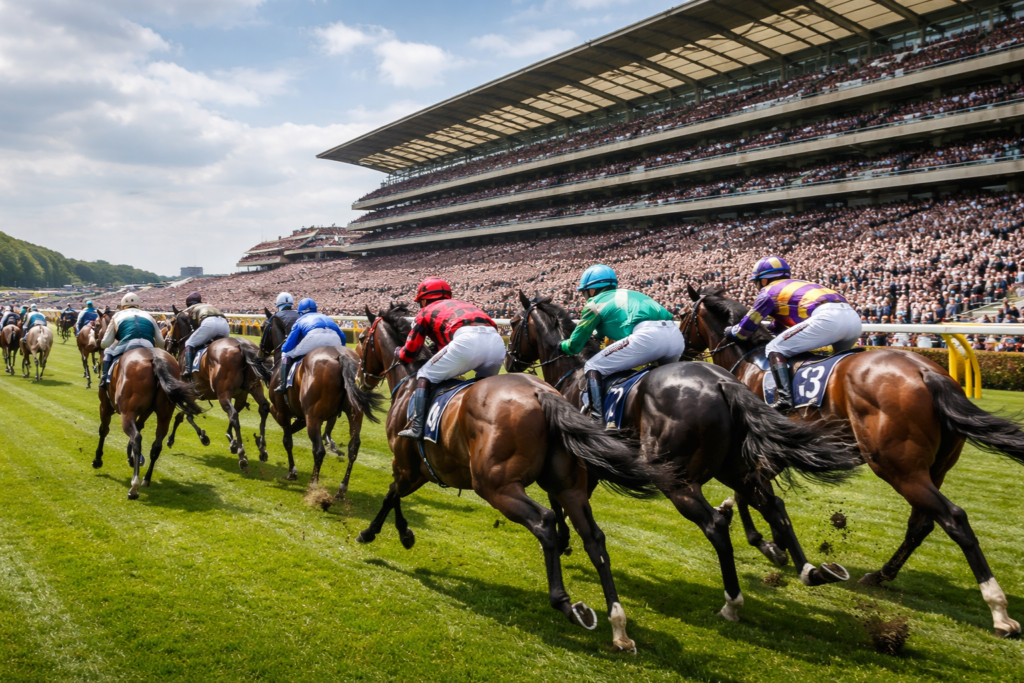
That difference shows up in the way races unfold. You see horses that travel strongly but fade late. Others are ridden with patience and only come alive in the final furlong. Neither approach is right nor wrong. It depends on where that horse is meant to be in its season.
Conditions complicate things further. Spring ground is unpredictable. A track that rides soft one weekend can feel much quicker the next. Some horses handle that shift without fuss. Others lose their rhythm the moment the surface changes. The early programme exposes those differences.
Over time, patterns start to emerge. Certain stables seem to need a run or two before their horses show their best. Others tend to have runners ready to go first time out. Those habits do not change much from year to year. Paying attention to them often tells you more than any single result on the day.
Meetings That Quietly Shape the Direction of the Season
A handful of spring fixtures tend to carry more weight than they appear to at first glance. Newmarket’s early meetings are a good example. The track does not flatter many horses. There is space to build momentum, but nowhere to hide if a runner is short of fitness or balance. When a horse moves well there in spring, it usually means the basics are in place.
Ascot, even early in the year, can be revealing in a different way. The course can catch out horses that are not fully tuned. Runners coming back from a break sometimes struggle to find a rhythm, especially if the pace changes mid-race. Performances there often tell you something about how ready a horse really is, even if the final position looks ordinary.
Newbury tends to be treated as a more straightforward test. The track gives horses a fair chance to show what they can do. When a runner runs an honest race there in the spring, it often holds up when you look back later in the season.
These meetings also attract attention within the sport. Trainers plan around them. Owners like seeing their horses run at recognisable venues. Jockeys know that strong rides at these fixtures are noticed. The result is that even early in the year, the level of competition can be sharper than it first appears.
Keeping a Handle on What Happens Between Races
A lot of what matters in spring racing happens away from the winning line. A horse might not improve its finishing position, yet still run a better race than last time. Another might finish closer but do less right during the run. Those shifts are easy to miss if you only follow results.
This is where having access to decent race information helps. Many people now use online platforms to track how horses are progressing from one meeting to the next. Being able to look back at recent runs, compare how a horse handled similar tracks, or check how often a stable improves runners on their second start of the season adds context that raw results do not show.
Some fans compare different services to see which ones present this information clearly. Tools and directories such as onlinebookies.uk racing bookmakers are sometimes used as reference points for where to find race cards, runner histories, and meeting coverage in one place. The practical value is not about prediction. It is about being able to follow the thread of a season without losing details along the way.
Why Spring Form Needs Time to Settle
Early-season form can be noisy. Horses are still building fitness. Trainers are still adjusting plans. Small changes in ground or pace can have outsized effects on how a race looks on paper.
It helps to look for repeated signs rather than one-off moments. Does a horse keep finding trouble in running? Does it travel smoothly but struggle to finish? Does it seem more relaxed with each run? Those small patterns tend to mean more than a single eye-catching performance.
Younger horses complicate things further. Three-year-olds, in particular, can change quickly from race to race. What looks like an ordinary run in March can be followed by a much stronger showing in April. Writing them off early is often a mistake.
How Spring Meetings Set the Tone Without Writing the Story
Spring does not decide how the season will end. What it does is set things in motion. You start to see which horses are comfortable with the shift in conditions. You notice which trainers have timed their preparation well. You get a feel for which jockey partnerships are starting to work.
Those early impressions are not final answers. They are the first chapters. By the time the bigger summer meetings arrive, many of the themes have already begun to take shape. Following spring racing closely makes the rest of the year easier to read, because you have seen how the pieces were set out at the start.