


Indaver Highlights The Impending Waste Crisis Facing Northern Ireland In The Absence of Modern Waste Infrastructure
Northern Ireland is facing a pending waste management crisis and Indaver, a private management waste company has warned that the Infrastructure Minister must approve the decision to go ahead as soon as possible.
In contributing to BBC Northern Ireland’s The View programme, Indaver, the European waste management specialists behind plans to develop a modern waste management solution to meet the needs of six Northern Ireland councils in the south-east including Newry Mourne and Down District Council and Ards and North Down District Council making up the arc21 partnership, have warned that Northern Ireland is facing a looming waste crisis unless it delivers the necessary infrastructure to manage its own waste.
The arc21 project has already been recommended for approval by four separate sets of planning professionals, including by an Independent Planning Appeals Commission review but is awaiting a decision from the Department of Infrastructure Minister Liz Kimmins.
The project has previously received no objections from over 70 statutory consultee responses including from the Northern Ireland Environment Agency (NIEA), Public Health Agency and DfI Roads Service.
For some time now Indaver has been highlighting to stakeholders and decision makers the precarious nature of Northern Ireland’s waste sector and stressing the need for the project to proceed.
Most recently they published a report called ‘Tipping Point’, which they issued to all Assembly members and local councillors in the arc21 councils last year.
This report emphasised that Northern Ireland risks adding a waste infrastructure crisis to our existing wastewater crisis, which is already damaging Northern Ireland’s economic aspirations and environmental reputation.
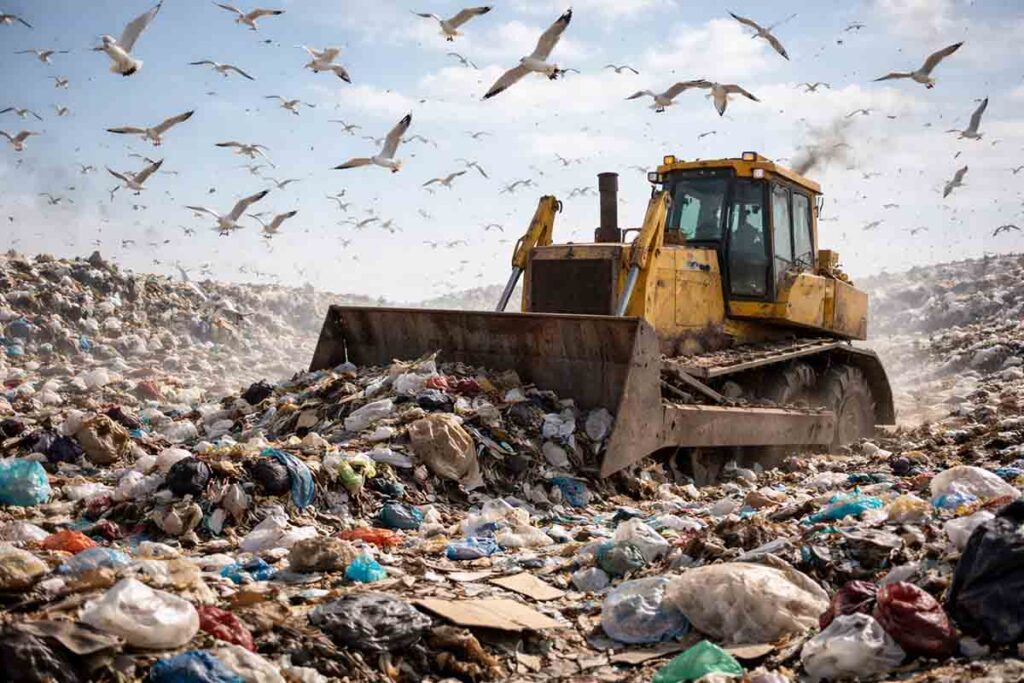
Climate change and circular economy targets mean, we no longer send our residual (black bag), largely non-recyclable waste to landfill, and because of this, most of our landfills have closed.
This leaves Northern Ireland extremely vulnerable, and subject to increasingly volatile and expensive waste export markets.
In 2024, NI exported nearly 290,000 tonnes of residual waste as Refuse Derived Fuel (RDF) to fuel energy-from-waste plants across Europe and approximately 80% of that went through Warrenpoint Port.

This figure has more than doubled (+223%) since 2020 and according to Indaver, will continue to rise without local waste infrastructure, thus leaving Northern Ireland even more at the mercy of these already volatile markets and processes.
We expect other jurisdictions across Europe to manage our waste. In doing so, these countries extract its value through energy and heat recovery. The report makes it clear that this is neither a responsible nor a sustainable long-term solution, especially in these turbulent geopolitical times.
Speaking about their concerns shared with the BBC, Colin O’Hanlon, Indaver said: “There is chronic under-capacity in the Northern Ireland waste management sector for our black bag waste, and we are lagging significantly behind the rest of the UK and Europe in adopting the modern infrastructure necessary to address this growing challenge.
“Continued inaction means we are nearing a tipping point, where we are increasingly vulnerable and risk running into a waste crisis.
“For many years through various strategies and plans, energy recovery of waste has been viewed as a more environmentally-friendly solution than landfill.
“While the success in achieving higher energy recovery rates from waste has been celebrated here, what has been ignored, is that this has largely been happening in Scandinavia, where they have realised the value of NI waste, through energy recovery for power and heat.
“Waste exports were only ever seen as an interim solution, until Northern Ireland developed its own modern and robust infrastructure.
“But the long-term solution needs to be progressed. Waste exporting is a notoriously complex process involving many movements of waste on roads and ships and which requires port infrastructure and storage. The resultant carbon footprint only adds to the negative environmental landscape.
“The proximity principle of good waste management means that waste should be dealt with as close to the source as possible.
“It is our view that the issues being experienced in Warrenpoint for some time now, are a direct symptom of the risks associated with this process and our wider reliance on waste export markets.
“This is not only an unsustainable approach which comes with economic, environmental and reputational risks, but the markets for this waste are increasingly unreliable and volatile.
“They can be subject to the vagaries of European weather and resulting market demand and in some cases RDF imports are now being taxed by the receiving countries. The UK Committee on Climate Change recommended that waste exports be phased out all altogether.”
In line with Northern Ireland Government policy, Indaver believes that like most councils in the rest of the UK, implementing a local solution would deliver self-reliance, economies of scale and enable NI to increase recycling levels and ensure we recover energy from NI waste locally, benefiting both the environment and the economy.

Colin O’Hanlon added; “Unlike the current wastewater crisis, there is a ready-made solution waiting to be implemented.
“That solution is the £250 million arc21 residual waste project, which presents an opportunity to showcase how private-sector investment can drive public benefit, delivering long-term value and leaving a valuable asset in public ownership.
“The project simply requires a Department for Infrastructure (DfI) Ministerial signature in the near future to deliver a robust and evidence-based planning decision.
“This will allow it to progress to the next stage of procurement where a business case evaluation will trigger a democratic decision by the arc21 councils to decide if it progresses.”
To read more about the project and Northern Ireland’s waste infrastructure needs you can view and download the Indaver report: Tipping Point – NI’s Looming Waste Crisis: The Case for Critical Waste Infrastructure for Northern Ireland here: www.becon.co.uk
You can also add your support for the project and sustainable waste management by sending a letter to the planning file here: https://becon.co.uk/support-the-project/
More About Waste and Arc21
Northern Ireland’s waste levels continue to increase in line with predicted population growth. Recycling levels have plateaued for several years because we have captured the low hanging fruit, and significant volumes of residual waste remain. Industry-wide, between 5-10% of waste collected for recycling is rejected due to contamination, meaning it must be disposed of another way.
The Northern Ireland Waste Management Strategy promotes a range of measures designed to minimise waste and maximise recycling. Until we transition to a truly Circular Economy with no residual waste there will remain significant volumes of waste that cannot be recycled, and we must treat it responsibly and sustainably.
The Strategy supports the need for energy recovery from residual waste, but it doesn’t envisage that it will happen abroad and that it will rely on hundreds of thousands of tonnes of NI waste being shipped across Europe at significant environmental and financial cost every year.
The Committee for Climate Change also recommends that Northern Ireland considers the feasibility of phasing out waste exports by 2030.
The current export practice contravenes the important proximity principle of waste management which implies that waste should be managed as near as possible to its place of origin. The carbon footprint of shipping waste abroad via road and sea journeys is naturally significantly higher.
Across Great Britain, Ireland, and Europe, residual waste is managed locally through similar energy-from-waste facilities, which convert non-recyclable waste into electricity and heat.
In the UK alone there are 60 facilities operational and 10 more in construction. Northern Ireland remains an outlier in this regard. The absence of similar modern waste infrastructure locally poses a serious risk to public health, the environment, and economic development.
In addition to delivering a sustainable waste management solution, the arc21 project presents an opportunity to support Northern Ireland’s wider decarbonisation and energy transition goals.
The facility will provide continuous baseload electricity, much of it renewable, helping stabilise the electricity grid for more renewable generation and reducing our reliance on fossil fuels.
With additional heat offtake available through the Energy from Waste process, the potential exists to integrate additional technologies such as hydrogen and e-fuel production, district heating, and carbon capture when technically and economically feasible and aligned with UK and NI government policy imperatives.
These advancements would position Northern Ireland as a leader in innovative waste-to-energy solutions, setting a precedent for sustainable waste management across the UK and Ireland.
The Mills Report on the Mobuoy illegal landfilling scandal in 2013 laid bare the risks of not managing our waste properly.
Some of the recommendations of this report remain outstanding, including the development of properly regulated local infrastructure to control and manage our waste.
The arc21 residual waste treatment project is a significant part of that infrastructure solution. This is one of the most important decisions that need to be taken at a senior political level, and it begs the question, do we have to wait until a crisis hits us in face before we respond to the predicament ?
This is a seriously important topic as discussed in the above, and ratepayers need to be more informed about it while the local councils in the south-east need to be more transparent and their support for arc21.
There does not seem to be an acceptable Plan B on the table and the environmental clock is ticking.