



Newry Mourne and Down District Council Council To Address Business Dereliction Across Its District
Owners of derelict and vacant properties across the Newry Mourne and Down District Council area are being offered the opportunity to apply for financial support to help redevelop the buildings to stimulate investment and support the growth of new and existing businesses.
In Downpatrick alone, there are at least three for bank properties lying empty, but may not necessarily be classed as ‘derelict’ which could made valuable contributions to the local business life of the town among other premises.
And there is the former IDB building on the Saul Road, which has been lying vacant, truly derelict for many years which will no doubt find its way onto the audit checklist.
Owners of vacant and derelict commercial properties across the district are being offered the opportunity to apply for financial support to help restore the buildings.
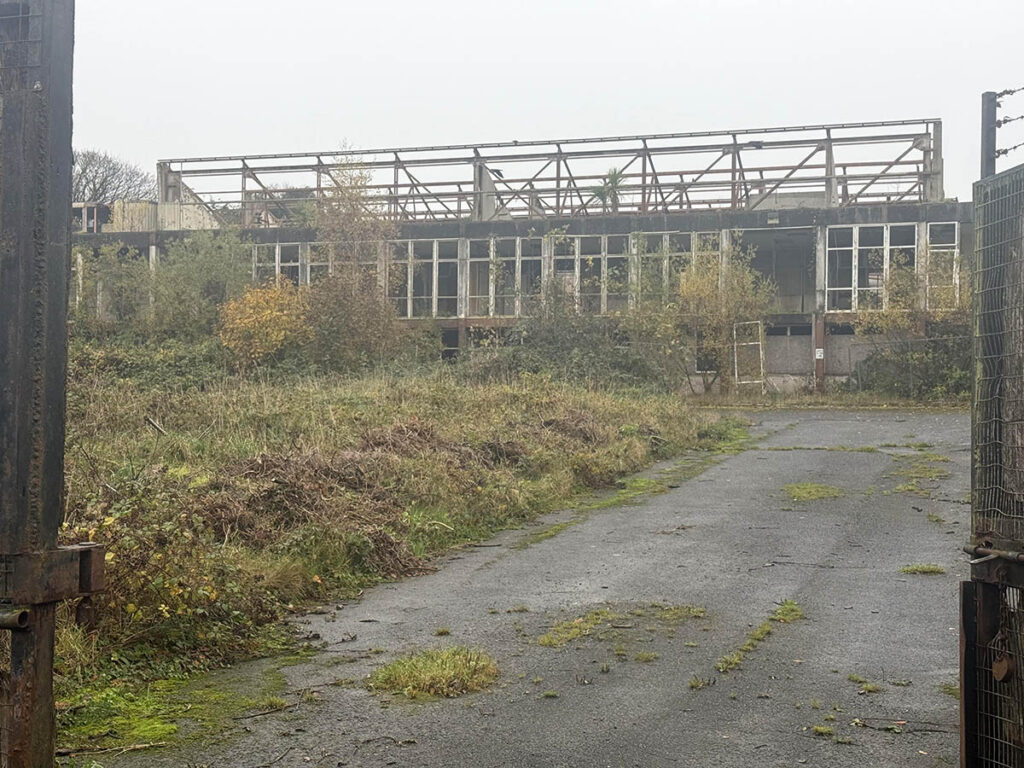
Newry Mourne and Down District Council’s Local Economic Partnership has secured £4.5m from the Department for the Economy to support bringing derelict premises back into use.
The support package aims to help business owners breathe new life into properties, stimulate new investment and support the growth of new and existing businesses.
The Council, in partnership with Newry and Mourne Enterprise Agency and Down Business Centre, is working on an audit of under-used and derelict properties to understand the scale of the issue across the district.
Applications for grant aid up to £200,000 are expected to open within the next few months, with the onus on property owners to submit bids to bring buildings back into use.
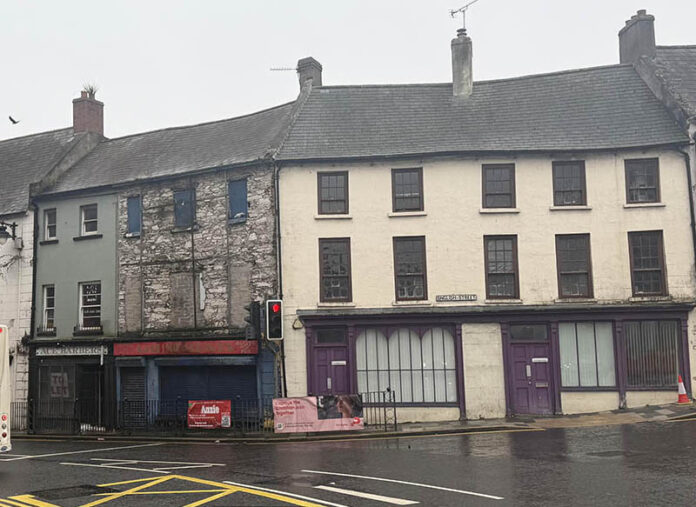
Council chairperson, Councillor Philip Campbell said: “Securing grant aid to help property owners breathe new life into buildings to help regenerate town centres is a good news story for the district”.
“The Department for Economy’s financial support will play an important role helping business owners improve how their premises and respective town centres look and stimulate investment.
“The Department’s grant aid can help regenerate our town centres and has the potential to increase football and boost the local economy,” Councillor Campbell added.
The Commercial Property Revive and Reimagine grant is designed to assist commercial growth across rural and urban areas within existing settlement limits, stimulate local economic activity, attract new business and provide space for existing enterprises to expand.
The current audit of vacant and derelict buildings is focusing on establishing a baseline for dereliction and their location to inform decisions on target interventions for regeneration funding.
The first tranche of funding to help transform vacant buildings into vibrant new premises is expected to be available in the Spring, with Council staff presently developing application forms and assessing criteria.
Newry Mourne and Down District Council is one of 11 district councils across Northern Ireland to have established a Local Economic Partnership (LEP) to deliver on the Department for the Economy’s Regional Balance Fund.
The Partnerships are part of the government department’s new strategic approach to locally led economic development, with the Council also working with the Department for Communities to ensure it maximises every available funding opportunity.
Given the complexity of planning laws in Northern Ireland and that there is no clear one definition of what ‘dereliction’ is, meeting the criteria for getting a grant could be complex in ticking all the boxes, but see below for a synopsis of the planning and statutory background surrounding ‘dereliction’.
One key issue will be in trying to get the projects through within a set timescale, and establishing legalities could be a major issue, but not unsurmountable.
***
So what is ‘dereliction’ ?
Property dereliction refers to a building or land that has been neglected, abandoned, or allowed to fall into serious disrepair, often to the point where it is unsafe, unusable, or visually degraded.
That is, a derelict property is one that the owner has failed to maintain, so it has deteriorated significantly. The former bank buidlings in Downpatrick appear to be significantly maintained.
Typical signs of dereliction
- Broken windows, roof damage, or structural instability
- Overgrown vegetation and unmanaged land
- Fire, vandalism, or water damage left unrepaired
- Disconnected utilities and no occupation for a long period
- Hazardous conditions (loose masonry, unsafe floors, vermin, etc.)
Legal and planning context (UK / Ireland)
In planning and building control, dereliction can be important because authorities may:
- Serve repair or enforcement notices
- Require owners to make buildings safe
- Use compulsory purchase powers in extreme cases
- Include the property on derelict sites registers (especially in Ireland)
- Consider dereliction when assessing planning applications or regeneration grants.
Difference from related terms
- Vacant – empty but not necessarily in poor condition
- Dilapidated – run-down or deteriorated, but still potentially usable
- Derelict – severe neglect, often unsafe or abandoned
A clearer explanation of property dereliction in Northern Ireland planning and local government law, with the key legal powers explained in plain English.
🏚️ Property Dereliction in Northern Ireland Planning Laws
Unlike some countries, Northern Ireland does not have a single statutory definition of “derelict property” in planning law.
Instead, dereliction is dealt with through several overlapping legal powers used by councils, planning authorities, and building control.
1) Planning Law – Appearance and Amenity Powers
📜 Planning Act (Northern Ireland) 2011
Under planning legislation, councils can act if land or buildings harm the appearance or amenity of an area.
Article 59 – Notice Requiring Proper Maintenance
Councils can issue a “Maintenance of Land” notice where:
- Land or buildings are untidy, neglected, or adversely affecting the area
- Owners fail to maintain land, buildings, or boundary treatments
👉 This is often used for:
- Overgrown sites
- Abandoned buildings
- Graffiti or boarded windows
- Collapsing structures visible from public areas
Failure to comply is an offence, and councils can carry out the work and recover costs
2) Building Safety – Dangerous or Ruinous Structures
📜 Building Regulations (NI) Order 1979 & Building Control
Councils (Building Control departments) can act where a property is:
- Structurally unsafe
- At risk of collapse
- A danger to the public
Powers include:
- Serving a Dangerous Structures Notice
- Ordering immediate works or demolition
- Entering the property to make it safe and charging the owner.
This applies even if the building is privately owned and not visible from the street.
3) Environmental Health – Statutory Nuisance
📜 Public Health (NI) Act 1967
Environmental Health Officers can intervene if a derelict property:
- Attracts vermin
- Causes foul smells or waste accumulation
- Creates health risks
- Is a fire hazard
They can issue Abatement Notices requiring clean-up or repairs.
4) Compulsory Purchase of Derelict Property
In extreme cases, authorities can force purchase of derelict land or buildings.
📜 Local Government Act (NI) 1972
📜 Planning Act (NI) 2011
Councils or government bodies can use Compulsory Purchase Orders (CPOs) for:
- Urban regeneration
- Housing schemes
- Removing blight from town centres
This is rarely used because it is expensive and legally complex.
5) Dereliction in Planning Policy (Not Statutory
Northern Ireland planning policy recognises dereliction even if not legally defined.
Strategic Planning Policy Statement (SPPS)
Encourages:
- Reuse of vacant and derelict sites
- Brownfield development
- Town centre regeneration
Planning applications on derelict sites often get policy support.
6) How Councils Classify Derelict Property (In Practice)
Although not legally defined, councils typically consider a property derelict if it is:
- Long-term vacant
- Structurally unsound
- Not maintained
- Detrimental to local amenity
- Unfit for habitation
This is often documented in Local Development Plans (LDPs) and regeneration strategies.
7) Difference Between Dereliction and Dilapidation in NI Law
| Term | Legal Meaning in NI |
|---|---|
| Vacant | Empty but may be in good condition |
| Dilapidated | Poor condition, but repairable and still usable |
| Derelict | Severely neglected, often unsafe or abandoned (policy term, not strict legal definition) |
| Dangerous structure | Legally defined and enforceable under Building Control |
8) What Owners Must Do
Owners of derelict property can be legally required to:
- Make the building safe
- Repair or secure it
- Clear land and waste
- Demolish dangerous structures
- Repay council costs if they refuse
9) Why Dereliction Matters in Planning Decisions
A derelict property can:
- Strengthen a case for redevelopment or demolition
- Support a planning application for regeneration
- Trigger enforcement action
- Affect property values and regeneration grants
✅ Key Point (Often Misunderstood)
“Derelict” in Northern Ireland is mostly a policy and practical term—not a single statutory category.
The real legal powers come from planning amenity rules, building safety law, and public health law.
RELATED DOWN NEWS ARTICLE: