


McGrath Says Cancer Waiting Times Show Executive Has Lost Focus
SDLP Opposition Health Spokesperson Colin McGrath MLA has said the latest cancer waiting time statistics show an Executive that is failing to prioritise one of its most fundamental responsibilities.
Commenting on figures published today by the Department of Health, Mr McGrath said that while the Minister continues to present a picture of steady progress, the reality for too many patients is one of unacceptable delay, anxiety and uncertainty.
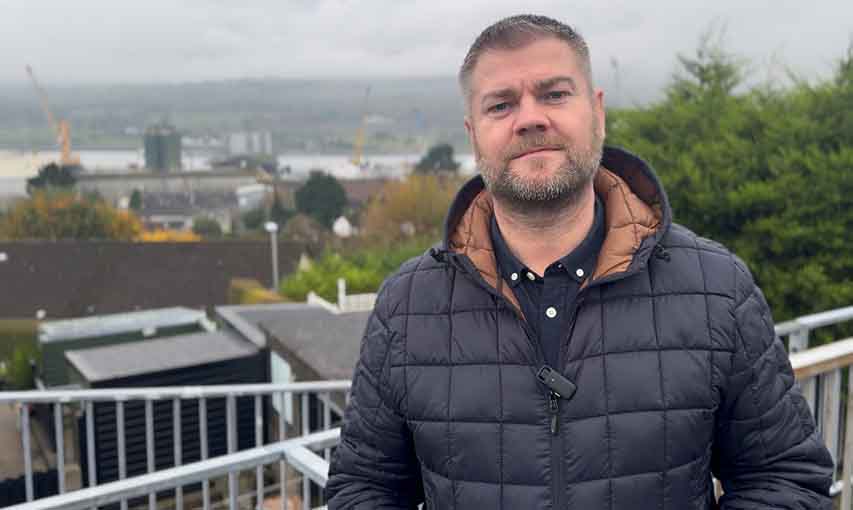
South Down MLA Colin McGrath said: “Behind every statistic is a person who has heard the word ‘cancer’ and is now waiting, often far too long, for treatment to begin.
“For those patients and their families, reassurance and spin mean nothing… they need outcomes.
“While 88% of patients began treatment within 31 days of a decision to treat, performance against the more critical 62-day target following an urgent GP referral continues to deteriorate.
“Only 30% of patients were treated within that timeframe, a fall on the previous quarter and a clear indication that early diagnosis and rapid access to care are not being delivered.
“Cancer care is a stated Programme for Government priority, yet these figures show it is slipping down the Executive’s list.
“The Minister is heavily focused on selling structural reform and the neighbourhood model of care, but reform without a grip on performance simply leaves patients behind.
“Cancer does not wait for system change to bed in. The Executive must stop pretending that everything is broadly okay and start taking responsibility for outcomes that are clearly going in the wrong direction.”
Statement from Health Minister on Cancer Waiting Times
Health Minister Mike Nesbitt has released detailsb around the cancer waiting time figures released today saying “they reflect an early stage in the transition to our new regional breast assessment service.
“While there is still more to do, the progress since then shows that reform was necessary, that it was the right decision, and that it is already delivering results.
“The figures published today relate to July to September 2025, the first quarter in which all five Trusts moved onto the new regional system. This early transition period had a short-term impact on performance, including the 6.8% of urgent breast patients seen within 14 days. That figure does not reflect the improvements that have followed, nor the reasons why change was required.
“The 14-day breast target has never been consistently met in Northern Ireland and performance was deteriorating before the regional move. Without intervention, the service was becoming less equitable and less sustainable.

“Since the end of the reporting period there has been very real progress. In October I introduced a regional waiting list initiative to fund additional evening and weekend clinics.
“Between October and December, 928 extra red-flag slots were delivered. The regional breast assessment waiting list reduced from 12 weeks in September to just over 7 weeks in mid-December.
“Further additional clinics have also already been delivered this month to offset the impact of a brief late December reduction in capacity.
“Whilst I absolutely acknowledge that too many women are still waiting for too long, I want to reassure the public that the latest position is much improved compared to where it was last year.
“I also expect it to continue to improve in the time ahead with the current average waiting times falling further.
“The regional booking system was introduced to address serious inequity of access. Previously, the likelihood of being seen within 14 days depended on where you lived. Before reform, one Trust was achieving 92.9% while another was at 3.8%.
“That postcode lottery was not acceptable and it was not equitable. The regional model now ensures patients are offered the earliest available appointment anywhere in Northern Ireland, which is the right approach for cancer care.
The review also identified a structural shortfall of around 3,900 patients per year driven by rising referrals and workforce pressures, including in radiology.
“No Trust could meet demand on its own. Regional working allows capacity to be pooled and investment targeted where it makes the most difference. We are now working with NHS Scotland to implement a modern consultant-led model supported by a maximised skill mix. I have allocated £5m recurrent funding to support this work.
“I acknowledge that 14-day and 62-day performance dipped during the transition period. This reflects the early implementation of the regional model and the roll-out of the Encompass digital system. These were expected short-term effects. The benefits of reform are long-term.
“Improving cancer performance remains a top priority.
“Through the Elective Care Framework we are investing in red-flag and time-critical capacity, expanding Rapid Diagnosis Centres, increasing imaging capacity, and exploring targeted insourcing including support from NHS Forth Valley. This is backed by the 2022 Cancer Strategy, which sets the pathway for long-term improvement.
“I can assure everyone that collectively we are doing everything we can to address this situation with straight to test pathways and learning from colleagues throughout the UK in the delivery of a red flag triple assessment service.
“I recognise the anxiety that delays cause for patients and families. While today’s figures cover an early transitional period, the progress since then shows that reform was necessary,” added Minister Nesbitt.
Publication of Northern Ireland Cancer Waiting Time Statistics: July to September 2025
A Department of Health spokesperson said that today published Accredited Official Statistics on cancer waiting times for the quarter ending September 2025.
This release gives details of the waiting times for patients accessing cancer services at hospitals in Northern Ireland during July, August, and September 2025.
On 9 November 2023, ‘encompass’ – a new electronic patient record system, was launched in the South Eastern Health and Social Care (HSC) Trust.
The system went live in Belfast HSC Trust on 6 June 2024, in Northern HSC Trust on 7 November 2024, and in Southern and Western HSC Trusts on 8 May 2025. Due to the rollout of encompass, validated data for Belfast Trust for quarter ending June 2024, and breast cancer referrals data for this Trust for quarter ending September 2024, are not available.
Validated breast cancer referrals data for Southern and Western Trusts for quarter ending June 2025 are also not available.
Data sourced from encompass are not directly comparable with legacy (pre-encompass) data sources. These figures, sourced from encompass, are considered to be ‘official statistics in development’, which are a subset of Official Statistics in line with the Code of Practice for Statistics.
While caution must be exercised when using these figures, they are a meaningful representation of what they measure and are of sufficient quality for publication and use.
Key Facts:
Waiting times for first definitive treatment following a decision to treat (31-day target)
- In the quarter ending September 2025, 2,841 patients started treatment following a decision to treat, of which 88.0% (2,499) started treatment within 31 days. The number of patients starting treatment increased by 9.0% (234) since last quarter.
- The percentage of patients starting treatment within 31 days increased from 87.9% (2,291) in the previous quarter.
Waiting times for first definitive treatment following an urgent GP referral for suspect cancer (62-day target)
- In the quarter ending September 2025, 1,430 patients started treatment following an urgent GP referral for suspect cancer, of which 30.1% (430) started treatment within 62 days. The number of patients treated increased by 15.4% (191) since last quarter.
- The percentage of patients starting treatment within 62 days decreased from 32.5% (403) in the previous quarter.
Patients first seen following an urgent referral for suspect breast cancer (14-day target)
- In the quarter ending September 2025, 2,699 patients were seen by a breast cancer specialist following an urgent referral across all five HSC Trusts, of which 6.8% (183) were seen within 14 days. This is the first quarter for which data for all five Trusts have been available since the transition to a regional service.
Referrals for suspect breast cancer
- During the quarter ending September 2025, 6,194 referrals were received by HSC Trusts for suspect breast cancer, of which 85.7% (5,309) were classified as urgent.
- During the quarter ending June 2025, 3,803 referrals were received by Belfast, Northern and South Eastern HSC Trusts for suspect breast cancer, of which 85.2% (3,240) were classified as urgent.
All statistical publications relating to cancer waiting times are available online at: