


The long-awaited budget is a missed opportunity suggests some of the commentators
There has been a cool, muted reaction to today’s budget delivered by Chancellor Rachel Reeves. She had little room to move to find ways to try and stimulate the economy struggling recently on minimal growth.
Retail NI Reaction To Chancellors Budget today (26th November 2025)
Reacting to the Chancellors Budget statement, Glyn Roberts, Chief Executive of Retail NI said: “This Budget is a missed opportunity to stimulate growth in the economy and address the huge burden of the cost of doing business in Northern Ireland and throughout the UK.
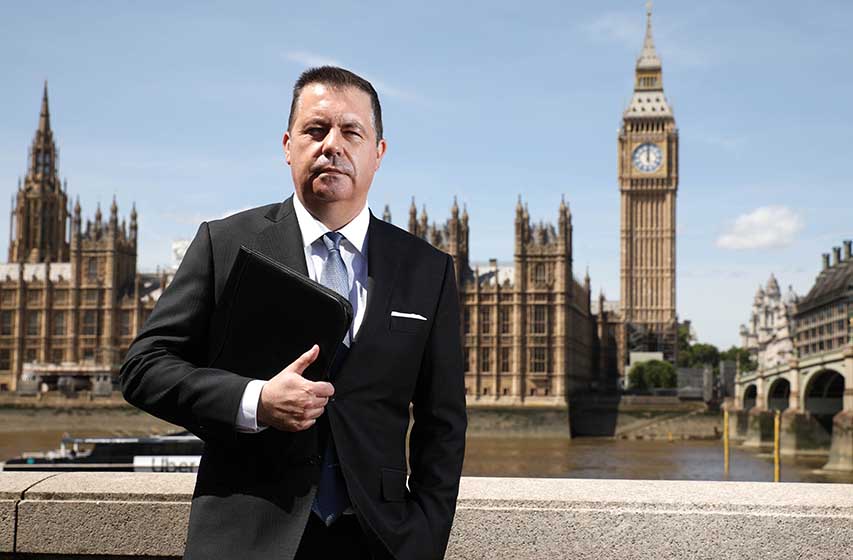
“An inflation busting rise in the Living Wage so soon after last years huge increase and the National Insurance hike will be a heavy blow to struggling independent retailers and small businesses.
“Retail NI does welcome the £16 million funding to create a Northern Ireland business concierge and trade resolution centre to sort out complex disputes with the Windsor Framework.
“A considerable number of our members are experiencing difficulties receiving product lines from GB suppliers and we hope that this will address this problem”.
***
FSB says budget must be followed by serious, pro-growth measures
Responding to today’s Budget, Tina McKenzie, Policy Chair of the Federation of Small Businesses, said: “Today’s tax-raising Budget shows the peril of a continuing economic doom loop – we must not be in the same place again next year, with more tax hikes to balance the books due to a lack of economic growth.

“The tax burden at a record high is the cost of failure to get growth and trim spending.
“Hikes to dividend tax mean the Government continues to make investing in your own business one of the least tax-friendly things you can do with your money.
“Plans to charge employers for supporting pension savings are a bad idea. The business rates measures will not help small firms and High Streets nearly enough.
“We need the Government to follow this Budget through with serious, pro-growth measures that restore the confidence small businesses need to grow, invest and hire.
“Ministers must now bring forward pro-business, pro-growth policies. Otherwise, we’ll be back at square one, stuck in the same rut we were in last year.
FSB’s Small Business Index, Q3 2025:
https://www.fsb.org.uk/resources/policy-reports/MCKBZSAF6OXFHTLLE57U3CCPY3UA
***
IHT transferable threshold still not good enough, says UFU
Following today’s Autumn Budget announcement, including the change to inheritance tax allowing the £1 million Agricultural Property Relief (APR) and Business Property Relief (BPR) threshold to be transferable between spouses, the Ulster Farmers’ Union says Northern Ireland will still be hit hardest due to its owner-occupied farming structure and land prices.
The minor change will bring APR and BPR into line with existing inheritance tax legislation, and will not prevent lasting damage to many family farms across Northern Ireland.
UFU president William Irvine said: “Today’s Autumn Budget announcement puts UK agriculture in a better position than it was in this morning, but by no means is it a fitting solution, especially not for Northern Ireland.
“This transferable threshold is the smallest change that Government could have made. We lobbied for this transferable threshold as one of a package of measures, but this change on its own is quite frankly, not nearly good enough.
“We repeatedly highlighted over the past year when engaging relentlessly with political figures locally and nationally, that because of NI’s unique owner-occupied farming structure and land prices, farmers here are disproportionately exposed to IHT changes.
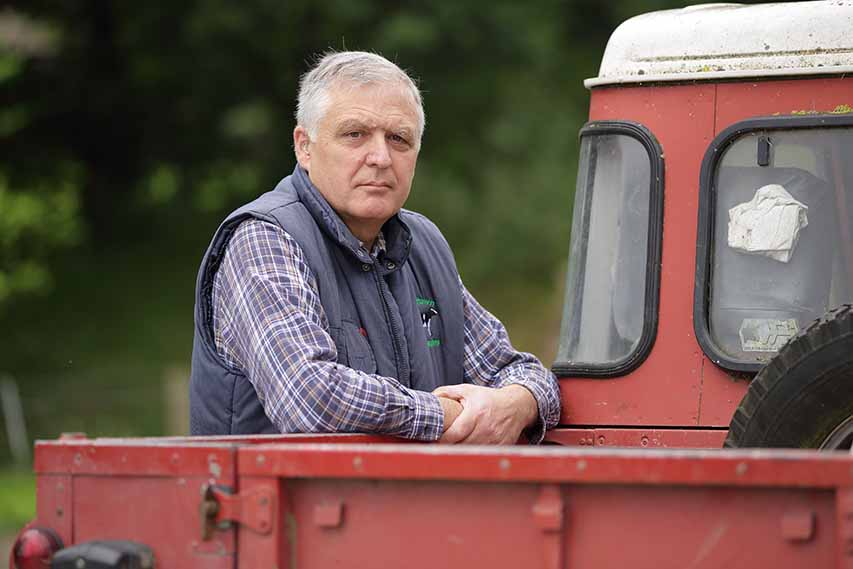
“This has not changed, even with the transferable threshold introduced. Northern Ireland family farms will still be the most severely affected in the UK.
“Government has belittled and dismissed our efforts and concerns by making only one slight change to its decision at last year’s budget, one that should have been there to begin with.
“It does not have any significant benefit for Northern Ireland and with no further protections for family farms, local farmers will be the ones to bear the brunt of Government’s unjust decisions.
“Amendments to the Finance Bill is the final opportunity for proper and suitable changes to be made on the inheritance tax proposals and we are urging the Labour Government to see sense and do what is right, not only for local farm families but for the UK population.
“What happens to local farms, the businesses that produce the high-quality food we all need to survive, affects us all in more way than one and we are now much too close to the wire.
“The Government must amend the Finance Bill urgently to prevent irreversible damage to the family farm model.”
The UFU will host a post-budget information webinar for members on Tuesday 2 December, 7:30pm – 9:00pm. You can sign up to attend, using the following link:
https://www.ufuni.org/event/post-budget-information-webinar/.
***
Autumn Budget doesn’t go far enough to invest in public services and boost growth says O’Dowd
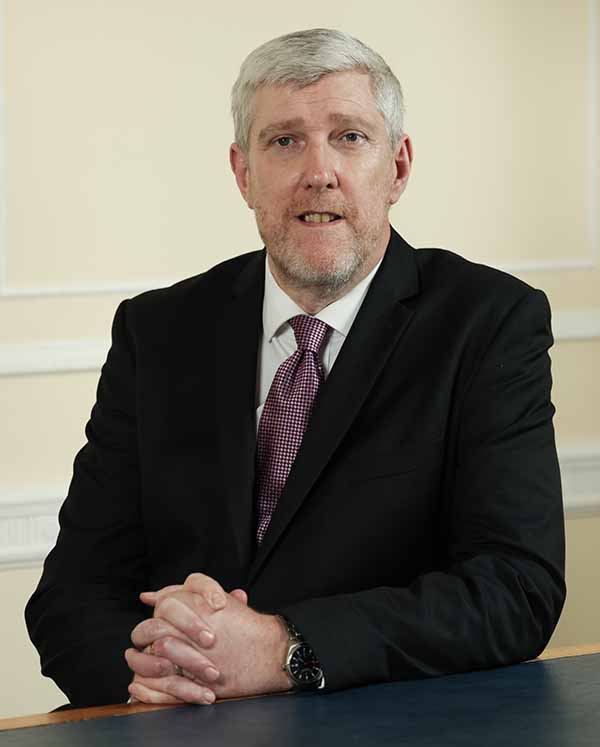
Finance Minister John O’Dowd has responded to the Chancellor’s Autumn Budget.
Commenting Minister O’Dowd said: “Ahead of the Chancellor’s Budget I have consistently called on Westminster to support families, workers and small businesses.
“I welcome the removal of the two-child limit, which will help lift thousands of children out of poverty here – something I have been calling for.
“I also welcome the Chancellor’s decision to increase both the Minimum Wage and the Living Wage, important steps that will support our lowest-paid workers.
“However, freezing income tax thresholds will hit working families who will have less disposable income to spend in our local businesses.
“The Chancellor had an opportunity to ensure those with the broadest shoulders carried more of the burden – but she didn’t go far enough.
“There was little in today’s budget to support economic growth and for small to medium businesses. Despite calls to support our hospitality industry by reducing the VAT rate – these calls went unanswered.
“The budget further strengthens the need for fiscal devolution. My Department will now intensify work to progress this.
Following the Autumn Budget the Executive will receive £370 million of additional funding over the Spending Review Period with £240 million of this for day-to-day spending and £130 million for capital.
Minister O’Dowd added: “While additional funding for public services is welcome, the reality is stark: following today’s announcements we will only receive £18.8 million in additional funding this financial year.
“This falls far short of what is needed to support the delivery of front line public services.
“I am committed to working in partnership with my Executive colleagues to prioritise and agree allocations in the December Monitoring Round.
“I will move quickly to bring forward a multi-year budget for Executive agreement – one that will shape our public services for the years ahead. This will give departments the certainty they need to plan on a longer-term and more strategic basis, creating the conditions to drive much needed transformational change in the delivery of our public services.
“While financial challenges undoubtedly remain, I stand ready to play my part in supporting workers, families and businesses with a multi-year budget that is focused on Doing What Matters Most.”
***
IoD: Budget policies fail to lift the UK’s growth prospects
Responding to the Autumn Budget Statement delivered by the Chancellor of the Exchequer, Anna Leach, Chief Economist of the Institute of Directors, said:
“Whilst this Budget further increases the tax burden on business, it is partially offset by some helpful measures.
“We welcome the funding for the Youth Guarantee and the full funding of SME apprenticeships for those eligible under 25, which will support young people in their careers.
“The decision not to converge the two rates of Landfill Tax will also be a relief to the construction sector.

“We also welcome the more than doubling of the headroom against the fiscal rules. This will help calm the frenzy of speculation which has surrounded fiscal events.
“The decision to only assess performance against the fiscal rules once a year may also contribute to greater stability in policy making.
“But the leaking of policy choices in the run-up to this Budget is of grave concern.
“It has contributed to substantial declines in business and consumer confidence, with real impacts on economic activity.
“This Budget does not substantively change the UK’s growth outlook, however – the OBR judge that none of the policies announced have a material impact on GDP. Public spending is higher, and business investment even lower than before.
“The scaling back of National Insurance relief on pension contributions – even while the government has launched its Pension Commission – will undermine retirement savings and the very investment pools that we need, as well as heaping further costs on employment.”
***
Swann Slams Autumn Budget as ‘Failure for Workers and Rural Communities’
Ulster Unionist MP Robin Swann has responded to the Chancellor’s Autumn Budget, conveying deep concern over its impact on households, businesses, and farm families across Northern Ireland.
Highlighting what he sees as fundamental shortcomings, Mr Swann warns that behind the headline figures, the measures announced will place additional strain on workers and rural communities.
Robin Swann MP said: “This budget fails across so many sectors and levels, while it looks on the surface to support workers, it is the multiple tax rises across so many sectors that will be felt.
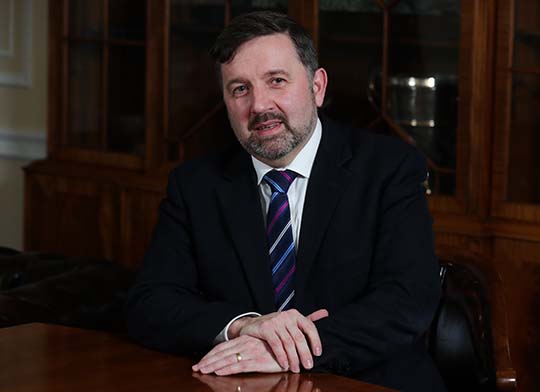
“The freeze on tax thresholds for another two years will see more people and families now liable for tax when they hadn’t been before.
“Farm families across the country and especially in Northern Ireland have been abandoned by this Chancellor as there was no movement on the Farm Family Inheritance Tax.
“This is despite all the farm lobby’s campaigning and engagements, and despite all the other U-turns, this is the one that the Government unfortunately didn’t perform.
“While the £370m Barnet consequential is a welcome uplift, the Finance Minister has said he is £400m short this year alone, so this doesn’t even touch the sides.
“The £16.6 million Internal Market Package, which seems to include the £2.25 million for Intertrade UK, to be spread over three years is an acknowledgment of the challenges businesses face under the Windsor Framework.
“But it alls far short of addressing the real problem, trade divergence, so rather than sort the issues, money is being spent on systems and structures.
“Until this Government faces the reality that Northern Ireland operates under different rules than the rest of the UK, businesses will continue to struggle with uncertainty and extra costs.
“Support services help, but they do not remove the structural barriers created by the Framework.
“The details of the Treasury Red Book will now be scrutinised to see what impact it will have in homes and business.”