



24-year old from Newtownards raising awareness of the long-term impact of cancer on young people
Danni Adams from Newtownards, CountyDown, who was diagnosed with cancer aged 22, is sharing her story to raise awareness of the long-term impact of cancer on young people.
And she is encouraging those who might be struggling after they’ve finished their treatment to seek support.
Studies suggest that people who have experienced cancer when they’re young are more likely to develop mental health conditions in later life, and that it can impact young people’s studies, careers, personal relationships, and their ability to live independently.
April is Teenage and Young Adult Cancer Awareness Month and to help others, Danni, now 24-years-old, is working with Teenage Cancer Trust to launch new information and advice for young people on its website about rebuilding their lives after cancer.
The information is based on the firsthand insights of people aged 13-24 who’ve been through cancer and the expertise of the charity’s specialist nurses and youth workers, who together support thousands of young people every year through treatment and beyond.
Danni says she felt anxious after finishing her treatment for thyroid cancer because she was used to a routine.
And when that ended, she knew she had to try and rebuild her confidence and her life again, after her cancer diagnosis.
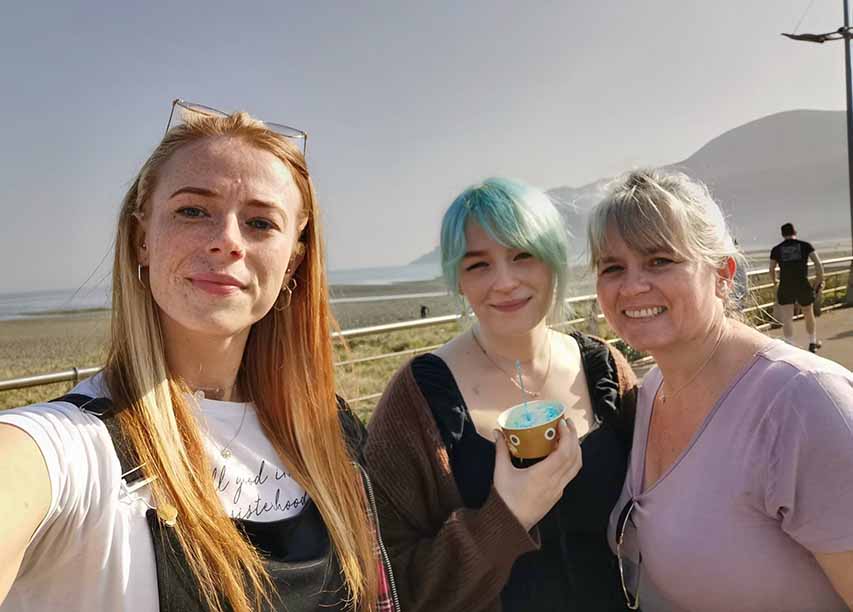
Danni was diagnosed with cancer in 2021, after noticing a small lump in her neck. Initially she thought it was a spot or a cyst but when the lump started getting bigger and as she started to feel increasingly tired, she knew she needed to go to the doctors.
“At one point I slept for 18 hours for three days in a row,” she said.
“I couldn’t stay awake long enough to book myself a doctor’s appointment, so I asked my sister to book an appointment for me.
“The doctor felt my neck and said it was probably just a swollen lymph node from a throat infection. He didn’t comment on the tiredness, despite me saying that I thought the two were connected.”
Danni had an ultrasound in January 2021 and she waited until July for her results.
“I assumed there was a backlog due to Covid, but my mum was getting worried, so she pushed me to chase them,” she said.
“I got a call from the GP the next day and they told me to bring a parent to the appointment, so we were all waiting to hear the word “cancer”. Instead, I had two more biopsies and another scan.
“My mum was with me when I was told later in July that I had thyroid cancer. The doctor asked us to listen carefully as some people get really upset as they took it as a death sentence, but that thyroid cancer treatable.
“I was told that I have the ‘good’ cancer and even now I still don’t know how I feel about being told that I had a ‘good’ cancer because no cancer is good and it really didn’t feel good either.”
As part of her treatment, Danni had an operation and radioactive iodine treatment.
After Danni was diagnosed, she was introduced to Lisa Callendar, Teenage Cancer Trust’s Teenage and Young Adult Clinical Nurse Specialist.
Lisa supported Danni in many ways including giving Danni her number so she could call her if she needed her.
“Throughout all of this, I knew I could just message or call Lisa and she’d help me,” Danni said.
“Lisa also made all of my appointments for me, which eliminated a lot of stress and she sorted out medication for me. It would have been so much more stressful without Lisa, and I would have been more anxious if she wasn’t there for me.
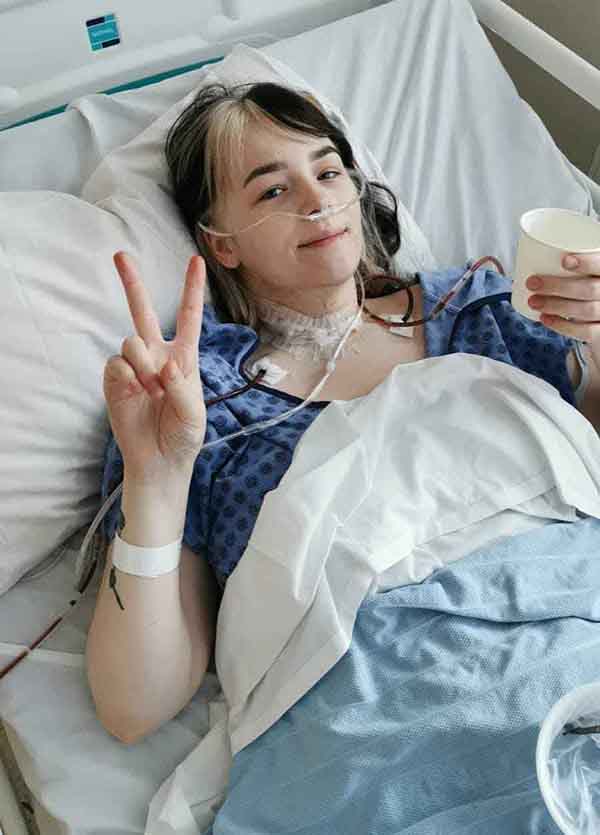
“At the start of my cancer journey, I felt completely alone as I didn’t know anyone with cancer.
“As supportive as they were, my best friends couldn’t understand it and they couldn’t physically be there with me in hospital. I felt very worried and guilty, so I opened up to Lisa about it.
“Lisa reassured me that it was really normal for people who had cancer to have those feelings. She helped put my mind at ease and arranged some counselling which I found really helpful. My experience would have been very different without Lisa.”
“My mum came to all of the appointments with me and took time off work after my diagnosis so that she could be there with me during my treatment.
“I was quite independent before my surgery, but I needed a lot of help afterwards. I embraced being like a kid again and having to be taken care of. The whole experience brought my mum and I closer because we spent so much time together.
“I got a bit of separation anxiety when my mum went back to work. I thought: ‘Who am I going to talk to now?’ I was so used to having her around.
“My energy hit an all-time low after the surgery and I didn’t see my friends or go out for a good couple of months. The first time I went out it felt weird. I didn’t want to talk, and I felt tired. I just wanted to go home.”
After finishing her treatment, Danni, who works in hospitality, said she thought she would go back to feeling normal but she still felt exhausted.
“I couldn’t go back to work straight away and that was hard. It’s taken me about two years to have a semi-normal sleep routine,” she said.
Danni, who is back working, said she still struggles with pain which is the result of her cancer treatment and cannot be on her feet for more than four hours at a time.
“Sometimes I feel like I’m a nuisance because I need to take a lot more breaks than other people and I can’t always do the same things that other people do but my current employers are really understanding and they are great,” she added.
“They will do whatever they can to help me and that means a lot.”
Alongside other young people affected by cancer across the UK, Danni is also sharing their personal tips on how to cope when treatment ends.
“Make the most of the support that’s available to you from the different charities including Teenage Cancer Trust,” Danni said.
“There are a lot of people wanting to help you, so take the help, even if you don’t think you need it. You aren’t alone.
“The resources and help that I had really saved me. I would recommend going to any peer support events that the charities organise.
“They really helped me and it’s an opportunity to meet other people your age who are going through similar experiences. You can relate to them and talk to them – there’s no judgement.
“At first I didn’t want to take part in any of it. I felt guilty and that I didn’t deserve to be there because some people had gone through more treatment than I had, but I pushed myself out of my comfort zone and it’s one of the best things I’ve done.
“Health anxiety is very real. Every time I have a sore throat, I want to Google my symptoms straight away but I try to distract myself when I have the urge to do that and I find other ways to make myself feel better.
“I also speak to my mum when I’m feeling like this and she always makes me feel better.
“It’s normal to feel anxious too because you’ve been through something that is life changing. If you’re struggling, speak to someone about it if you can and reach out for help.
“After treatment, just take your time and go at your own pace.
“Life may feel different to how it did before you were diagnosed but find your own way of doing things and surround yourself with people who are there to support you through this new chapter of your life.”
Kate Collins, Chief Executive, Teenage Cancer Trust, said: “Reaching the end of treatment is a major milestone for any young person with cancer.
“But moving forward from cancer can be equally challenging – the physical, psychological and emotional impacts can be felt long afterwards and may even hit hardest after treatment is over.
“That is why we’re launching new information and advice to support teenagers and young adults with the challenges of rebuilding their lives after cancer.
“And why we’re also asking young people recovering from cancer to share their experiences of life after treatment, to help send out the message to any young people struggling in the aftermath of cancer that they are not alone.”
For advice and support about life after cancer visit: